

Most people think stripping a wire is one of the easiest parts of electrical work. Grab a pair of cutters, squeeze, pull, and move on. Sounds simple, right? The reality is very different. A badly stripped wire can create loose electrical connections, overheating, intermittent power failures, or even dangerous fire hazards. Something as tiny as nicking a few copper strands can weaken the wire enough to cause long-term problems inside a wall, junction box, or appliance. That is why professional electricians treat wire stripping as a precision task instead of a casual step.
Electrical safety organizations continue to warn about preventable electrical injuries caused by improper handling of energized conductors and unsafe tool use. Recent data from the Electrical Safety Foundation International shows that contact with electricity remains one of the leading causes of workplace injuries and fatalities. Between 2011 and 2024, there were more than 2,000 workplace electrical fatalities in the United States alone. Those numbers highlight something important: even basic electrical tasks deserve attention and discipline. Wire stripping may look harmless, but sloppy technique can create dangerous situations quickly.
A clean strip protects the copper conductor, preserves conductivity, and helps terminals grip securely. Think of the copper strands like the fibers in a rope. If too many strands get cut or weakened, the entire rope loses strength. Electrical wire works the same way. Every intact strand matters because electricity relies on uninterrupted flow through the conductor. Damaged wire increases resistance, and resistance creates heat. That extra heat can slowly damage devices, melt insulation, or create arcing inside electrical boxes.
Professional electricians know that neat wiring is not just about appearance. A properly stripped wire tells a story about the quality of the entire installation. Clean cuts, intact copper, and correctly measured insulation removal all point toward reliable workmanship. Whether you are replacing a light switch, installing speakers, fixing automotive wiring, or learning electrical basics for the first time, understanding how to strip wires correctly is one of the most valuable foundational skills you can develop.
Understanding the Different Types of Wire Cutters
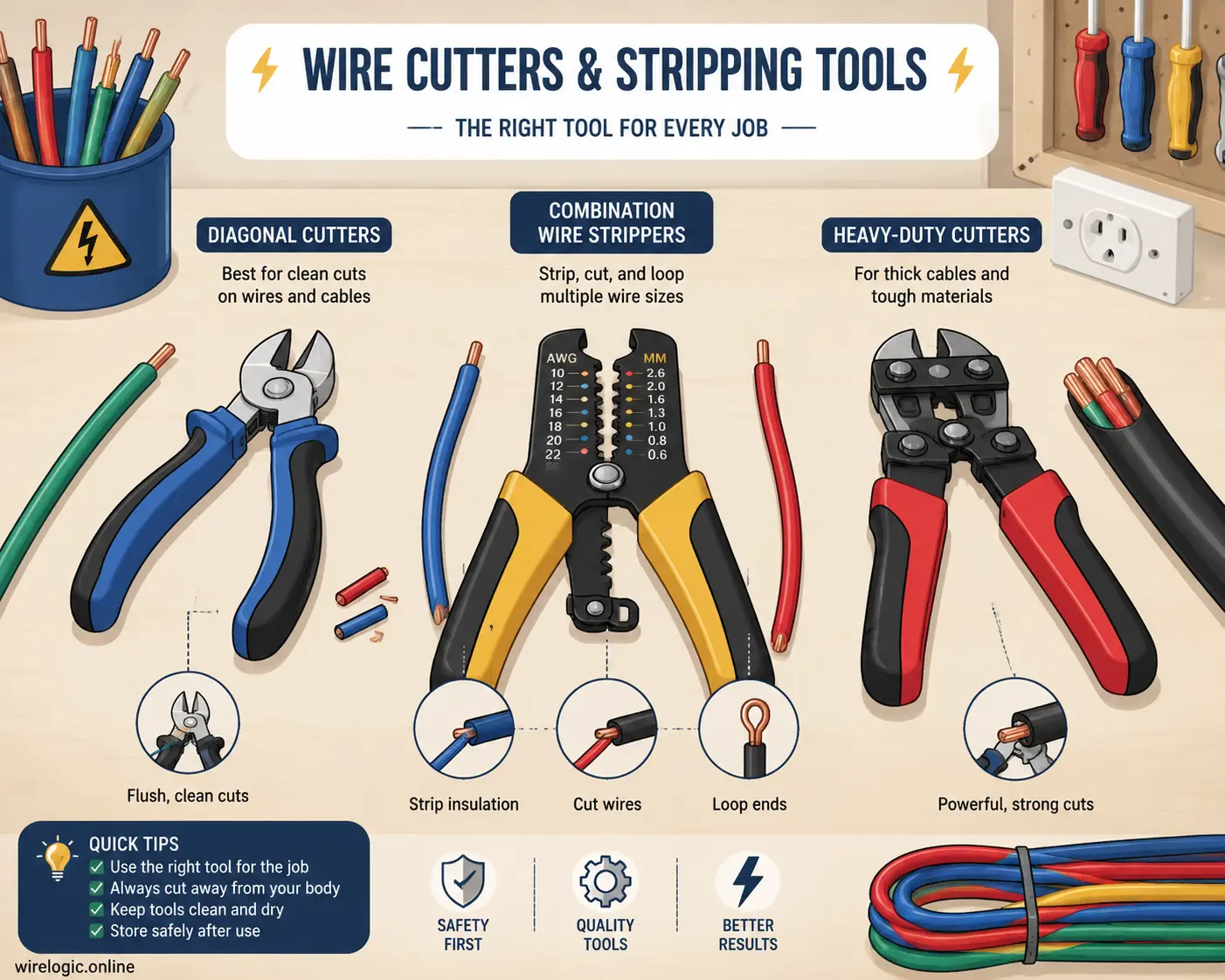
Before stripping any wire, it helps to understand the tools involved. Not all wire cutters are designed the same way, and using the wrong type is one of the biggest reasons people accidentally damage conductors. Some cutters are built purely for cutting, while others combine cutting and stripping functions into one tool. Knowing the difference can dramatically improve your results and reduce frustration.
Standard diagonal cutting pliers are common in almost every toolbox. These cutters are excellent for trimming wires cleanly, but they are not specifically designed for stripping insulation. Many beginners attempt to strip insulation using the sharp cutting edges directly, which increases the chance of nicking copper. It works in emergencies, but it requires careful control and practice. Think of it like peeling an apple with a chef’s knife instead of a peeler. It can be done, but the margin for error is much smaller.
Combination wire stripper tools are usually the best option for most electrical work. These tools include dedicated stripping holes matched to specific wire gauges. Instead of cutting into the copper conductor, the blades are designed to slice only the insulation. This creates cleaner results with far less effort. Many also include crimping sections, bolt cutters, and gripping jaws, making them versatile tools for electricians, mechanics, and DIY users alike.
Heavy-duty cutters come into play when dealing with thick cable, industrial wiring, or armored conductors. Large-gauge wire requires more force and stronger cutting edges. Trying to use lightweight household cutters on thick cable often crushes or deforms the wire instead of producing a clean cut. That deformation can make stripping harder and increase the risk of damaging the conductor underneath.
The quality of the cutter also matters more than many people realize. Cheap cutters tend to have poorly aligned blades and inconsistent cutting pressure. That means even if your technique is correct, the tool itself may still chew through copper strands. Professional-grade cutters maintain sharper edges, smoother action, and more precise alignment over time. It is one of those situations where spending a little more upfront saves endless frustration later.
Picking the Right Wire Cutters for the Job
Choosing the right wire cutters is a little like choosing the right tires for a car. Sure, almost any tire can roll down the road, but the wrong type affects safety, control, and performance. Wire stripping tools work the same way. Different wires require different approaches, and matching the cutter to the job creates cleaner, safer results.
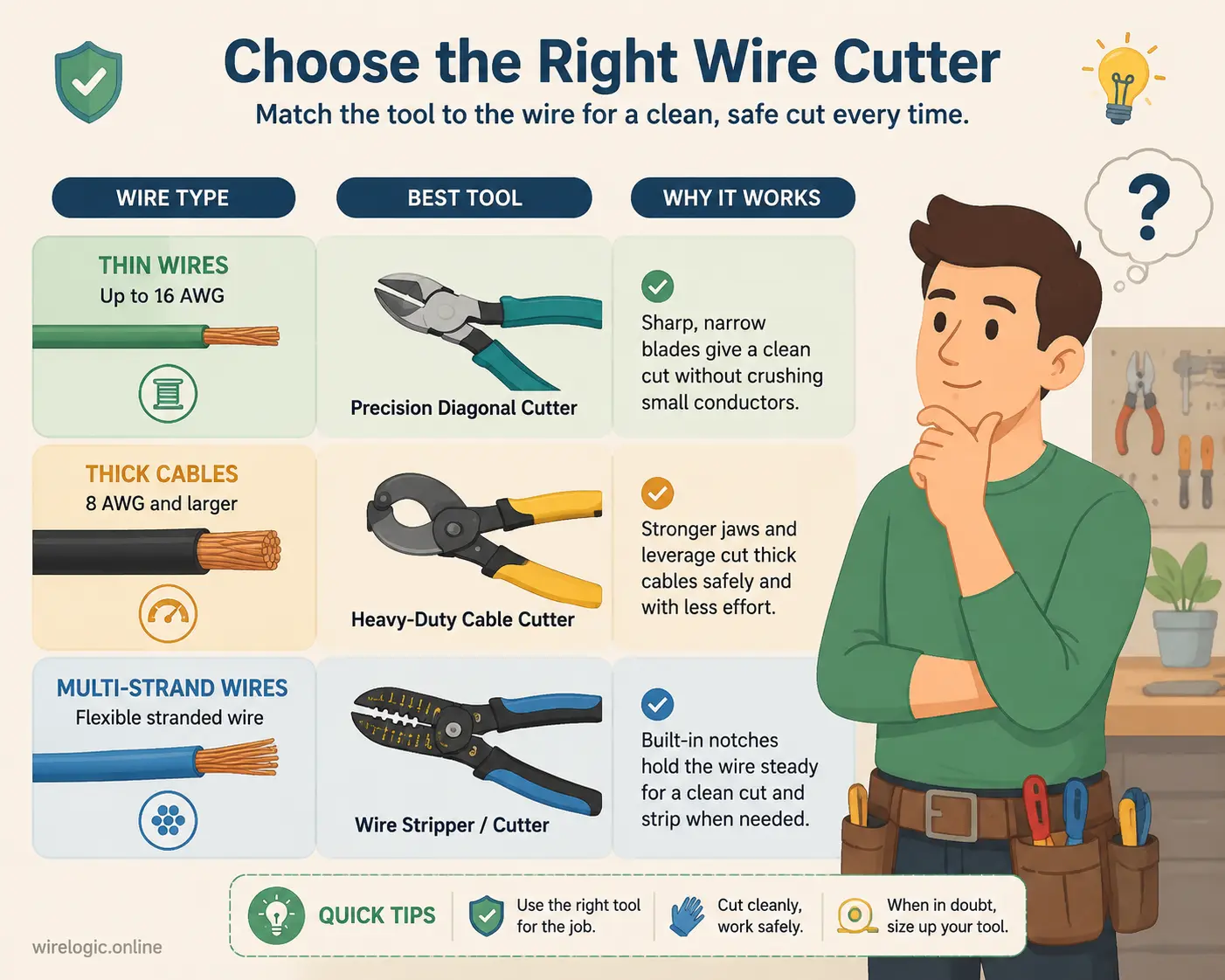
Wire gauge is one of the first things you need to consider. Thin wires, such as those used in electronics, networking, or speaker systems, require delicate handling. A heavy-duty cutter designed for thick electrical cable can crush thin wire instantly. On the other hand, trying to strip a thick household or automotive wire with a tiny electronics tool often results in uneven cuts and excessive hand strain. The tool should match the thickness and flexibility of the conductor.
Another factor is the wire type itself. Solid-core wire behaves differently from stranded wire. Solid wire contains one single conductor, making it more rigid and easier to strip cleanly. Stranded wire contains multiple thin strands twisted together, which increases flexibility but also raises the chance of strand damage during stripping. Dedicated stripper tools designed for stranded wire usually produce better results because they apply even pressure around the insulation.
Comfort matters too. People often underestimate how much hand fatigue affects precision. If the tool feels awkward, stiff, or slippery, your control decreases. Comfortable handles and smooth spring-loaded action make it easier to apply gentle, accurate pressure instead of squeezing too hard. Many professionals prefer ergonomic handles because repetitive electrical work can quickly strain the hands and wrists during long projects.
Cheap wire cutters are another common trap. Poor-quality tools may seem fine initially, but inconsistent blade alignment often causes uneven cuts. That inconsistency forces users to apply more pressure, which increases the likelihood of nicking copper strands. In online electrical communities, many experienced electricians repeatedly warn beginners that damaged strands usually come from excessive pressure and dull tools rather than lack of experience alone.
The best wire cutter is not necessarily the most expensive one. It is the one that matches your specific task, wire type, and skill level. A properly chosen tool makes wire stripping smoother, safer, and far more reliable.
Preparing Before You Strip Any Wire
Good wire stripping starts long before the blades touch the insulation. Preparation is where many accidents and mistakes are prevented. Rushing into electrical work without checking the environment, the wire condition, or the power source is like driving at night without headlights. You might get away with it for a while, but eventually something goes wrong.
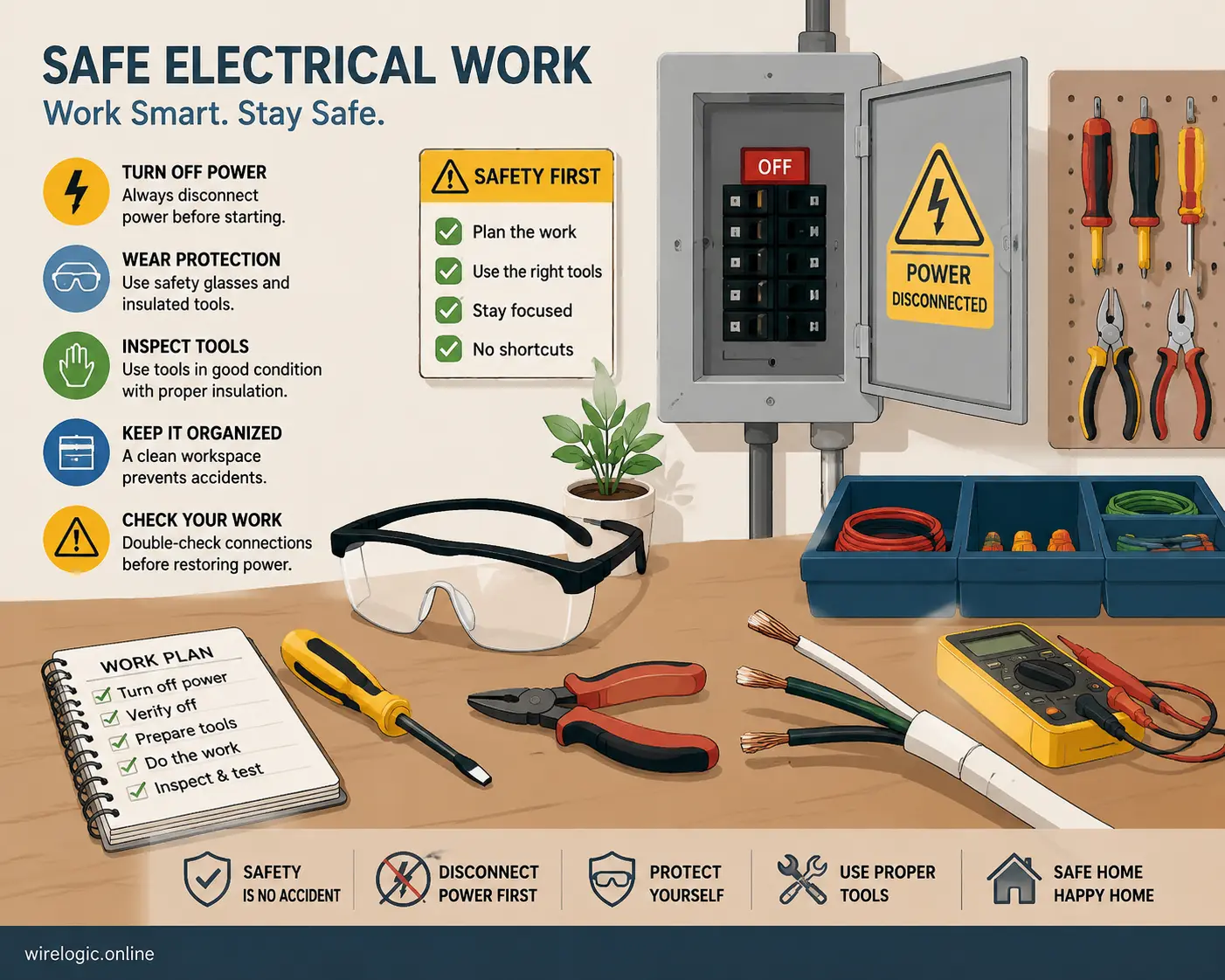
The first and most important step is turning off the power. That sounds obvious, yet countless injuries happen because someone assumes a wire is dead when it is still energized. OSHA accident reports include multiple incidents involving workers electrocuted while stripping live wires using uninsulated tools. Even experienced professionals can make dangerous mistakes when rushing or working carelessly. Always disconnect power at the breaker, verify with a voltage tester, and treat every conductor cautiously until confirmed safe.
Inspecting the wire itself is equally important. Look closely for cracks, corrosion, melted insulation, burn marks, or previous damage. A wire that already has compromised insulation may need replacement rather than restripping. Damaged conductors can hide beneath the jacket, especially if the cable has been bent sharply or exposed to moisture for long periods.
Workspace organization matters more than people think. Loose tools, poor lighting, or cramped spaces increase the chances of slipping with cutters. Electrical work requires visibility and stability. You need enough light to see the insulation clearly and enough space to control the tool comfortably. Many professionals also recommend avoiding distractions while stripping wire. A single moment of inattention can damage the conductor or lead to accidental contact with energized components.
Proper positioning helps too. Hold the wire securely but avoid bending it sharply during stripping. Excessive bending weakens copper over time, especially in stranded conductors. Think of a paperclip being bent repeatedly until it snaps. Copper wire experiences similar fatigue under stress. Supporting the wire gently while stripping helps preserve its strength and flexibility.
Preparation also includes understanding how much insulation actually needs removal. Guessing often leads to over-stripping, exposed copper, or weak terminal connections. Taking a few extra seconds to measure and inspect before stripping saves far more time than repairing mistakes later.
How Much Insulation Should Actually Be Removed
One of the most common beginner mistakes is removing too much insulation. People often assume exposing more copper creates a stronger connection, but the opposite is usually true. Excess exposed conductor increases the chance of accidental shorts, electrical arcing, and unsafe contact. The goal is precision, not excess.
Most terminals and connectors are designed for a specific strip length. Many electrical devices even include strip guides stamped directly onto the connector or packaging. These guides exist for a reason. Too little exposed wire creates weak contact inside the terminal, while too much leaves bare copper exposed outside the connection point. It is similar to tying a shoelace. Too loose and it slips apart. Too tight and it becomes messy and difficult to manage.
For standard household wiring, stripping around half an inch to three-quarters of an inch is usually common, depending on the connector type. Smaller electronics wiring may require only a few millimeters. The exact amount depends on the application, terminal style, and wire gauge. Precision matters because electrical connections rely on maximum contact pressure between the conductor and terminal.
Over-stripping creates another hidden issue: conductor fatigue. Long exposed sections bend more easily and may weaken at the edge of the insulation line. That transition point between insulated and exposed copper is often where wires break under repeated movement or vibration. Automotive wiring is especially vulnerable because constant movement and temperature changes place ongoing stress on exposed conductors.
Under-stripping causes problems too. If insulation remains inside the connector, the terminal may clamp onto plastic instead of copper. That creates poor conductivity and intermittent electrical performance. Loose connections generate heat over time, and heat is one of the leading enemies of electrical systems. Many electrical failures begin with nothing more dramatic than an improperly stripped wire hidden inside a connection point.
The cleanest electrical work often looks simple because every strip length is consistent. Professionals develop the habit of measuring visually and stripping only exactly what is needed. That consistency improves safety, reliability, and overall installation quality.
Step-by-Step Guide to Stripping Wire with Wire Cutters
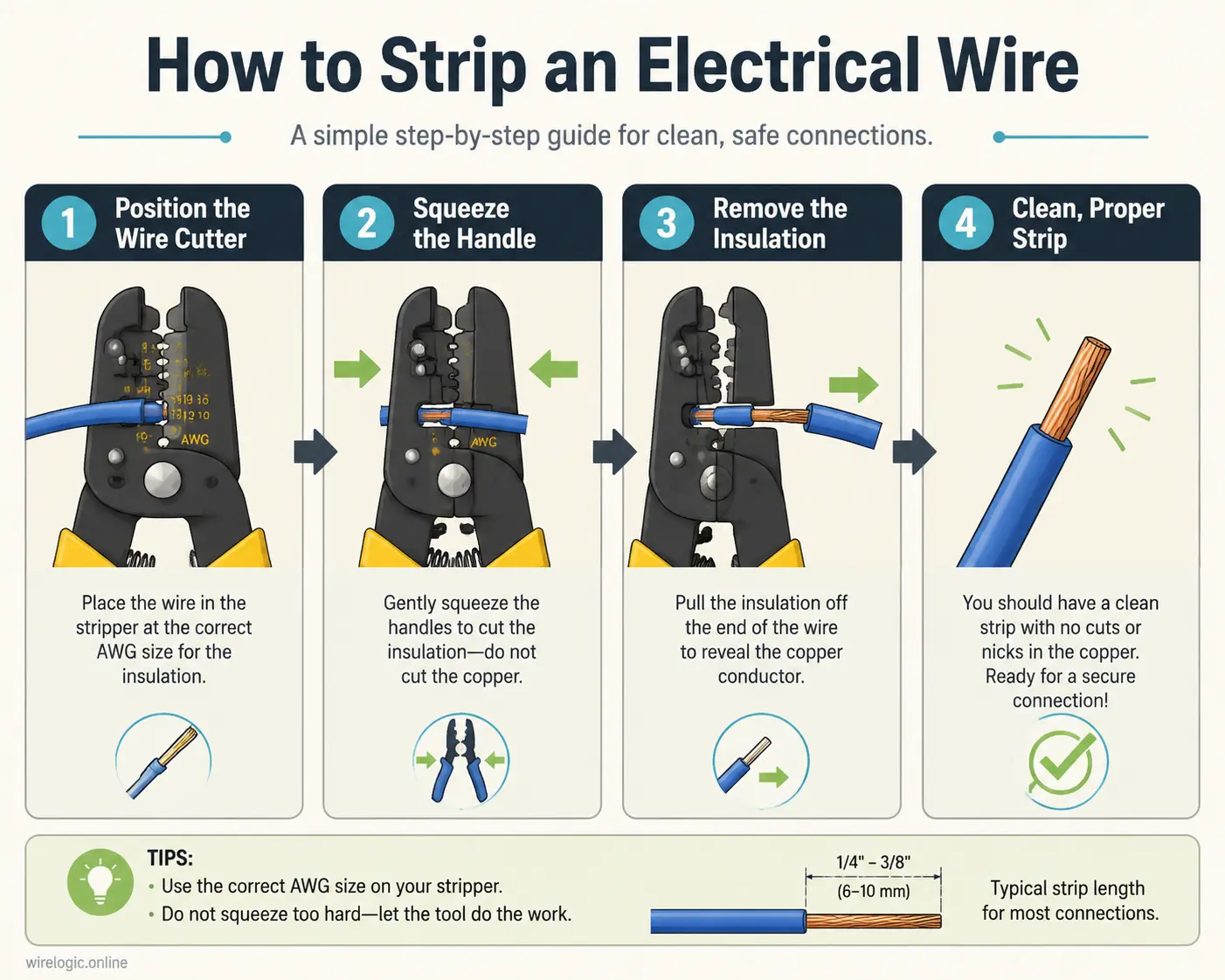
The actual stripping process becomes much easier once the preparation is complete. Good technique relies more on control than force. Beginners often squeeze too hard because they assume the insulation needs aggressive cutting. In reality, the goal is only to score the insulation enough to separate it from the conductor beneath.
Start by selecting the correct cutting notch or blade position for the wire gauge. If using standard cutters without stripping holes, position the blades gently around the insulation. Apply light pressure while rotating the tool slightly around the wire. You are trying to cut the insulation jacket, not the copper underneath. Imagine slicing the peel of an orange without cutting into the fruit itself. That level of control is exactly what clean wire stripping requires.
Once the insulation is scored, pull the insulation piece away smoothly. Avoid twisting aggressively or yanking suddenly because that can stretch or break stranded conductors. A smooth pulling motion usually removes the insulation cleanly if the cut depth is correct. If the insulation refuses to come off easily, do not increase force immediately. Recheck the cut instead. Excessive pulling often damages the conductor.
After stripping, inspect the copper carefully. The conductor should look smooth, bright, and intact. No missing strands, deep scratches, flattened sections, or cut marks should appear. Even small nicks weaken the wire over time. Many experienced electricians recommend restripping immediately if noticeable damage appears rather than hoping it will still function properly.
Stranded wire requires additional care after stripping. The strands should remain tightly grouped together instead of spreading apart wildly. Some applications require twisting the strands lightly before insertion into terminals, while others specifically advise against twisting. Always follow the connector manufacturer’s recommendations.
Consistency improves with practice. The first few attempts may feel awkward, but muscle memory develops quickly. Professional electricians strip hundreds of wires accurately because they learn to rely on controlled hand pressure instead of brute force.
Clean Stripping Techniques Without Damaging the Copper
Clean stripping is all about finesse. The biggest misconception among beginners is believing wire stripping depends on strength. It actually depends on sensitivity and precision. Skilled electricians develop a feel for the insulation thickness and blade pressure almost like musicians learning finger control on an instrument.
One of the best techniques is using gradual pressure instead of full squeezing force immediately. Start gently and increase pressure only until the insulation begins to score. Over-squeezing is the primary reason copper strands become nicked or partially cut. Damaged strands reduce current-carrying capacity and create weak points vulnerable to breakage.
Blade angle matters too. Keeping the cutter perpendicular to the wire helps distribute pressure evenly around the insulation. Angled cuts create uneven scoring, which increases the risk of cutting deeper into one side of the conductor. This becomes especially important with fine stranded wire because the tiny strands are easier to damage than solid-core conductors.
Another overlooked factor is blade sharpness. Dull cutters crush insulation rather than slicing cleanly. Crushed insulation requires extra pulling force to remove, which often stretches or damages the conductor beneath. Maintaining sharp tools dramatically improves stripping quality and reduces hand fatigue.
Patience plays a surprisingly large role. Many mistakes happen because users rush through repetitive work. A hurried hand applies inconsistent pressure and loses alignment. Clean stripping becomes much easier when you slow down slightly and focus on each conductor individually.
Electrical professionals frequently emphasize that neat workmanship reflects safe workmanship. A cleanly stripped wire usually means the installer paid attention to detail throughout the project. Sloppy stripping often signals rushed installation habits elsewhere too.
The Real Reason Behind Nicked or Broken Wire Strands
Nicked strands are not just cosmetic damage. They represent weakened structural points within the conductor. Every cut strand reduces the wire’s total conductive capacity and mechanical strength. Over time, vibration, movement, or heat expansion can cause those weakened points to fail completely.
The main culprit behind nicked wires is excessive tool pressure. Many people squeeze harder than necessary because they fear the insulation will not cut through properly. Ironically, that extra force usually slices into the copper beneath. Once a conductor gets nicked, it becomes more vulnerable to breakage during bending or terminal tightening.
Using the wrong blade size is another major issue. Oversized stripping notches fail to grip the insulation properly, while undersized notches bite directly into the conductor. Matching the tool opening to the wire gauge is critical for clean results. This is why professional wire strippers include clearly labeled gauge markings.
Poor-quality tools contribute heavily as well. Cheap cutters may have uneven blade alignment that creates deeper cuts on one side of the wire. Even experienced users struggle to achieve clean results with badly manufactured tools. Quality tools provide consistent cutting depth and smoother operation.
Online electrical discussions regularly show homeowners worried about tiny scratches or missing strands after stripping wire. Experienced electricians often explain that minor superficial marks may not immediately cause failure, but deeper nicks or broken strands should absolutely be restripped. That advice exists because small damage accumulates over time, especially in circuits carrying significant current or exposed to vibration.
The best mindset is simple: if you question whether the wire is damaged, restrip it. Copper is cheaper than risking an unreliable electrical connection hidden inside a wall or device.
Working With Thin, Thick, and Multi-Strand Wires
Different wires behave almost like different personalities. Thin wires are delicate and unforgiving. Thick wires resist cutting and require more leverage. Multi-strand conductors flex beautifully but become frustratingly easy to damage during stripping. Understanding these differences helps prevent costly mistakes.
Thin wires, such as those used in electronics or communication systems, demand precision above all else. Their conductors are small enough that even slight overpressure can sever them completely. Specialized precision strippers work best for these applications because they provide controlled cutting depth without crushing the wire.
Thick wires create the opposite challenge. Their insulation is often tougher and thicker, requiring stronger cutters and more hand force. Trying to strip thick cable with lightweight tools often leads to jagged cuts or hand strain. Some heavy-duty cables may even require rotary stripping techniques or specialized industrial tools for safe removal.
Multi-strand wire deserves special attention because it is common in automotive, marine, and flexible electrical systems. Each conductor contains many tiny strands twisted together, creating flexibility but also increasing vulnerability to strand loss. Aggressive stripping easily removes or cuts strands accidentally, reducing the wire’s strength and conductivity.
Flexible wire also tends to spread apart after stripping. Keeping the strands neatly grouped helps create secure terminal connections. Some connectors require ferrules or crimp terminals specifically designed for stranded wire because loose strands can escape and create shorts.
Environmental factors matter too. Old insulation becomes brittle over time, making it harder to strip cleanly. Heat exposure, sunlight, oil, or chemical contamination can stiffen insulation and increase cracking. In these cases, even proper technique may still require extra caution.
Experienced electricians adapt their stripping approach constantly depending on the conductor type, insulation material, and application environment. There is no universal technique that works perfectly for every wire.
Safety Habits That Matter During Electrical Work
Electrical safety is not just about avoiding shocks. It is about developing habits that reduce risk consistently over time. The safest electricians are not necessarily the boldest or fastest. They are usually the most methodical.
Always verify power is disconnected before stripping or cutting wire. Never trust labels alone. Use a tester every time. OSHA reports continue to document fatal accidents involving energized wires that workers mistakenly believed were safe. That extra verification step takes seconds but can save lives.
Protective equipment matters too. Safety glasses protect against clipped wire pieces and accidental sparks. Insulated tools reduce shock risk during troubleshooting work. Gloves may help in some situations, although they can reduce dexterity for delicate stripping tasks.
Workspace cleanliness plays a larger role than people expect. Loose wire scraps, metal shavings, and clutter increase the chance of accidental shorts or trips. Organized electrical workspaces improve both safety and efficiency.
Knowing when to restrip a wire is another critical habit. If the conductor appears nicked, corroded, bent sharply, or partially broken, cut it back and start over. Many people try to salvage damaged wire to save time, but electrical reliability depends heavily on connection quality. A fresh strip is almost always safer than risking a compromised conductor.
Safety culture matters because electrical hazards are often invisible. You cannot always see resistance buildup, weak connections, or hidden conductor damage immediately. Problems may develop slowly over months or years before suddenly causing failure. Careful stripping, clean connections, and disciplined habits dramatically reduce those risks.
Conclusion
Learning how to strip a wire with wire cutters is one of those skills that looks deceptively simple until you understand how much precision it actually requires. Clean stripping protects the copper conductor, creates stronger electrical connections, improves reliability, and reduces safety risks. The difference between a professional-quality strip and a sloppy one often comes down to tool selection, patience, and proper technique rather than experience alone.
Choosing the correct cutter for the wire type makes the entire process easier and safer. Matching the stripping notch to the wire gauge, applying controlled pressure, and inspecting the conductor afterward all help prevent nicked strands and weak connections. Whether working with thin electronics wire, thick cable, or flexible stranded conductors, adapting your approach to the material is essential.
Electrical safety should never become an afterthought. Real-world injury statistics continue to show that improper handling of energized conductors and unsafe tool use remain serious risks in electrical work. Developing disciplined habits now creates safer, cleaner, and more reliable electrical projects in the future.
The best electricians are not the ones who rush. They are the ones who understand that even a tiny wire deserves careful attention.
FAQs
1. Can I strip wires using regular wire cutters?
Yes, but it requires much more precision and control than using dedicated wire strippers. Standard cutters can easily nick or cut copper strands if too much pressure is applied.
2. How do I know if I damaged the copper conductor?
Inspect the stripped wire carefully. If you see missing strands, deep scratches, flattened sections, or cuts in the copper, the wire should usually be cut back and restripped.
3. Why is over-stripping dangerous?
Over-stripping exposes excess copper outside the terminal connection. That exposed conductor increases the risk of shorts, accidental contact, and electrical arcing.
4. What type of wire is hardest to strip?
Thin multi-strand wire is often the most challenging because the tiny strands are easy to nick or break during stripping.
5. Should damaged wire always be restripped?
In most situations, yes. Restripping damaged wire is safer and more reliable than risking a compromised electrical connection that may fail later.

Devin Sorrell is a 34-year-old American blogger and editorial writer from Asheville, North Carolina. His background includes writing in consumer education, home improvement, and practical lifestyle topics with a strong emphasis on fact-checking and readability. Through his work at wirelogic.online, he aims to make complex subjects easy to understand while maintaining high editorial standards and trustworthy research practices.