
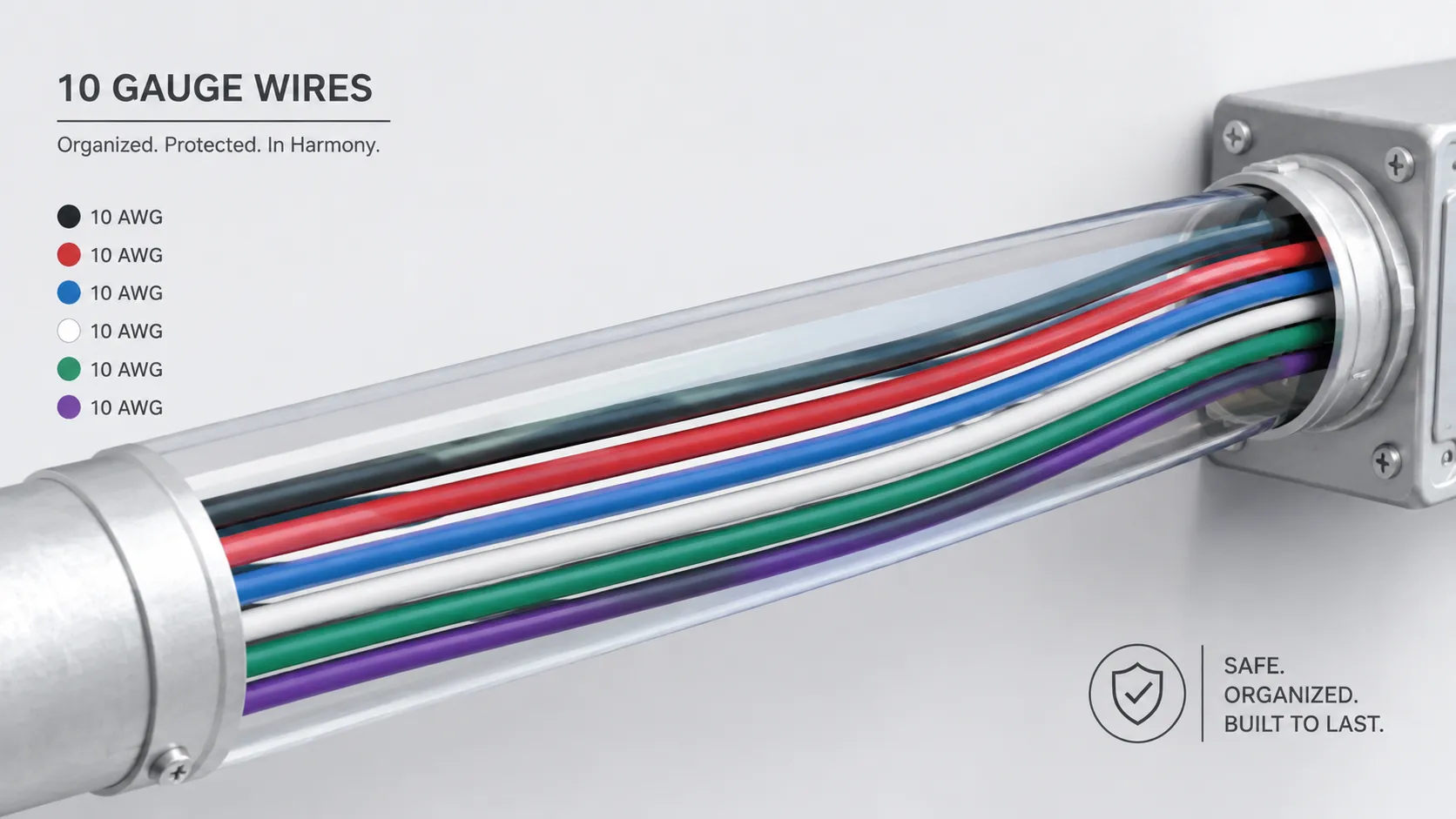
If you have ever worked on an electrical installation, you already know one thing: conduit fill calculations can turn into a headache surprisingly fast. At first glance, a 3/4-inch EMT conduit looks roomy enough to handle a pile of conductors without any issue. But once you start pulling actual wires through bends, connectors, and offsets, reality hits hard. Suddenly, what seemed spacious feels as cramped as trying to shove luggage into an overhead airplane compartment that clearly wasn’t designed for your optimism.
According to current NEC conduit fill tables, a 3/4-inch EMT conduit can typically hold up to 10 conductors of 10 AWG THHN wire under the standard 40% conduit fill rule. That number sounds straightforward, but there’s a catch. The theoretical maximum allowed by code is not always the smartest or safest number to install in the real world. Electricians often choose fewer wires to improve pulling ease, reduce heat buildup, and leave room for future expansion.
The topic matters far more than most DIYers realize. Conduit fill rules are not random regulations invented to make electrical work complicated. They exist because overcrowded conduit creates heat problems, makes future repairs miserable, and increases the chance of insulation damage during installation. A poorly planned conduit run can turn a simple upgrade into an expensive demolition project later. That’s why understanding conduit fill capacity is one of the most important skills in electrical work, whether you are wiring a garage, a workshop, or a large commercial building.
Understanding EMT Conduit and Wire Fill Basics
What EMT Conduit Is Used for in Electrical Systems
EMT, or Electrical Metallic Tubing, is one of the most common raceway systems used in residential and commercial electrical work. Think of it as armor for electrical conductors. Instead of leaving wires exposed inside walls or ceilings, EMT provides a protective metal pathway that shields conductors from physical damage, moisture exposure, and accidental contact. It also creates a cleaner and more professional installation compared to loose cable runs.
EMT is especially popular because it strikes a balance between durability and flexibility. Rigid conduit offers extreme protection but can be difficult and expensive to install. Flexible conduit is easier to route but may not provide the same structural support. EMT sits comfortably in the middle, giving electricians a raceway that bends relatively easily while still maintaining strong protection. That balance explains why EMT appears everywhere from garages and warehouses to retail stores and apartment complexes.
Wire fill becomes critical because EMT has limited internal space. The inside diameter may look large from the outside, but fittings, couplings, insulation thickness, and bends reduce usable space quickly. The National Electrical Code addresses this through conduit fill percentages that limit how much of the conduit’s interior can actually contain conductors. Once you exceed those limits, pulling wires becomes difficult and dangerous. It is a little like trying to force too many people into an elevator. Technically they may fit, but nobody is going to enjoy the ride, and eventually something fails.
Why Conduit Fill Rules Exist
Many people assume conduit fill rules are mainly about physical space, but heat management is equally important. Electrical conductors naturally generate heat whenever current flows through them. When too many wires occupy a confined metal pathway, heat cannot dissipate effectively. The conductors begin warming each other like parked cars baking in the summer sun. Over time, excessive heat can damage insulation, reduce conductor lifespan, and increase fire risk.
The NEC’s standard fill limits are designed to prevent those problems while also ensuring conductors can still be installed and removed safely. Current code allows a maximum fill of 40% for three or more conductors, 31% for two conductors, and 53% for a single conductor. These percentages are carefully engineered around pull tension, heat dissipation, and conductor protection.
Another overlooked reason for conduit fill regulations is future maintenance. Electrical systems rarely remain untouched forever. Circuits get upgraded, additional loads get added, and damaged conductors sometimes need replacement. If the original installer packed the conduit to its maximum limit, future wire pulling can become nearly impossible without cutting open walls or replacing the conduit entirely. Experienced electricians understand this reality well, which is why many intentionally oversize conduit even when code technically allows a tighter fill ratio.
Maximum Number of 10 Gauge Wires in 3/4 EMT
NEC Conduit Fill Standards Explained
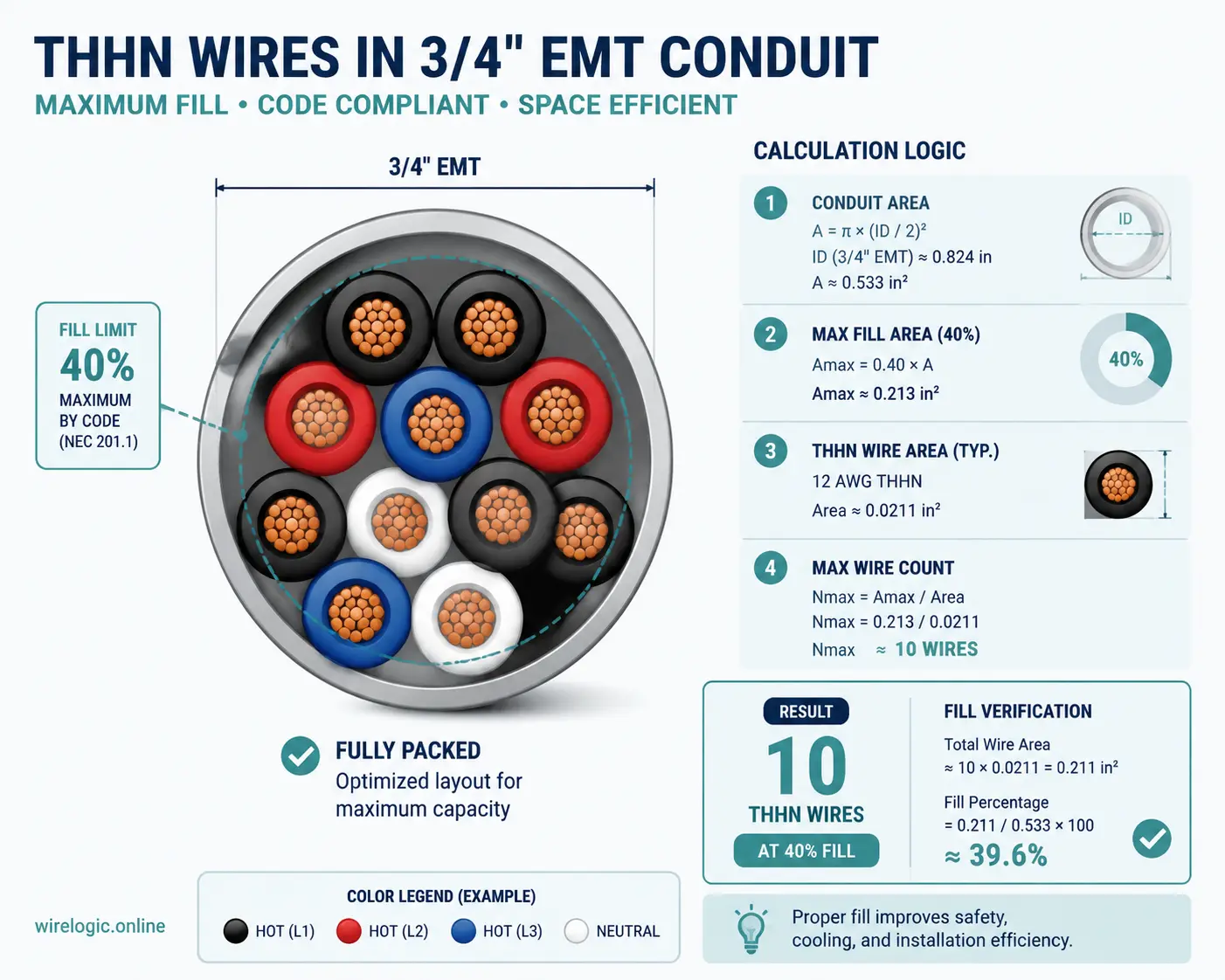
Under modern NEC conduit fill tables, 3/4-inch EMT conduit can accommodate 10 conductors of 10 AWG THHN wire at the standard 40% fill allowance. This calculation is based on conductor cross-sectional area combined with the internal area of the conduit itself. For 3/4-inch EMT, the usable 40% fill area is approximately 0.213 square inches. Each 10 AWG THHN conductor occupies roughly 0.0211 square inches, which mathematically permits ten conductors.
Here is a simplified reference table based on NEC conduit fill data:
| EMT Size | Maximum 10 AWG THHN Conductors |
|---|---|
| 1/2 inch EMT | 5 |
| 3/4 inch EMT | 10 |
| 1 inch EMT | 16 |
| 1-1/4 inch EMT | 28 |
The numbers seem simple until you realize conduit fill and ampacity derating are separate issues. A conduit may physically fit ten conductors, but if too many are current-carrying conductors, ampacity adjustments may require larger wire sizes or reduced circuit loads. That distinction confuses many beginners because they assume fill capacity automatically equals safe electrical capacity. In reality, the NEC treats them as two different calculations.
THHN Wire Capacity Inside 3/4 EMT
The reason THHN wire appears so often in conduit fill discussions is because it is one of the most common conductor types used in EMT installations. THHN insulation is relatively thin compared to many other insulation types, allowing more conductors to fit within a conduit. Electricians appreciate this because thinner insulation means easier pulls and more efficient conduit usage.
<math xmlns=”0.2130.0211≈10frac{0.213}{0.0211}approx 10
That simple calculation represents the basic logic behind the NEC fill tables for 10 AWG THHN conductors in 3/4-inch EMT. But practical installation conditions matter just as much as the math itself. A perfectly straight conduit run with minimal bends may allow all ten conductors to pull smoothly. Add multiple 90-degree bends, offsets, or long pull distances, and suddenly those same ten wires feel impossible to install.
Professional electricians often avoid maxing out conduit unless absolutely necessary. Even though the code says ten conductors fit, many installers stop at seven or eight for easier pulling and future flexibility. It is similar to loading a pickup truck. The manufacturer may say it can haul a certain weight, but operating at maximum capacity every day increases wear, stress, and frustration.
Why Real-World Installations Often Use Fewer Wires
Electrical code represents the minimum acceptable standard, not necessarily the ideal installation. That distinction matters enormously in conduit work. A conduit packed right to the legal limit may technically pass inspection while still being unpleasant to work with and difficult to maintain later.
One major reason electricians reduce conductor count is pull tension. Every additional wire increases friction inside the conduit. Long runs with multiple bends multiply that resistance quickly. Pulling ten 10 AWG wires through a straight 15-foot EMT run may feel manageable. Pulling the same conductors through a 120-foot run with several bends can feel like dragging an anchor through a garden hose.
Future expansion also plays a huge role. Smart electricians think years ahead. Leaving spare conduit capacity allows new circuits to be added later without replacing the entire raceway. Commercial facilities especially benefit from oversized conduit because equipment needs often evolve over time. Nobody wants to shut down a business simply because a conduit installed years earlier was packed too tightly for upgrades.
Why Conduit Fill Capacity Matters in Electrical Work
Safety Risks of Overfilled Conduit
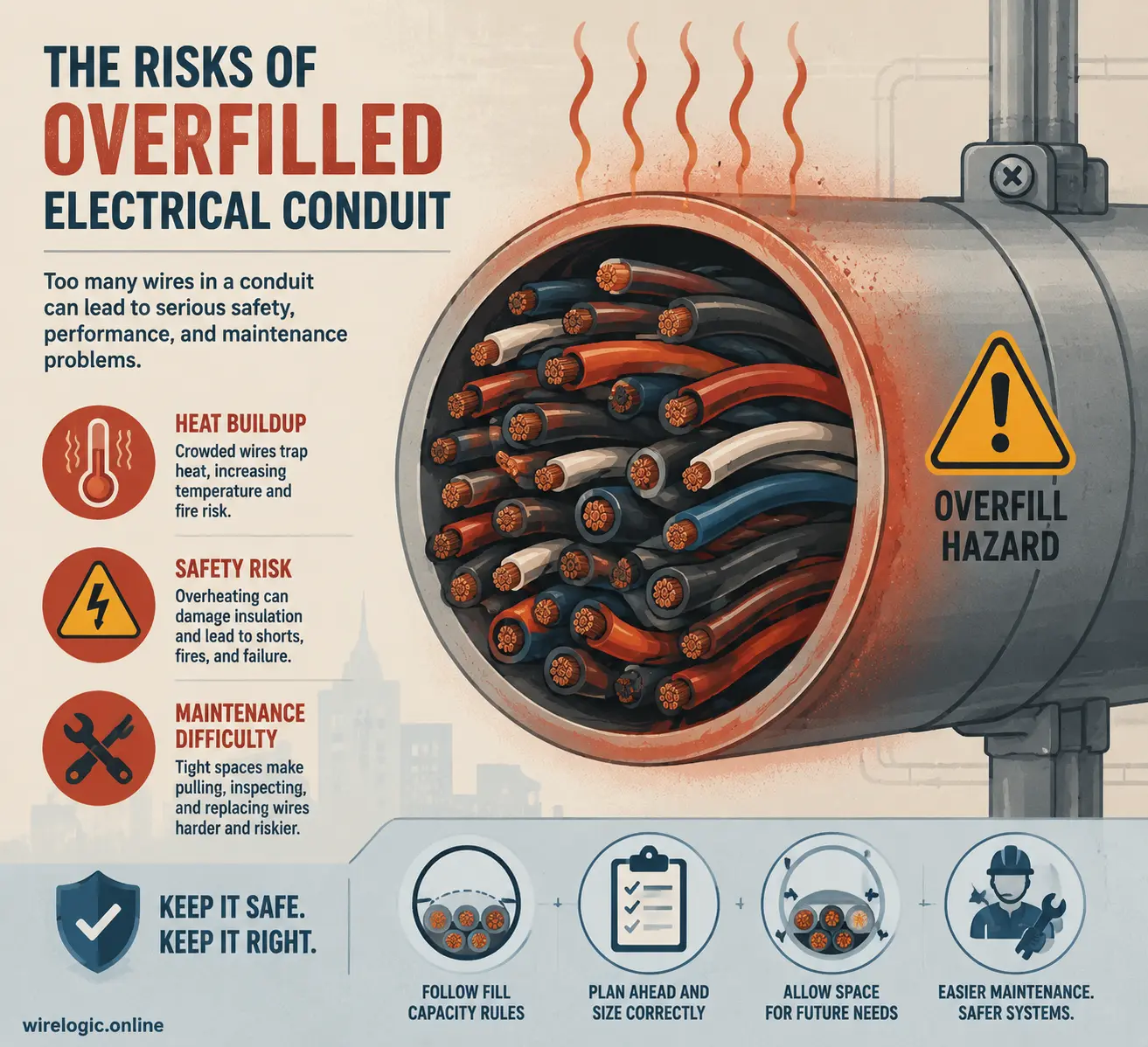
Overfilled conduit creates several hidden dangers that are easy to underestimate. The first problem is insulation damage during installation. When wires are forced through cramped conduit, friction increases dramatically. Insulation can scrape, stretch, or tear against fittings and bends. Sometimes the damage is invisible from the outside, yet still severe enough to weaken insulation integrity over time.
Heat buildup is another major concern. Conductors generate heat naturally during operation, and crowded conduit traps that heat like a blanket wrapped around a running engine. Excessive temperatures accelerate insulation breakdown, reduce conductor lifespan, and may even create fire hazards under heavy electrical loads. The NEC fill limits exist specifically to minimize these risks.
There is also the issue of troubleshooting. Electrical systems eventually require repairs, upgrades, or circuit tracing. An overcrowded conduit transforms a routine maintenance task into a nightmare. Pulling a damaged conductor from an overfilled raceway can require excessive force, increasing the chance of damaging neighboring wires. In severe cases, electricians must abandon the original conduit entirely and install a new raceway.
Maintenance and Future Expansion Concerns
One of the smartest habits in electrical design is planning for future needs instead of only current requirements. Many older buildings suffer from undersized conduit because installers focused strictly on immediate costs rather than long-term usability. Years later, adding circuits becomes difficult or impossible without expensive demolition work.
Leaving extra conduit space acts like building future flexibility into the electrical system. Additional conductors can be pulled later without major reconstruction. Maintenance becomes simpler because conductors move more freely inside the raceway. Pulling replacement wires causes less friction and lower risk of insulation damage.
This forward-thinking approach is especially important in commercial environments where technology changes rapidly. Offices add equipment, workshops expand machinery, and data systems evolve constantly. An oversized conduit today can prevent major renovation expenses tomorrow. Experienced electricians understand that labor costs associated with replacing conduit usually far exceed the small upfront cost difference between conduit sizes.
Factors That Determine How Many Wires Fit Safely
Conductor Diameter and Insulation Thickness
Not all 10 AWG wires occupy the same amount of space. The conductor itself remains consistent, but insulation thickness changes dramatically depending on wire type. THHN insulation is relatively compact, while XHHW insulation is thicker and consumes more conduit space. That difference explains why NEC tables vary according to conductor insulation type.
Even small differences in insulation thickness become significant when multiple conductors share the same raceway. Imagine trying to fit winter coats into a suitcase instead of lightweight shirts. The contents may technically be similar in purpose, but bulk changes everything. Electrical conductors behave the same way inside conduit.
This is why electricians must verify exact conductor types before performing conduit fill calculations. Assuming all 10 AWG wires occupy identical space can lead to code violations and installation headaches. NEC Chapter 9 tables exist specifically to provide accurate dimensions for different conductor types and insulation ratings.
Number of Bends and Pull Distance
Conduit bends dramatically affect wire installation difficulty. Every 90-degree bend increases pulling friction because conductors press harder against the conduit walls. Long conduit runs magnify this problem further. A straight conduit acts like a smooth hallway, while multiple bends create obstacle courses that fight every inch of wire movement.
The NEC limits total bend angles between pull points because excessive bends increase conductor damage risk during installation. Even within legal limits, experienced electricians know fewer bends always make installations easier and safer. Large conductors especially become difficult to manage around sharp turns.
Pull distance also matters because conductor weight and friction accumulate over longer runs. A short conduit segment may tolerate near-maximum fill levels without issue. Long commercial runs often require lower fill percentages, pull boxes, or oversized conduit to reduce installation stress. Wire-pulling lubricant helps, but it cannot magically eliminate friction from overcrowded conduit.
Ambient Temperature and Heat Dissipation
Environmental temperature significantly affects conductor performance. Conduit installed in hot attics, rooftops, or industrial spaces experiences higher ambient temperatures before electrical current even begins generating additional heat. Crowded conductors worsen the problem by trapping heat within the raceway.
Electrical codes account for these conditions through ampacity adjustment factors and conductor temperature ratings. Still, practical judgment matters enormously. Conductors operating in hot environments benefit from additional conduit space because extra airflow improves heat dissipation.
Think of conduit like a crowded subway train during summer. The more people packed inside, the harder it becomes to stay cool. Electrical conductors experience similar conditions when packed tightly inside hot conduit systems.
Insulation Type and Its Effect on Available Space
THHN vs THWN vs XHHW Wire Types
Different insulation types affect both conduit fill calculations and installation performance. THHN remains one of the most popular conductor types because it combines heat resistance, durability, and relatively compact insulation dimensions. Its thinner insulation allows more conductors to fit within a conduit compared to bulkier alternatives.
THWN conductors provide enhanced moisture resistance, making them useful in wet locations. Modern conductors are often dual-rated as THHN/THWN, giving electricians flexibility for various installation environments. XHHW insulation, meanwhile, is thicker and more rugged, offering excellent moisture and heat resistance at the cost of increased conductor diameter.
The insulation choice affects more than conduit capacity alone. Pulling characteristics, flexibility, temperature ratings, and environmental suitability all vary between conductor types. That is why professional electricians select conductors based not only on ampacity but also installation conditions and conduit limitations.
Why THHN Is Common in EMT Installations
THHN wire dominates EMT installations because it balances flexibility, durability, and space efficiency exceptionally well. Its nylon outer jacket reduces friction during pulling, which becomes valuable when navigating bends and long conduit runs. Electricians appreciate any feature that makes wire pulls easier because difficult pulls increase labor time and installation risk.
Another reason THHN remains popular is its high temperature rating. Modern electrical systems often involve multiple conductors sharing conduit, creating significant heat buildup. THHN’s temperature tolerance helps maintain safe performance under demanding conditions.
Cost also contributes to THHN’s popularity. It is widely available, code-compliant for most common installations, and economical compared to some specialized conductor types. For many residential and commercial applications, THHN provides the ideal combination of performance and affordability.
Heat Buildup Problems Caused by Overfilled Conduit
Ampacity Derating and Current-Carrying Conductors
One of the most misunderstood topics in conduit design is ampacity derating. Many people assume conduit fill tables alone determine safe conductor counts, but current-carrying conductors introduce another layer of calculation. As conductor quantity increases, heat buildup intensifies, reducing each conductor’s safe ampacity.
The NEC requires ampacity adjustment factors when more than three current-carrying conductors occupy the same raceway. That means ten 10 AWG conductors may physically fit inside 3/4-inch EMT, yet still require derating adjustments depending on circuit configuration.
This distinction explains why conduit design sometimes feels confusing. Physical space and thermal performance are related but separate calculations. A conduit may pass fill requirements while still violating ampacity limits due to excessive heat concentration. Professional electricians must evaluate both simultaneously.
How Heat Damages Wire Insulation Over Time
Electrical insulation behaves much like rubber tires on a car. Under normal conditions it lasts for years, but excessive heat accelerates aging dramatically. Overheated insulation becomes brittle, cracks more easily, and eventually loses dielectric strength. Once insulation integrity weakens, short circuits and ground faults become far more likely.
Overfilled conduit increases these risks because trapped heat cannot dissipate effectively. Conductors essentially bake each other inside the raceway. The problem becomes even worse in warm environments like attics or rooftop conduit exposed to direct sunlight.
Long-term reliability depends heavily on thermal management. A properly sized conduit system allows conductors to operate cooler, extending insulation lifespan and reducing maintenance issues. Saving a few dollars by undersizing conduit often creates expensive problems years later.
Electrical Code Rules That Apply to EMT Conduit Fill
NEC 40 Percent Fill Rule
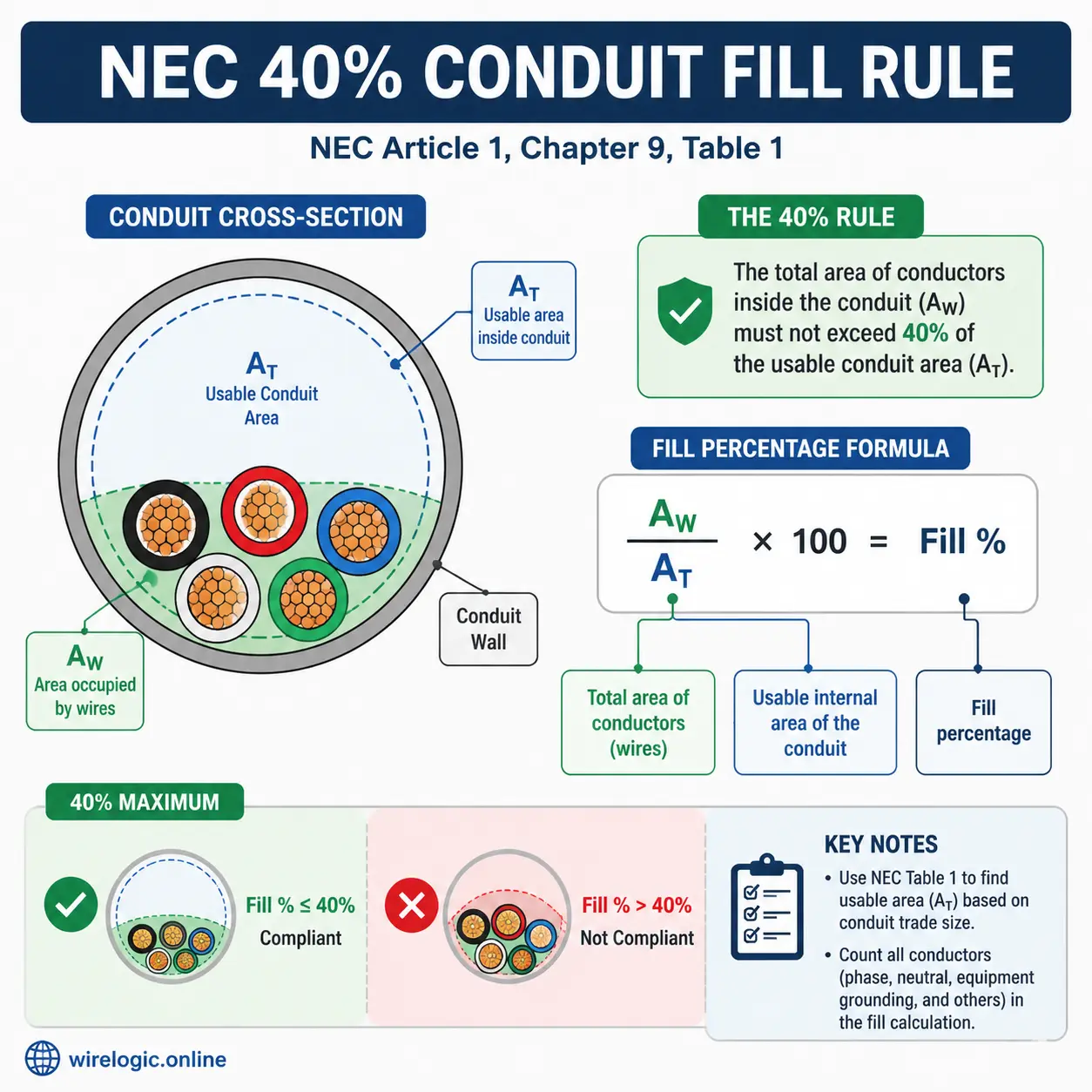
The NEC’s famous 40% fill rule applies whenever three or more conductors share a conduit. This limit balances conductor protection, pullability, and heat dissipation. Exceeding the limit increases friction and thermal stress while making future maintenance difficult.
<math xmlns=”Fill Percentage=Total Wire AreaConduit Area×100text{Fill Percentage}=frac{text{Total Wire Area}}{text{Conduit Area}}times100
Electricians use that formula constantly when designing conduit systems. The calculation seems straightforward, but real-world applications often involve mixed conductor sizes, different insulation types, grounding conductors, and varying conduit materials.
Short conduit nipples sometimes qualify for higher fill allowances under specific NEC exceptions, but standard conduit runs generally follow the 40% rule strictly. Attempting to exceed those limits usually creates installation problems long before inspection issues appear.
Important NEC Tables Electricians Use
Electricians rely heavily on several NEC tables during conduit design. Chapter 9 Table 1 establishes maximum fill percentages. Table 4 provides conduit internal dimensions and allowable fill areas. Table 5 lists conductor dimensions for different insulation types. Annex C simplifies calculations further by listing maximum conductor counts directly for common conduit and wire combinations.
These tables eliminate guesswork and standardize installations across the industry. Without them, conduit sizing would become inconsistent and potentially dangerous. Experienced electricians memorize common combinations, but even professionals regularly reference NEC tables for unusual conductor types or complex installations.
Common Mistakes That Make Future Wire Pulling Difficult
Overusing 90-Degree Bends
Too many conduit bends create enormous pulling resistance. Conductors drag against conduit walls, increasing friction and installation stress. Multiple tight bends combined with high conductor counts often transform routine pulls into exhausting battles.
Smart conduit design minimizes unnecessary bends whenever possible. Pull boxes, larger radius bends, and thoughtful routing dramatically improve installation efficiency. Electricians who ignore these principles usually regret it later during wire pulling.
Choosing the Smallest Possible Conduit
Trying to save money with undersized conduit often backfires. The material cost difference between 3/4-inch and 1-inch EMT is usually small compared to labor costs associated with difficult pulls and future upgrades.
Larger conduit simplifies installations, improves heat dissipation, and leaves room for future conductors. Experienced electricians frequently oversize conduit intentionally because they understand how valuable flexibility becomes over time.
Ignoring Pull String and Lubrication Practices
Even properly sized conduit installations benefit from good pulling practices. Pull strings save enormous time during future upgrades, while wire-pulling lubricant reduces friction and protects insulation during difficult pulls.
Skipping these simple steps often turns manageable installations into frustrating experiences. Professional electricians know small preparation details can dramatically improve both installation quality and long-term maintainability.
Best Practices for Safe and Efficient EMT Conduit Installation
The best conduit installations combine code compliance with practical foresight. That means avoiding the temptation to cram every possible conductor into the smallest allowable raceway. While NEC tables permit ten 10 AWG THHN conductors inside 3/4-inch EMT, many electricians prefer fewer conductors for easier pulling, reduced heat buildup, and future flexibility.
Using larger conduit sizes whenever practical pays dividends later. It simplifies installations, reduces pull tension, improves airflow, and makes future modifications easier. Good conduit design also minimizes sharp bends and excessive pull distances while using proper fittings and support methods.
Electrical work rewards planning. A well-designed conduit system may cost slightly more upfront, but it saves enormous labor and maintenance headaches over the lifespan of the installation. That long-term perspective separates professional-quality electrical work from barely acceptable installations.
Conclusion
A 3/4-inch EMT conduit can typically hold up to 10 conductors of 10 AWG THHN wire under standard NEC conduit fill rules. But successful electrical installations involve far more than simply reaching the maximum legal conductor count. Conduit fill calculations exist to manage heat, protect insulation, simplify maintenance, and ensure long-term system reliability.
Factors like insulation type, conduit bends, pull distance, ampacity derating, and environmental temperature all influence safe conductor capacity. Overfilled conduit increases friction, traps heat, and creates future maintenance nightmares that can cost far more than installing larger conduit initially.
The smartest electricians treat NEC limits as minimum safety standards rather than design goals. Leaving extra conduit space improves installation quality, reduces labor difficulty, and creates flexibility for future upgrades. In electrical work, a little extra room inside the conduit often saves a tremendous amount of trouble later.
FAQs
1. How many 10 AWG THHN wires fit in 3/4 EMT conduit?
A standard 3/4-inch EMT conduit can hold 10 conductors of 10 AWG THHN wire according to NEC conduit fill tables.
2. Does conduit fill include the ground wire?
Yes. Equipment grounding conductors count toward physical conduit fill calculations even though they may not count as current-carrying conductors for ampacity derating purposes.
3. Why do electricians often use larger conduit than required?
Larger conduit makes wire pulling easier, improves heat dissipation, and allows room for future circuits or conductor replacement.
4. What happens if conduit is overfilled?
Overfilled conduit increases heat buildup, installation friction, insulation damage risk, and maintenance difficulty. It may also violate NEC code requirements.
5. Is THHN better than XHHW for EMT conduit?
THHN is commonly preferred for EMT because its thinner insulation allows more conductors to fit while reducing pulling friction during installation.