
Working with a 220 volt outlet can feel intimidating at first. The wires are thicker, the breakers are larger, and the risks are significantly higher than swapping a normal wall receptacle. Still, understanding how these circuits work gives homeowners and DIY enthusiasts a clearer picture of how modern electrical systems power heavy-duty appliances. Electric dryers, ovens, welders, HVAC systems, and EV chargers all depend on reliable 220V circuits to operate safely and efficiently. Without the correct wiring setup, those appliances either will not work properly or could become serious fire hazards.
A standard 120V outlet in a home uses one hot wire and one neutral wire. A 220V outlet, sometimes labeled 240V in modern systems, uses two hot wires that combine to provide higher voltage. That extra voltage is what allows large appliances to operate without overloading standard household circuits. According to recent electrical safety discussions and updated NEC guidance, modern installations increasingly require grounded four-prong receptacles instead of the older three-prong designs used decades ago.
The process of wiring a 220 volt outlet is not simply about matching colors and tightening screws. It requires understanding breaker sizing, wire gauge compatibility, grounding methods, outlet configurations, and voltage testing procedures. Think of it like building a highway for electricity. If the road is too small for the amount of traffic flowing through it, congestion and heat build up quickly. In electrical systems, that “traffic jam” becomes melted insulation, tripped breakers, or dangerous electrical fires.
This guide walks through every major step involved in wiring a 220 volt outlet safely. From identifying the proper circuit requirements to understanding hot, neutral, and ground connections, you will learn the principles behind the installation rather than blindly copying a diagram. That knowledge matters because every appliance has slightly different requirements, and using the wrong outlet type or wire size can damage expensive equipment instantly.
Understanding How 220 Volt Power Works
What Makes a 220V Circuit Different From 120V
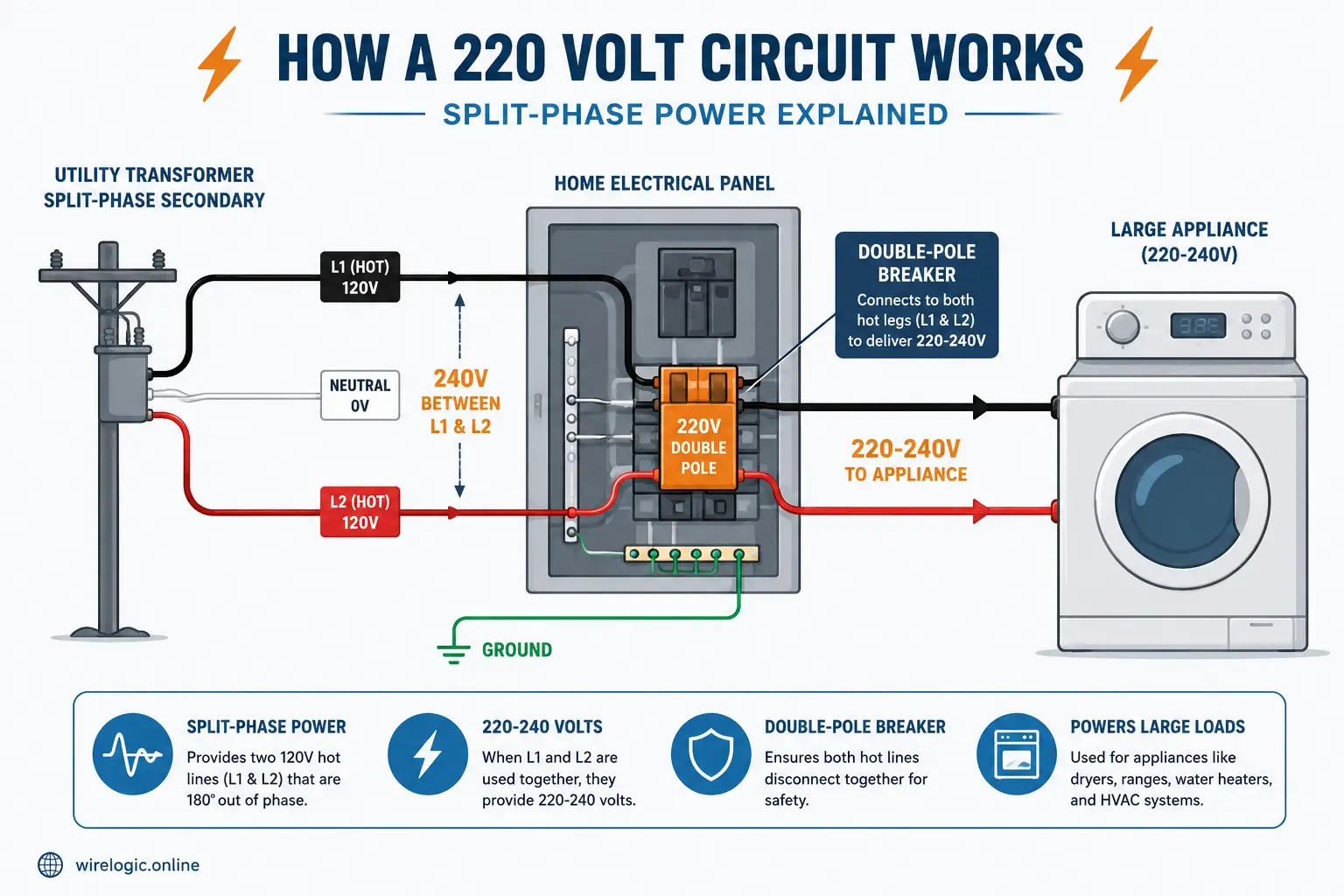
A normal household outlet supplies approximately 120 volts using one hot conductor and one neutral conductor. A 220 volt outlet works differently because it pulls power from two separate hot bus bars inside the electrical panel. Each hot wire carries roughly 120 volts, but together they create approximately 240 volts across the circuit. That higher voltage allows large appliances to draw power more efficiently without demanding excessive amperage.
You can imagine it like moving water through a pipe. A higher voltage system pushes electrical energy more effectively, reducing the current needed for large equipment. That is why appliances such as electric ranges, central air conditioners, and EV chargers use 220V circuits instead of ordinary outlets. A dryer pulling 5000 watts on a 120V system would require extremely high amperage, which would overload standard wiring quickly. On a 240V circuit, the current demand becomes far more manageable.
Modern residential electrical systems in North America rely on what electricians call split-phase power. Two hot legs enter the service panel from the utility transformer. Each leg measures approximately 120 volts to neutral, but together they provide 240 volts between the two hot conductors. This arrangement gives homes flexibility because small devices can use 120V while heavy equipment uses 240V.
Recent wiring guidance published in 2025 and 2026 emphasizes the importance of matching outlet configurations precisely to appliance requirements. Many people mistakenly assume all 220V outlets are identical, but outlet shapes, amperage ratings, and neutral requirements vary significantly depending on the appliance. A welder outlet is not wired the same way as an electric range receptacle, even if both operate on 240 volts.
Why Large Appliances Need 220 Volt Power
Heavy-duty appliances generate heat, mechanical movement, or high electrical loads that standard outlets cannot safely support. Electric dryers, for example, must spin a motor while simultaneously heating large coils to dry clothing quickly. That combination demands much more power than a normal kitchen appliance. Using 220 volts allows the appliance to operate efficiently while reducing excessive current flow through the wiring.
Modern EV chargers represent another growing reason homeowners install 220 volt outlets. Level 2 EV charging stations dramatically reduce charging times compared to ordinary household outlets. Discussions among electricians and EV owners consistently point out that dedicated 240V circuits deliver faster, safer charging performance. In many homes, installing a properly sized 240V receptacle is the first major upgrade needed for electric vehicle ownership.
There is also a practical engineering reason for using higher voltage circuits. Lower amperage means less heat buildup in conductors over long runs. Excess heat is the enemy of electrical systems because it gradually damages insulation and increases fire risk. That is why code requirements carefully match wire gauge to breaker size. Every component in the circuit must handle the electrical load safely under continuous operation.
The higher voltage also improves motor efficiency in appliances like air conditioners and compressors. Motors running on 240V often start more smoothly and place less strain on the electrical system compared to equivalent 120V devices. In simple terms, 220 volt power gives demanding equipment the “muscle” it needs without overburdening the home’s wiring infrastructure.
Identifying the Correct Circuit Requirements for 220 Volt Power
Determining Appliance Voltage and Amperage
Before installing any 220 volt outlet, the first step is checking the appliance nameplate. This small label provides critical information including voltage requirements, amperage draw, wattage, and recommended circuit size. Ignoring these specifications is like trying to fuel a diesel engine with gasoline. The equipment may fail immediately or suffer long-term damage.
Most residential 220V appliances require dedicated circuits. Dryers commonly use 30-amp circuits, electric ranges often require 40 or 50 amps, and welders may vary depending on power demands. HVAC equipment can range even higher depending on compressor size. Recent NEC discussions and wiring guides continue stressing the importance of dedicated circuits for heavy appliances because shared loads increase overheating risks.
Continuous loads also affect breaker sizing decisions. Electrical systems are generally designed so continuous operation does not exceed 80% of breaker capacity. That means a 40-amp continuous load may require a 50-amp breaker depending on application. This rule prevents breakers from operating near their maximum limits for extended periods, which can shorten equipment life and increase nuisance trips.
Many homeowners make the mistake of assuming larger breakers automatically provide more safety. The opposite is true. Oversized breakers may fail to trip before wires overheat dangerously. The breaker exists primarily to protect the wiring, not the appliance itself. That is why matching amperage ratings precisely matters so much.
Choosing the Right Double-Pole Breaker
A 220 volt outlet requires a double-pole breaker because both hot legs must disconnect simultaneously during faults or maintenance. Unlike standard single-pole breakers, double-pole breakers connect to both bus bars in the electrical panel to provide 240 volts across the circuit.
Breaker selection depends entirely on appliance requirements and wire size compatibility. For example:
| Breaker Size | Common Wire Gauge | Typical Appliance |
|---|---|---|
| 20 Amp | 12 AWG | Small air conditioners |
| 30 Amp | 10 AWG | Electric dryers |
| 40 Amp | 8 AWG | Cooktops |
| 50 Amp | 6 AWG | EV chargers and ranges |
Using mismatched breaker and wire combinations creates serious safety hazards. A 50-amp breaker protecting 10-gauge wire essentially allows the wiring to overheat before the breaker trips. That situation can turn hidden wall cavities into ignition points for electrical fires.
Modern code discussions also increasingly emphasize GFCI protection for some 240V circuits, particularly garage outlets and EV charging installations. Requirements vary by jurisdiction, so local electrical codes should always be checked before beginning installation work.
Understanding Hot, Neutral, and Ground Connections
What the Hot Wires Actually Do
The two hot wires are the heart of a 220 volt circuit. Each carries approximately 120 volts from opposite phases inside the electrical panel. When measured together, they produce approximately 240 volts across the circuit. These conductors usually appear black and red, though color conventions may vary.
Unlike a standard 120V circuit where electricity flows from hot to neutral, many 240V appliances operate entirely between the two hot conductors. That is why some 220 volt outlets contain only three wires: hot, hot, and ground. Equipment such as welders or certain air conditioners may not require a neutral at all.
The double-pole breaker connects both hot wires simultaneously. If one leg trips, both disconnect immediately. This synchronized disconnection prevents partially energized circuits, which can create dangerous troubleshooting situations. Imagine shutting off only half a machine while the other half still operates invisibly behind the scenes. That hidden danger is exactly what double-pole breakers prevent.
Correctly terminating hot wires is critical because loose connections generate resistance. Resistance creates heat, and heat inside electrical boxes can lead to melted terminals or arc faults. Professional electricians torque breaker and receptacle terminals carefully because even slightly loose connections become dangerous over time.
When a Neutral Wire Is Required
Not every 220 volt appliance needs a neutral wire. Appliances using only 240V components may function with two hot wires and a ground conductor alone. Many welders and compressors fall into this category. Other appliances, particularly ranges and dryers, contain both 240V and 120V components internally. Those devices require a neutral conductor to power timers, lights, electronics, or control boards.
Modern four-prong outlets separate neutral and ground conductors for improved safety. Older three-prong installations combined grounding and neutral functions, but updated NEC standards changed that approach decades ago because shared neutral-ground paths increased shock risks.
This distinction matters tremendously during installation. Accidentally bonding neutral and ground at the receptacle instead of the service panel can create dangerous stray current paths. Electricity always seeks the easiest route back to its source. Improper neutral-ground connections may energize appliance frames or metal conduit unexpectedly.
The Purpose of the Ground Wire
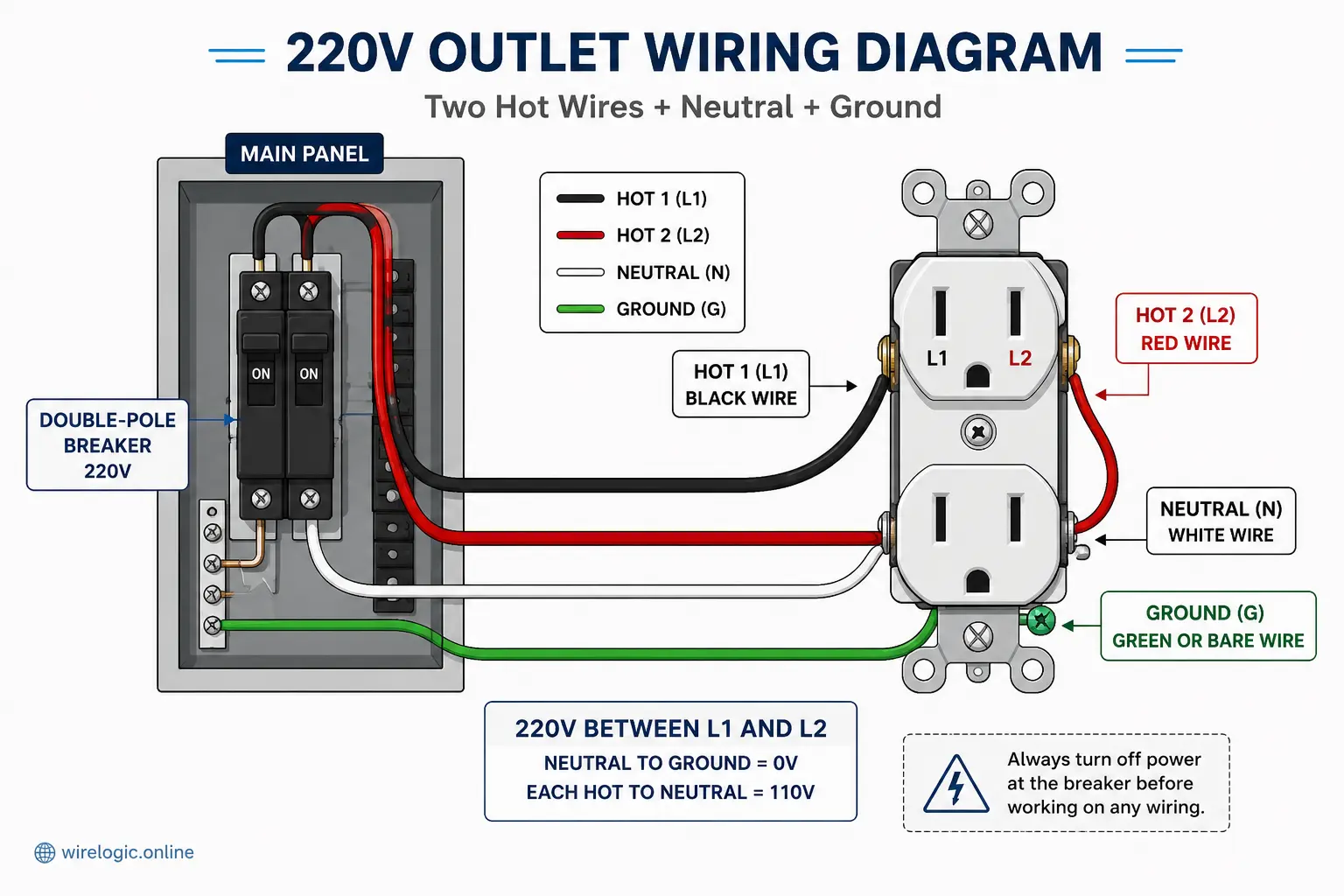
The ground wire exists purely for safety. Under normal operation, it carries no electrical current. If a fault occurs and electricity contacts a metal appliance frame, the grounding conductor provides a low-resistance path back to the panel, causing the breaker to trip quickly.
Without grounding, touching a faulty appliance could make your body the easiest path to ground. That is why grounding requirements are among the most important elements of modern electrical codes. A proper equipment grounding conductor dramatically reduces electrocution risks.
Ground wires are typically bare copper or green insulated conductors. They attach to designated grounding terminals in outlets and panels. Every grounding connection must remain secure because loose grounds can fail silently until a dangerous fault occurs.
Matching Wire Gauge to Breaker Size Properly
Common Wire Gauge and Breaker Combinations
Choosing the correct wire gauge is one of the most important parts of wiring a 220 volt outlet. Thicker wires handle more current safely because they generate less resistance and heat. Smaller wires overheat under heavy loads, damaging insulation and potentially igniting nearby materials.
The following combinations are commonly used:
| Wire Gauge | Breaker Size | Typical Use |
|---|---|---|
| 12 AWG | 20A | Window AC units |
| 10 AWG | 30A | Dryers |
| 8 AWG | 40A | Electric cooktops |
| 6 AWG | 50A | EV chargers and ranges |
Electrical guides published in 2025 continue reinforcing these standard pairings because improper sizing remains one of the most common DIY wiring mistakes. Long cable runs may also require upsizing conductors to minimize voltage drop.
Wire insulation type matters too. NM-B cable works for many indoor residential applications, while THHN conductors inside conduit are common for garages, workshops, or outdoor runs. Environmental conditions influence allowable ampacity, so heat exposure and conduit fill calculations become important in larger installations.
Dangers of Using the Wrong Wire Size
Using undersized wire creates excessive resistance, which produces heat. Heat damages insulation gradually until conductors short together or ignite surrounding materials. Electrical fires often begin silently behind walls where overheating goes unnoticed for months or years.
Oversized breakers paired with smaller wires are especially dangerous because the breaker may not trip before the wire exceeds safe operating temperatures. This is why professional electricians never “upgrade” breakers without verifying conductor size first.
Another overlooked danger involves outlet compatibility. Installing a 50-amp receptacle on a 30-amp circuit encourages future misuse because someone may eventually plug in equipment exceeding circuit capacity. Every component must match the intended load carefully.
Common Outlet Types Used for Large Appliances
NEMA 6-20, 10-30, and 14-50 Explained
Different appliances use different outlet designs to prevent accidental misuse. These configurations are standardized through NEMA designations.
- NEMA 6-20: Common for 20A 240V equipment without neutral
- NEMA 10-30: Older dryer outlet style using three prongs
- NEMA 14-50: Modern four-prong 50A outlet used for ranges and EV chargers
Modern electrical guidance strongly favors grounded four-prong receptacles for new installations because they separate neutral and ground conductors safely.
Three-Prong vs Four-Prong 220V Outlets
Older three-prong outlets combined neutral and ground functions. While once legal, modern codes typically require separate grounding conductors for improved safety. Four-prong outlets include:
- Two hot wires
- One neutral
- One ground
This arrangement prevents appliance frames from carrying neutral current during normal operation. That change dramatically reduced shock hazards associated with older dryer and range installations.
Tools and Materials Needed Before Wiring
Essential Electrical Tools
Proper tools make electrical work safer and more accurate. Common tools include:
- Voltage tester
- Multimeter
- Wire stripper
- Torque screwdriver
- Fish tape
- Insulated pliers
- Drill and cable staples
A multimeter is particularly important because verifying voltage accurately prevents dangerous assumptions. Professional electricians test every conductor before touching it, even after switching breakers off.
Safety Equipment You Should Never Skip
Electrical work is never the place to ignore safety gear. Essential equipment includes:
- Insulated gloves
- Safety glasses
- Rubber-soled shoes
- Flashlight
- Lockout tags
Arc flashes and accidental contact injuries happen quickly and violently. High-voltage circuits deserve complete respect every single time you work around them.
Step by Step Outlet Wiring and Terminal Connections
Turning Off Power and Testing the Circuit
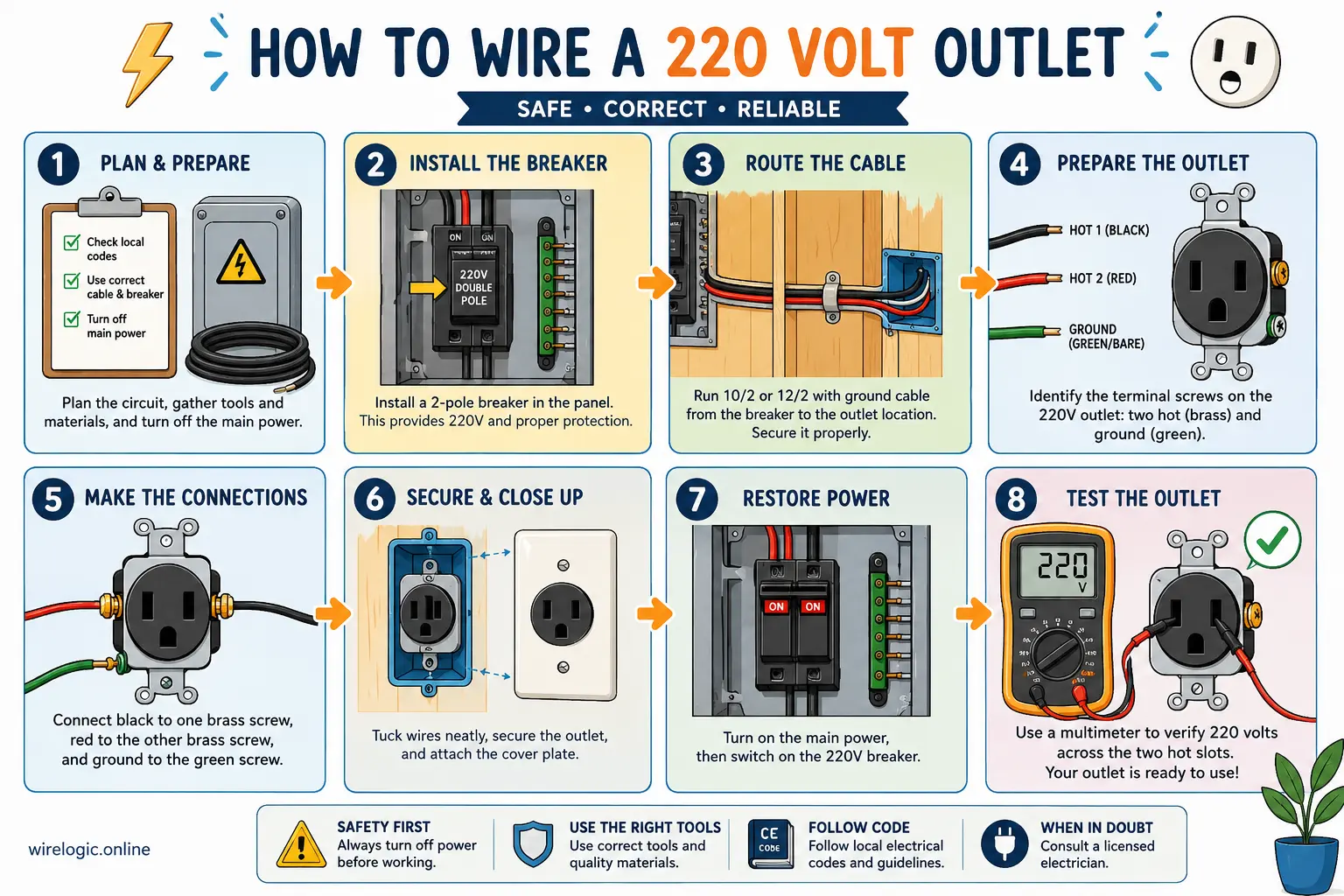
Begin by shutting off the main breaker or designated branch breaker. Never trust panel labeling alone because mislabeled circuits are extremely common. Use a non-contact voltage tester followed by a multimeter to confirm zero voltage.
Recent electrical safety articles repeatedly emphasize verification because assuming a circuit is dead causes many injuries. Test between both hot legs, hot-to-ground, and neutral-to-ground if applicable.
Connecting the Breaker and Running the Cable
Install the double-pole breaker into two adjacent panel slots so it contacts both bus bars properly. Route cable neatly into the panel using approved clamps or conduit fittings.
Connect:
- Black hot wire to one breaker terminal
- Red hot wire to the other breaker terminal
- White neutral to neutral bar if required
- Bare or green ground to grounding bar
Secure cables carefully along framing members while avoiding sharp bends or physical damage.
Wiring the Outlet Terminals Correctly
At the receptacle box:
- Connect hot wires to brass terminals
- Connect neutral to silver terminal if present
- Connect ground wire to green grounding screw
Tighten all terminal screws securely. Loose terminations create resistance and heat buildup over time. Install the receptacle firmly into the box so movement does not stress wiring connections.
Testing Voltage Before Plugging In Equipment
Using a Multimeter Safely
After restoring power, use a multimeter to verify correct voltage readings:
| Test Points | Expected Reading |
|---|---|
| Hot to Hot | ~240V |
| Hot to Neutral | ~120V |
| Hot to Ground | ~120V |
| Neutral to Ground | ~0V |
Incorrect readings indicate wiring mistakes that must be corrected immediately. Never plug expensive appliances into unverified outlets because reversed conductors or missing grounds can destroy electronics instantly.
Testing also confirms breaker operation and grounding integrity. Many professional electricians perform additional load testing after installation to ensure stable voltage under appliance operation.
Safety Precautions When Working With High Voltage Circuits
Common Mistakes That Cause Electrical Fires
Many electrical fires begin with small mistakes that seem harmless initially. Common examples include:
- Loose terminal screws
- Oversized breakers
- Undersized wires
- Damaged insulation
- Incorrect outlet types
- Missing grounding conductors
DIY installers sometimes underestimate how much heat electrical resistance can generate. A slightly loose connection may operate normally for months before gradual heating carbonizes insulation and creates arcing conditions.
Another dangerous habit involves reusing outdated three-prong receptacles improperly. Modern safety standards favor grounded four-wire systems specifically because older configurations created preventable shock hazards.
When You Should Call a Licensed Electrician
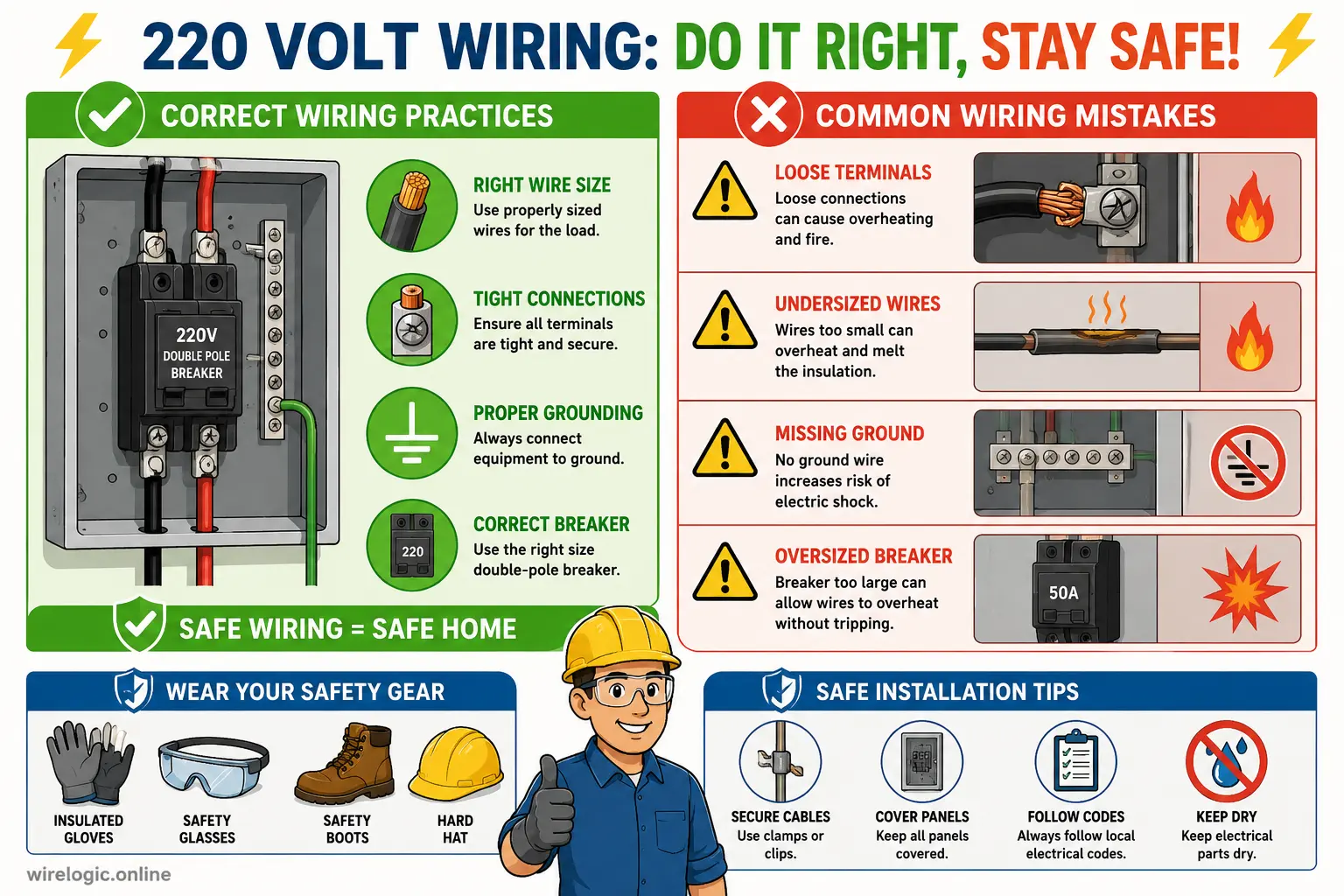
Some projects simply exceed safe DIY limits. You should strongly consider hiring a licensed electrician if:
- The panel lacks available capacity
- Aluminum wiring is present
- Service upgrades are needed
- Local permits are required
- You are unfamiliar with voltage testing
- The installation involves EV charging equipment
Electricians also understand local code requirements, which vary between jurisdictions. Permits and inspections protect homeowners because they catch hidden hazards before systems become energized permanently.
Conclusion
Learning how to wire a 220 volt outlet involves far more than connecting a few wires. Safe installation depends on understanding voltage, amperage, grounding, breaker sizing, outlet configurations, and testing procedures. Every part of the system works together like links in a chain. If one link fails, the entire circuit becomes unsafe.
Modern electrical standards continue evolving toward safer grounding methods, improved GFCI protection, and stricter circuit requirements for high-power equipment. Recent NEC guidance and industry discussions show growing emphasis on dedicated circuits and grounded four-prong receptacles for heavy appliances and EV charging systems.
Taking shortcuts with high-voltage wiring is never worth the risk. Proper wire sizing, secure terminal connections, accurate voltage testing, and correct breaker selection protect both property and human life. If uncertainty exists at any point during installation, involving a licensed electrician is always the safer decision.
FAQs
1. Is 220 volts the same as 240 volts?
In residential systems, the terms are often used interchangeably. Modern household split-phase systems typically provide around 240 volts, though many people still say 220V out of habit.
2. Can I install a 220 volt outlet without a neutral wire?
Yes, some appliances only require two hot wires and a ground. Equipment that uses internal 120V components usually requires a neutral conductor as well.
3. What size wire do I need for a 50 amp 220V outlet?
A 50-amp circuit commonly uses 6 AWG copper wire, though exact requirements may vary depending on cable type and local codes.
4. Why are four-prong outlets safer than three-prong outlets?
Four-prong outlets separate neutral and ground conductors, reducing shock risks associated with shared grounding paths used in older three-prong systems.
5. Should I test the outlet before plugging in appliances?
Absolutely. A multimeter should verify correct voltage and grounding before any appliance is connected to the new outlet.

Nico Hartwell is a 26-year-old American content creator living in Spokane, Washington. He has developed expertise in software, productivity, and emerging technology through years of independent research and professional writing. As a writer for wirelogic.online, Nico creates informative, balanced articles designed to help readers make confident decisions using accurate, well-organized information.