

When people buy a generator, one of the first questions they ask is simple: how long can a generator run continuously? The answer sounds straightforward, but it actually depends on a web of factors working together behind the scenes. A generator is a lot like a marathon runner. It can keep moving for a long time, but fuel, temperature, maintenance, and workload determine whether it finishes strong or collapses halfway through the race. Some generators are engineered for temporary emergency backup lasting only a few hours, while others are designed to provide electricity around the clock for days or even weeks.
Recent industry reports show that most portable gasoline generators operate for around 8 to 12 hours per fuel tank under moderate loads, while industrial diesel generators can operate continuously for 24 to 72 hours or longer before requiring service. Standby generators connected to natural gas lines can theoretically run indefinitely if maintenance schedules are followed and no mechanical failures occur. That difference is enormous, and it highlights why runtime is not just about fuel tank size. The design of the engine, the cooling system, and even weather conditions all play major roles.
Continuous runtime also does not mean “ignore the machine and walk away.” Generators require monitoring, especially during extended outages. Oil levels must be checked, air circulation maintained, and warning signs watched closely. Many homeowners assume that because a generator is running smoothly after a few hours, it can continue forever without attention. That assumption is exactly what leads to breakdowns during critical moments like hurricanes, heat waves, or winter storms.
The smartest approach is understanding the specific type of generator you own and respecting its limits. Whether you rely on a small portable generator for camping or a whole-house standby system for emergencies, knowing the science behind runtime helps you avoid costly repairs and dangerous failures.
What Continuous Runtime Actually Means
The term continuous runtime often confuses generator owners because it sounds like the machine can run endlessly without interruption. In reality, manufacturers define continuous operation based on safe operating conditions, scheduled maintenance intervals, and rated load capacities. Think of it like driving a car nonstop across the country. Your vehicle may technically stay running for days, but you still need fuel stops, oil checks, and cooling breaks to avoid damaging the engine.
A generator’s runtime is generally measured in two ways: fuel-based runtime and service-based runtime. Fuel-based runtime refers to how long the machine can run before its fuel source is exhausted. Service-based runtime refers to how long the engine can safely operate before maintenance becomes necessary. According to recent generator industry guidance, many portable gasoline generators require oil checks every 8 hours and oil changes after approximately 100 to 150 operating hours. Industrial diesel generators may stretch oil intervals to 250–500 hours because they are built for heavier-duty operation.
Another important concept is load percentage. Generators are not meant to operate at full capacity nonstop. Running a generator at 100% load for long periods increases heat, fuel consumption, and engine stress. Most experts recommend operating between 50% and 75% load for maximum efficiency and longevity. It is similar to carrying groceries. Carrying a manageable number of bags feels easy, but carrying every bag at once strains your body quickly. Generators experience that same kind of stress under excessive electrical demand.
People also forget that environmental conditions matter. High outdoor temperatures, dust, humidity, and poor airflow can dramatically reduce safe runtime. A generator operating in a shaded, ventilated area will usually last longer than one trapped in a hot garage or cramped enclosure. Continuous runtime is never just a number printed in a manual. It is a balancing act between engineering, maintenance, and operating conditions.
What Limits Generator Runtime During Continuous Use
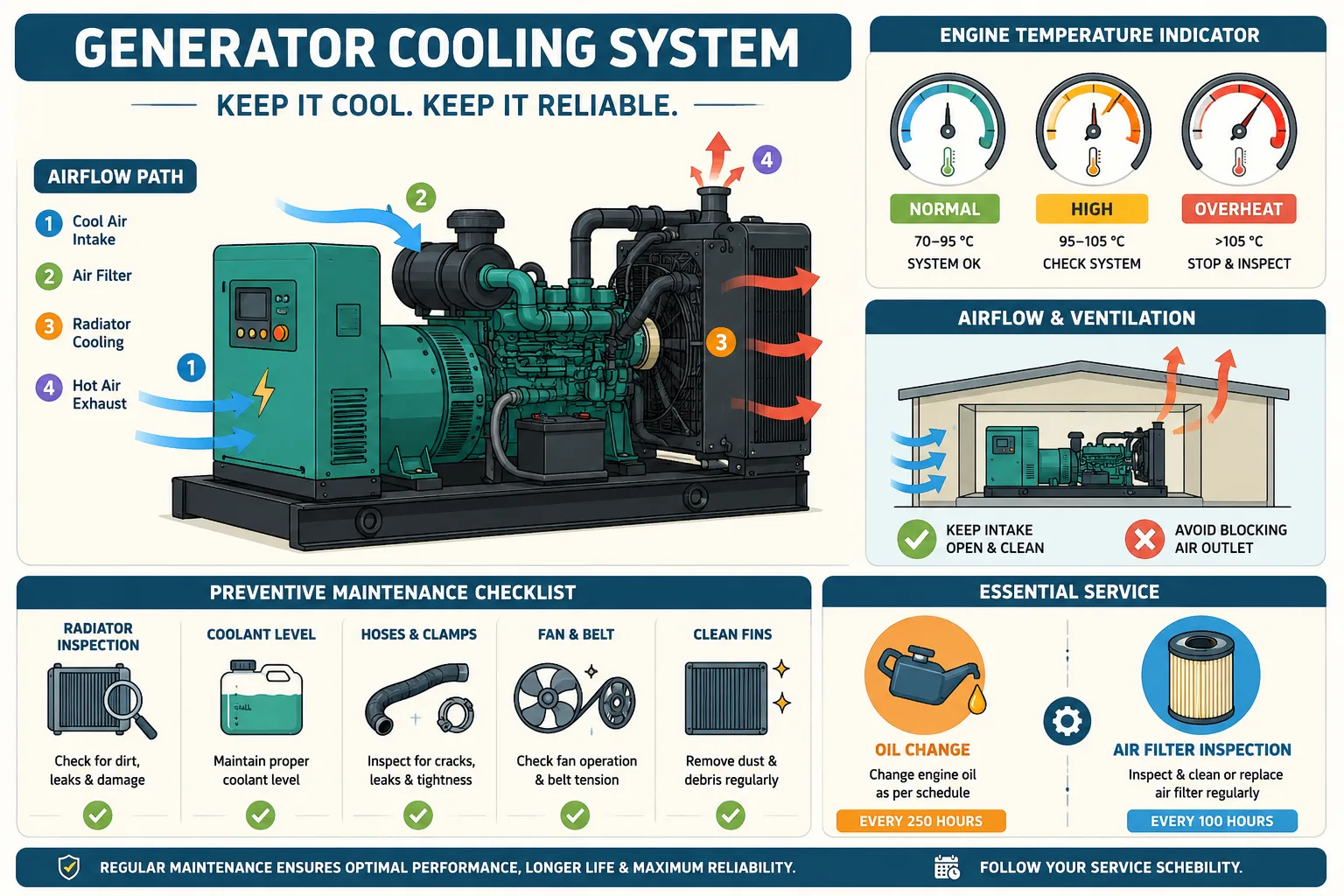
Several key factors determine how long a generator can realistically run before it needs to stop. Fuel is the obvious one, but it is only part of the story. Heat buildup, engine wear, electrical load, ventilation quality, and maintenance all work together to create practical runtime limits. Ignoring even one of these elements can shorten generator lifespan dramatically.
Fuel consumption is heavily influenced by load demand. The more appliances connected to the generator, the faster fuel burns. A portable generator powering only a refrigerator and a few lights might last 10 to 12 hours on a tank, while the same unit powering air conditioning units, heaters, and kitchen appliances may empty the tank in half that time. This relationship between power draw and fuel usage is one of the biggest reasons runtime estimates vary so widely.
Heat is another massive limiting factor. Engines naturally produce heat during combustion, but continuous operation without proper cooling causes internal temperatures to rise dangerously. Once oil thins out from excessive heat, lubrication decreases and metal components begin wearing against each other more aggressively. Overheating can damage pistons, valves, bearings, and alternators. Portable generators are especially vulnerable because many rely on simple air-cooling systems rather than advanced liquid-cooling setups found in industrial standby units.
Ventilation plays an equally critical role. Generators need airflow not only for cooling but also for safe exhaust dispersal. Carbon monoxide buildup becomes extremely dangerous in enclosed spaces. Reports from generator users and safety experts consistently warn against operating generators inside garages, sheds, or partially enclosed patios. Even partially blocked airflow can reduce cooling efficiency enough to shorten runtime significantly.
Maintenance ultimately ties everything together. Dirty filters, degraded oil, clogged fuel systems, and worn spark plugs force engines to work harder than necessary. It is like asking an athlete to run a marathon while breathing through a straw. Proper maintenance reduces friction, improves fuel efficiency, and stabilizes engine temperatures during extended operation.
Fuel Type Differences and Their Impact on Operating Time
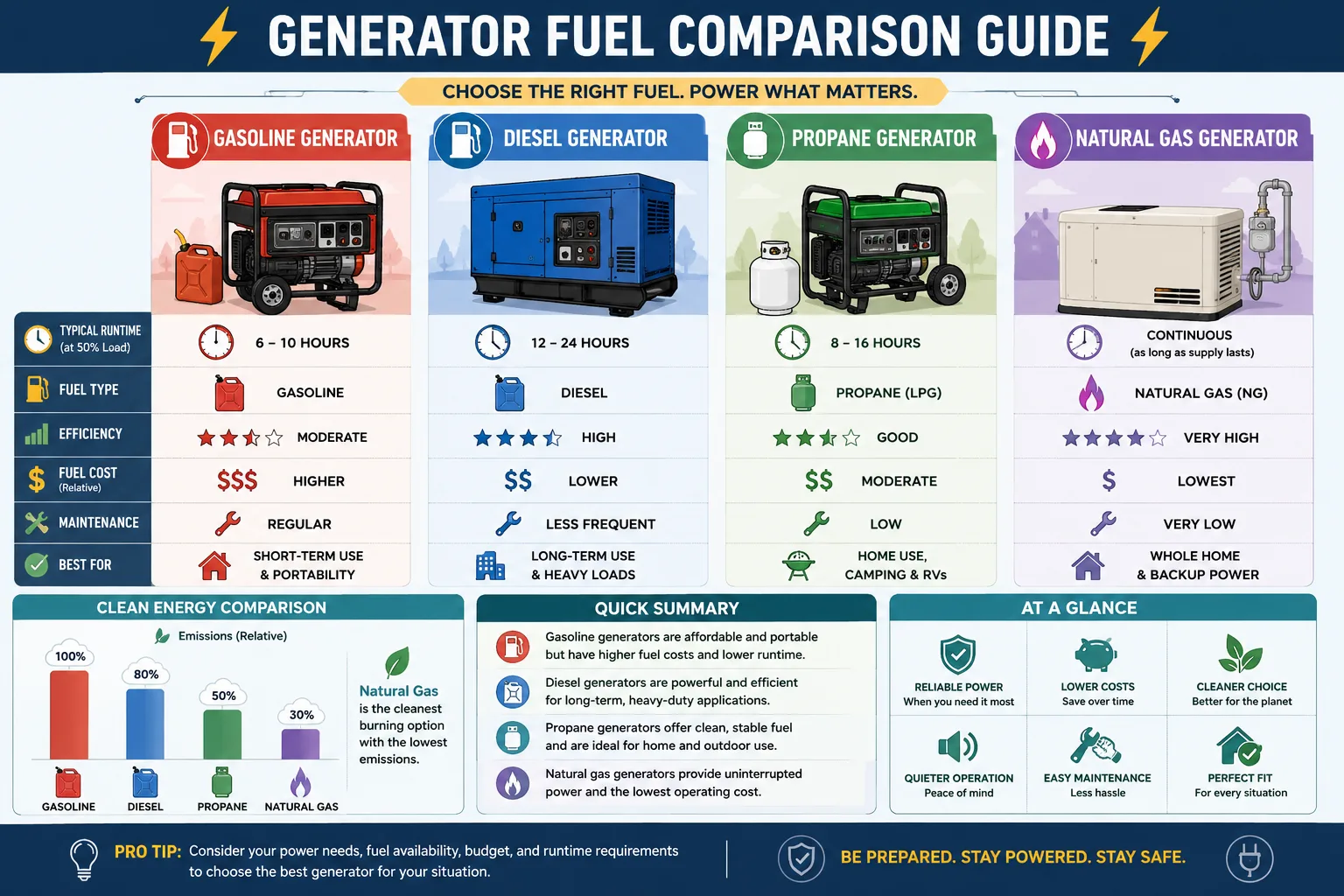
Fuel type dramatically changes how long a generator can operate continuously. Gasoline, diesel, propane, and natural gas each have unique combustion properties, storage limitations, and efficiency characteristics. Choosing the right fuel type is not just about cost. It directly affects runtime reliability during long emergencies.
Gasoline Generator Runtime Characteristics
Gasoline generators are common because they are affordable and widely available. Most portable consumer generators fall into this category. The downside is that gasoline burns relatively quickly and gasoline-powered engines often operate at higher temperatures. Industry estimates show many portable gasoline generators run approximately 8 to 12 hours per tank under moderate load conditions. During heavy use, runtime may drop even lower.
Gasoline also has storage problems. Fuel degrades over time, especially if untreated, which can clog carburetors and fuel lines. During prolonged outages, finding fresh gasoline may become difficult because gas stations can lose power too. This creates a chain reaction where the generator designed to solve your emergency becomes dependent on another failing system.
Another issue is maintenance frequency. Gasoline engines often require more frequent oil changes and cooling breaks compared to diesel systems. Many manufacturers recommend periodic shutdowns after extended operation to prevent overheating and engine wear.
Diesel Generator Runtime Advantages
Diesel generators are built differently. Diesel engines operate at lower RPMs, generate stronger torque, and generally provide better fuel efficiency during continuous use. Portable diesel generators may run 14 to 22 hours on a single tank, while industrial diesel systems can operate for days before refueling becomes necessary.
One major advantage of diesel fuel is energy density. Diesel contains more usable energy per gallon than gasoline, allowing generators to produce electricity more efficiently. Diesel engines are also designed for heavier-duty applications, which is why hospitals, telecom facilities, and construction sites rely heavily on them during long-term outages.
That said, diesel systems are not maintenance-free. Wet stacking, a condition caused by running under light loads for too long, can create carbon buildup in the exhaust system. Fuel contamination and water intrusion also become concerns during long storage periods.
Propane and Natural Gas Runtime Performance
Propane and natural gas generators shine during extended outages because fuel supply can remain steady for long periods. Natural gas standby generators connected directly to utility pipelines may operate for days or weeks without refueling interruptions.
Propane offers cleaner combustion and longer storage stability compared to gasoline. A properly stored propane supply can remain usable for years. Runtime depends largely on tank size, but propane generators often outperform gasoline units in long-term reliability.
The tradeoff is energy output. Natural gas and propane typically produce slightly lower power efficiency compared to diesel or gasoline. Still, for homeowners focused on uninterrupted operation rather than maximum power density, gaseous fuels often provide the best balance between convenience and endurance.
Portable vs Standby Generator Performance Under Load
Portable and standby generators may serve similar purposes, but their long-term performance under heavy electrical loads differs dramatically. Portable generators are like pickup trucks hauling supplies during an emergency. Standby generators are more like commercial freight trains designed for nonstop transportation. Both can move cargo, but one is clearly engineered for endurance.
Portable generators are built primarily for temporary or intermittent use. Their engines are smaller, cooling systems are simpler, and fuel tanks are limited in size. Under moderate electrical loads, portable units may perform well for several hours. Under heavy continuous demand, however, fuel consumption rises sharply while internal temperatures climb. Most portable gasoline generators are not intended for uninterrupted multi-day operation.
Standby generators are engineered with extended operation in mind. These permanently installed systems often use liquid-cooled engines similar to automotive designs, allowing them to handle continuous workloads more efficiently. Many standby generators are connected directly to natural gas lines or large propane tanks, eliminating constant refueling concerns.
The difference becomes especially obvious during large-scale power outages. Portable generators require manual startup, fuel refilling, and close supervision. Standby systems can activate automatically through transfer switches and maintain stable household power with minimal intervention. Reddit users discussing real-world outages often describe standby generators operating for several days continuously as long as oil levels and maintenance schedules are monitored carefully.
| Feature | Portable Generator | Standby Generator |
|---|---|---|
| Typical Runtime | 8–15 hours per tank | Days to weeks |
| Cooling System | Mostly air-cooled | Often liquid-cooled |
| Fuel Supply | Manual refueling | Connected fuel source |
| Load Handling | Moderate | Heavy continuous loads |
| Maintenance Frequency | Higher | Lower |
| Best Use | Temporary backup | Long-term outage support |
Choosing between these generator types depends on your expectations. If outages are short and occasional, a portable model may work perfectly. If uninterrupted power matters for medical equipment, home offices, or climate control, standby systems provide far greater reliability under sustained load conditions.
Heat Buildup and Cooling Considerations During Long Runs
Heat is the silent enemy of every generator. Even the most powerful generator can fail prematurely if temperatures spiral out of control. Engines convert fuel into electricity through combustion, and combustion naturally produces tremendous heat. During extended operation, that heat accumulates faster than many users realize.
Portable generators are especially vulnerable because many rely on air cooling. Cooling fins and fans help move heat away from the engine, but high outdoor temperatures or restricted airflow can overwhelm these systems quickly. Recent runtime studies indicate that hot climates and poor ventilation can reduce real-world runtime by 10–20% compared to ideal conditions.
Standby and industrial generators often use liquid cooling systems, which function much like vehicle radiators. Coolant circulates through the engine to absorb heat and maintain stable operating temperatures. This allows standby generators to run much longer under heavier loads without overheating. That difference explains why industrial diesel generators can operate continuously for hundreds of hours in controlled conditions.
Airflow matters just as much as the cooling technology itself. A generator surrounded by walls, boxes, or debris traps hot air around the engine. The result is like wrapping a blanket around a laptop while running demanding software. Temperatures rise fast, and performance eventually suffers. Proper clearance around the generator allows fresh air intake while safely dispersing exhaust gases.
Owners should also understand the warning signs of overheating. Rising exhaust temperatures, burning smells, fluctuating power output, or automatic shutdowns all indicate excessive thermal stress. Some modern generators include temperature sensors and automatic shutdown protection, but many older portable units do not. Relying solely on automatic safety systems is risky because mechanical failures can still occur before shutdown activates.
Regular cooling breaks during long outages can extend equipment life significantly. Even industrial systems benefit from scheduled inspections and service intervals. Heat may be unavoidable, but smart operating practices prevent it from becoming destructive.
Maintenance Factors That Affect Reliability
A generator without maintenance is like a ticking clock counting down toward failure. Continuous operation accelerates wear on every internal component, which means maintenance becomes even more important during prolonged power outages. Many generator failures blamed on “bad luck” are actually the result of neglected oil, dirty filters, or poor fuel quality.
Oil is the lifeblood of the engine. During long runs, oil gradually breaks down from heat and contamination. As viscosity decreases, moving parts experience greater friction. Portable generators often require oil checks every 8 hours and oil changes every 100 to 150 hours. Industrial diesel generators can sometimes extend intervals to 250–500 hours due to larger oil capacities and heavier-duty engineering.
Air filters also matter more than most people realize. A clogged air filter restricts oxygen flow into the combustion chamber, reducing efficiency and increasing fuel consumption. Dusty environments worsen the problem quickly. Fuel filters are equally important because contaminated fuel can damage injectors, carburetors, and pumps.
Fuel quality itself becomes a major concern during extended outages. Gasoline can degrade within months, while diesel fuel may develop water contamination or microbial growth during long storage periods. Some generator professionals warn that inaccurate fuel monitoring systems and contaminated tanks are common causes of long-outage generator failures.
Spark plugs, belts, coolant levels, and battery health should also be inspected regularly. One failing component can trigger a domino effect throughout the system. Preventive maintenance is far cheaper than emergency repairs during a blackout when replacement parts may be unavailable.
The best generator owners treat maintenance as part of runtime planning rather than an afterthought. A properly serviced generator can survive long emergencies smoothly, while a neglected unit often fails exactly when reliable power matters most.
Signs a Generator Needs to Be Shut Down and Inspected
Generators rarely fail without warning. The challenge is recognizing the warning signs early enough to prevent catastrophic damage. Many users continue operating generators despite obvious symptoms because the lights are still on. That decision often turns a minor repair into a major engine failure.
Unusual noises are one of the first indicators something is wrong. Knocking, grinding, rattling, or sudden changes in engine tone can signal internal mechanical wear or loose components. Vibrations that feel stronger than normal may indicate imbalance, failing mounts, or damaged rotating parts.
Smoke color also reveals important clues. Black smoke usually indicates incomplete combustion or excessive fuel consumption. Blue smoke may point to oil burning inside the engine. White smoke can suggest coolant leaks or fuel delivery issues. Any persistent smoke pattern deserves immediate inspection before continued operation causes permanent engine damage.
Power fluctuations are another serious red flag. Flickering lights, unstable voltage, or appliances behaving erratically may indicate alternator problems or overload conditions. Overloaded generators work harder, generate more heat, and experience accelerated wear. Running beyond rated capacity for too long can permanently damage electrical components.
Burning smells should never be ignored. Overheated insulation, melting wires, or oil leaks can quickly escalate into fires. Automatic shutdown systems are helpful, but relying on them alone is dangerous because not all failures trigger sensors immediately.
Routine inspections during extended outages reduce these risks dramatically. Check oil levels, coolant, exhaust appearance, and operating temperature several times per day during continuous operation. Listening to the generator carefully often reveals problems before visible damage occurs.
Safe Runtime Practices During Extended Power Outages
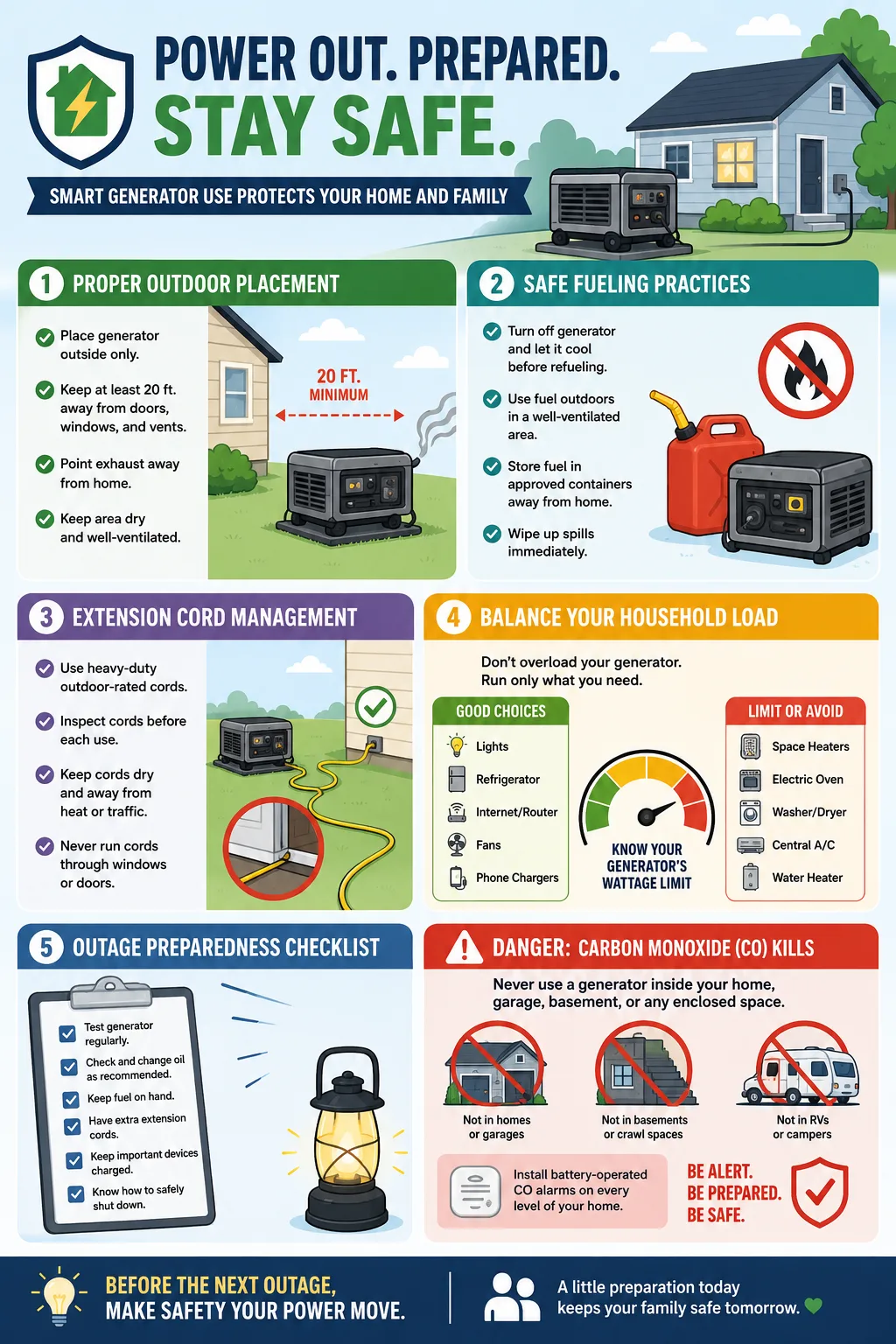
Extended outages test both generators and the people operating them. Safe runtime practices are not just about protecting equipment. They also protect lives. Carbon monoxide poisoning, electrical fires, overheating, and fuel mishandling remain major risks whenever generators operate continuously.
The safest practice starts with proper placement. Generators should always operate outdoors with strong ventilation and adequate distance from windows, doors, and vents. Portable generators inside garages or enclosed patios create deadly carbon monoxide buildup. Safety discussions among generator owners repeatedly emphasize the importance of outdoor airflow and carbon monoxide monitoring.
Load management is equally important. Avoid connecting every appliance at once. Prioritize essential systems like refrigerators, medical devices, lights, and communication equipment. Running a generator at moderate load extends fuel efficiency while reducing heat and mechanical stress.
Fuel handling requires patience and caution. Never refuel a hot generator immediately after shutdown because spilled fuel can ignite on hot surfaces. Allow cooling time before refilling tanks. Store fuel safely in approved containers away from living spaces and ignition sources.
Maintenance routines should continue throughout the outage. Check oil levels daily, inspect filters, monitor fuel supply, and listen for unusual operating sounds. Many standby generator users recommend scheduled shutdowns every few days for inspection and service checks, especially during extremely long outages.
Backup planning matters too. Fuel shortages, severe weather, or mechanical failures can happen unexpectedly. Keeping extra oil, filters, spark plugs, and treated fuel on hand reduces vulnerability during emergencies. The best generator strategy combines preparation, realistic expectations, and disciplined operating habits.
Conclusion
Generators can run anywhere from a few hours to several weeks depending on their design, fuel source, cooling system, maintenance schedule, and operating load. Portable gasoline generators usually provide shorter runtimes and require closer supervision, while diesel and standby natural gas systems are engineered for long-duration operation. Runtime is never determined by a single factor alone. Fuel availability, heat management, ventilation, maintenance quality, and electrical demand all work together to define how long a generator can safely operate.
Understanding those limitations is the difference between reliable backup power and unexpected failure during a critical outage. Heat buildup, neglected oil changes, overloaded circuits, and poor airflow silently reduce generator lifespan even when the machine appears to be running normally. Treating a generator like a long-distance endurance machine rather than a simple appliance helps owners make smarter decisions during emergencies.
The safest and most reliable approach combines proper generator sizing, disciplined maintenance, careful load management, and regular inspections. When used responsibly, generators provide an invaluable lifeline during storms, blackouts, and infrastructure failures. When pushed beyond their limits without attention, they become expensive and potentially dangerous liabilities.
FAQs
1. Can a generator run 24 hours a day continuously?
Yes, many generators can operate continuously for 24 hours or longer, especially standby and industrial diesel models. Portable generators can also run for extended periods, but they usually require refueling, oil checks, and cooling breaks more frequently.
2. What is the average runtime of a portable generator?
Most portable gasoline generators run between 8 and 12 hours on a full tank under moderate electrical load conditions. Runtime decreases significantly when powering high-demand appliances.
3. Which fuel type provides the longest generator runtime?
Diesel and natural gas systems generally provide the longest runtime. Diesel generators are highly fuel-efficient, while natural gas standby generators can operate continuously as long as the gas supply remains active.
4. How often should generator oil be changed during long outages?
Portable generators often need oil changes every 100–150 hours, while industrial diesel generators may extend intervals to 250–500 hours depending on manufacturer guidelines and operating conditions.
5. What causes generators to overheat during continuous use?
Overheating is usually caused by excessive electrical load, poor ventilation, dirty filters, high ambient temperatures, or insufficient cooling system performance. Proper airflow and regular maintenance greatly reduce overheating risks.

Colt Marlowe is a 29-year-old American content writer based in Boise, Idaho. He specializes in technology, digital tools, and online business topics, combining years of research with practical experience to produce clear, trustworthy articles. As a contributor to wirelogic.online, he focuses on creating well-researched, reader-friendly content that emphasizes accuracy, transparency, and long-term value for audiences seeking reliable information.