
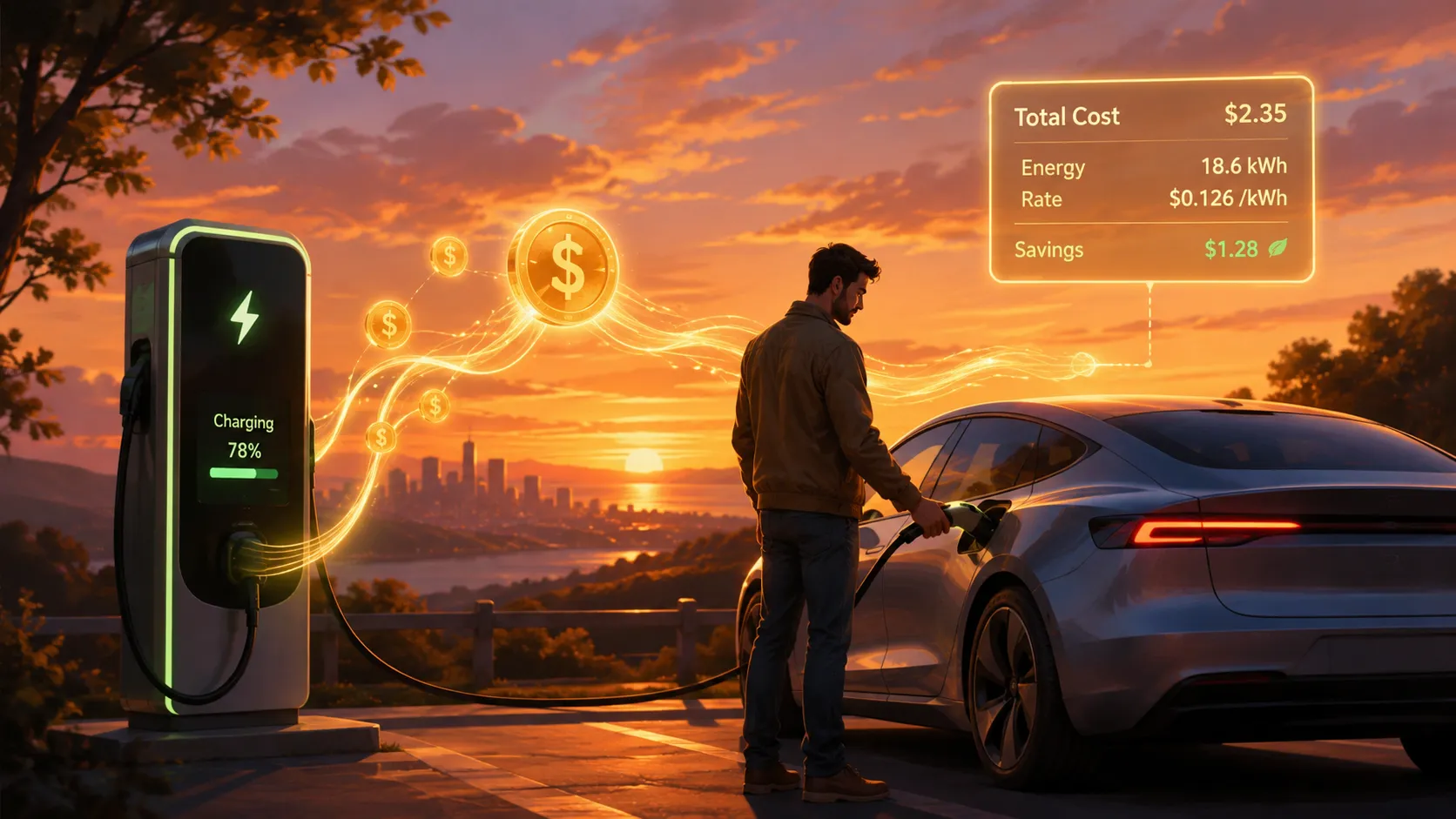
Electric vehicles are no longer futuristic gadgets cruising silently through science fiction movies. They are now parked in driveways, office garages, shopping malls, and highways across the world. Yet one question still follows almost every new EV owner like a shadow: How much does it actually cost to charge an electric car?
The answer sounds simple at first. Plug in the car, pay for electricity, and drive away. But once you dig deeper, you discover a web of factors influencing charging costs. Battery size, electricity rates, charging efficiency, weather conditions, charging speed, and even the time of day can dramatically affect how much money leaves your wallet.
Recent 2026 EV charging data shows that home charging in the United States averages around $0.16–$0.18 per kWh, while public DC fast charging often reaches $0.45–$0.50 per kWh. That gap alone explains why some EV drivers spend only a few dollars per week while others feel shocked by expensive road-trip charging sessions.
Before you buy an EV; or if you already own one; it helps to understand exactly how charging costs are calculated. Once you know the formula, EV charging becomes far less mysterious and much easier to optimize.
Understanding How EV Charging Works
Charging an electric vehicle is surprisingly similar to filling a water tank. Instead of gasoline flowing into a fuel tank, electricity flows into a battery pack measured in kilowatt-hours, commonly shortened to kWh. Think of kWh as the EV equivalent of gallons of fuel. The bigger the battery capacity, the more energy the car can store, and usually the farther it can travel.
Most modern electric vehicles have battery capacities ranging from 40 kWh to more than 120 kWh. A compact EV might have a 50 kWh battery, while a premium electric SUV may carry a 100 kWh battery or larger. The relationship between battery size and driving range works much like a smartphone battery. Larger batteries generally last longer before needing a recharge, though driving habits and environmental conditions still affect performance.
Unlike gasoline prices, electricity rates can vary wildly depending on location and time of day. One driver might pay only 12 cents per kWh at home, while another pays over 30 cents. Public charging stations often cost even more. That’s why calculating charging expenses requires more than a quick guess.
The beauty of EV charging lies in its flexibility. You can charge slowly overnight at home, quickly during a highway stop, or even while shopping at a mall. Each method has different costs attached to it. Understanding these differences is the first step toward controlling your EV ownership expenses rather than letting the charging network control them for you.
Finding the Battery Capacity of Your Vehicle
Before calculating charging costs, you need one critical piece of information: your EV’s battery capacity. Without it, estimating costs is like trying to budget a grocery trip without knowing how much food you plan to buy.
Battery capacity is measured in kilowatt-hours. If your vehicle has a 75 kWh battery, it means the battery can theoretically store 75 kilowatt-hours of electricity. Most manufacturers list this specification clearly in owner manuals, vehicle websites, or dealership brochures.
Here’s a simple example:
| EV Model Type | Approximate Battery Capacity |
|---|---|
| Compact EV | 40–60 kWh |
| Mid-Size Sedan EV | 60–85 kWh |
| Electric SUV | 80–120 kWh |
The actual usable battery capacity may differ slightly from the advertised number because manufacturers reserve a small portion of the battery to protect long-term health. Even so, the listed capacity provides an accurate enough estimate for cost calculations.
Imagine you own an EV with a 70 kWh battery. If electricity costs $0.16 per kWh, a theoretical full charge would cost:
<math xmlns=”70×0.16=11.270 times 0.16 = 11.2
That means a complete charge costs roughly $11.20 before accounting for charging losses or efficiency issues.
This single number; battery capacity; acts as the foundation for every charging cost calculation you’ll ever make. Once you know it, estimating charging expenses becomes far easier and far more accurate.
Electricity Rates and Why They Matter
Electricity pricing is the secret ingredient that changes everything about EV ownership costs. Two drivers with identical cars can pay completely different charging expenses simply because they live in different regions or charge at different times.
Electricity is typically billed per kilowatt-hour. In 2026, the average U.S. residential electricity rate hovers around 15.5 cents per kWh, though some states are significantly higher. California households may pay over 27 cents per kWh, while some southern states remain close to 13 cents.
The formula for charging costs is straightforward:
<math xmlns=”Charging Cost=kWh Used×Electricity Ratetext{Charging Cost} = text{kWh Used} times text{Electricity Rate}
Suppose your EV consumes 50 kWh during charging:
- At $0.12/kWh = $6.00
- At $0.30/kWh = $15.00
That difference is massive over an entire year.
Time-of-use pricing adds another layer to the equation. Many utility companies charge lower rates overnight when electricity demand drops. Peak evening hours often cost far more. Smart EV owners take advantage of these cheaper periods by scheduling charging sessions after midnight.
Public charging stations operate differently. Instead of residential pricing, they include infrastructure costs, maintenance, and business profit margins. Recent data shows DC fast chargers averaging around $0.45–$0.50 per kWh nationwide. Suddenly, charging that same 50 kWh battery could cost $25 instead of $8.
That’s why electricity rates matter so much. Your EV may be efficient, but where and when you charge determines whether you save money or slowly drain your budget.
The Basic Formula for Calculating Charging Costs
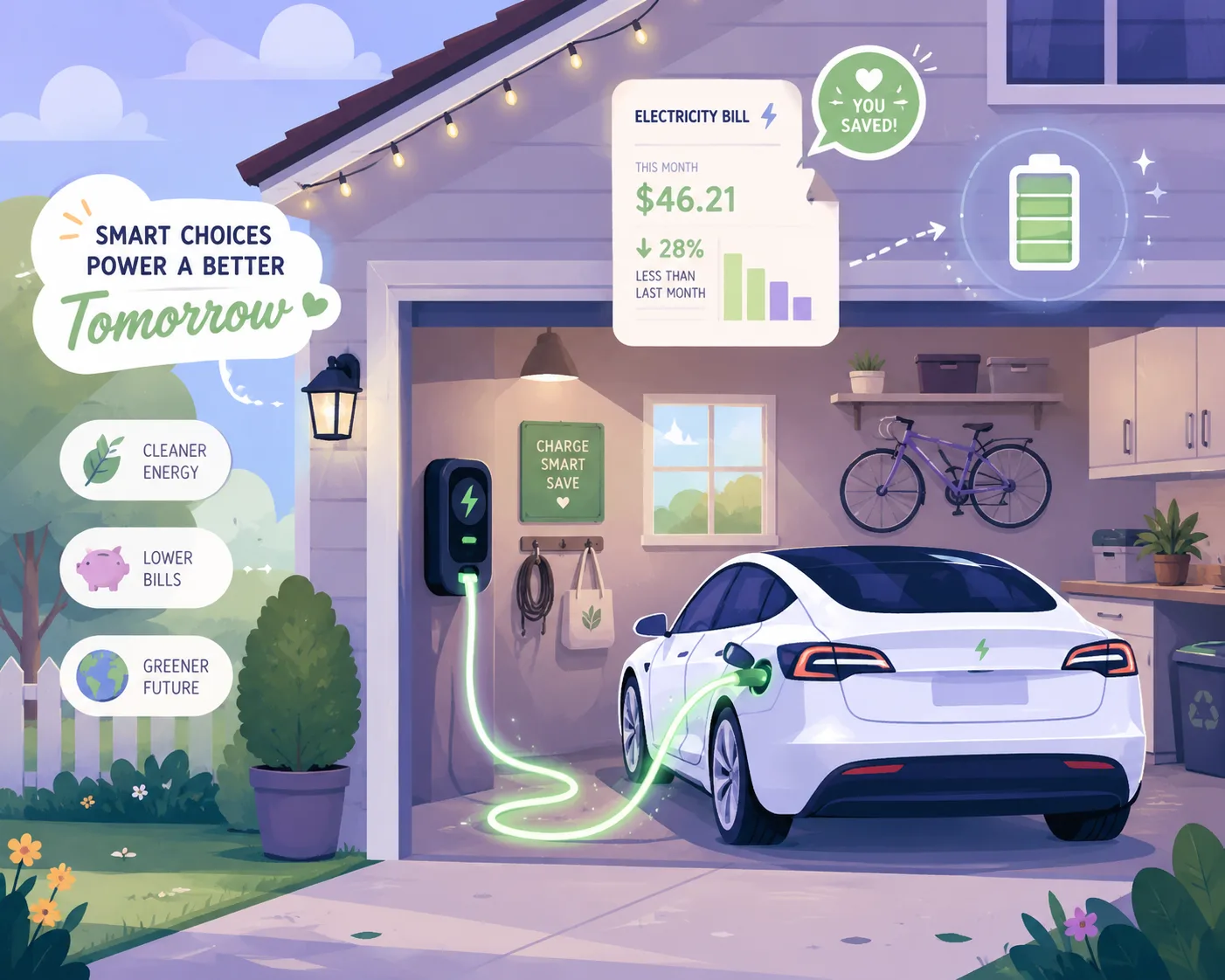
Calculating EV charging expenses becomes simple once you understand the core formula. There’s no magic involved. It’s just multiplication with a few practical adjustments.
The most basic equation looks like this:
<math xmlns=”Cost=Battery Capacity×Electricity Ratetext{Cost} = text{Battery Capacity} times text{Electricity Rate}
If your battery is 80 kWh and electricity costs $0.17 per kWh:
<math xmlns=”80×0.17=13.680 times 0.17 = 13.6
A full charge costs approximately $13.60.
Most drivers rarely charge from 0% to 100%, though. Partial charging is far more common. Maybe you recharge from 20% to 80%. In that case, you only add 60% of the battery capacity.
For an 80 kWh battery:
<math xmlns=”80×0.60=4880 times 0.60 = 48
You’re adding 48 kWh of electricity.
At $0.17 per kWh:
<math xmlns=”48×0.17=8.1648 times 0.17 = 8.16
That charging session costs roughly $8.16 before efficiency losses.
This formula gives drivers tremendous control. Once you know your vehicle’s battery size and local electricity rate, you can estimate charging costs almost instantly. It’s far more predictable than gasoline prices, which often swing dramatically due to global oil markets.
Understanding this math also helps drivers compare home charging with public charging networks. Suddenly, overnight charging at home starts looking like a bargain while highway fast chargers feel more like convenience-store fuel pricing.
Estimating Charging Costs at Home
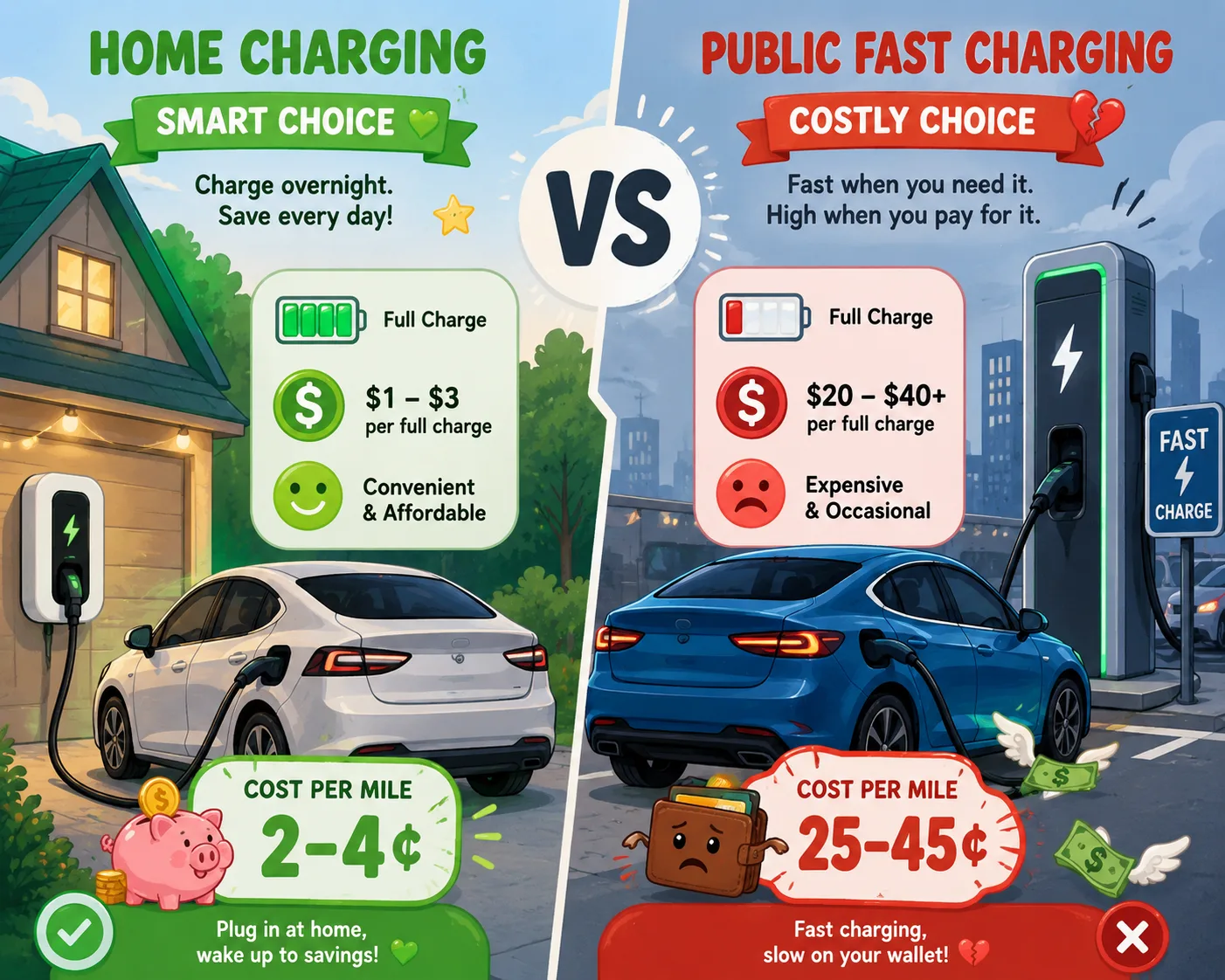
Home charging is where electric vehicles truly shine financially. Plugging in overnight feels a bit like charging a phone; simple, quiet, and convenient. It’s also where most EV owners save the most money compared to gasoline vehicles.
According to recent EV charging studies, home charging in 2026 typically costs around $4–$6 per 100 miles driven. That’s dramatically lower than most gasoline vehicles, especially with rising fuel prices.
Let’s imagine a driver travels 1,000 miles monthly in an EV averaging 3.5 miles per kWh.
Energy required:
<math xmlns=”1000÷3.5≈2861000 div 3.5 approx 286
That driver uses roughly 286 kWh monthly.
At $0.16 per kWh:
<math xmlns=”286×0.16≈45.76286 times 0.16 approx 45.76
The monthly charging bill becomes approximately $46.
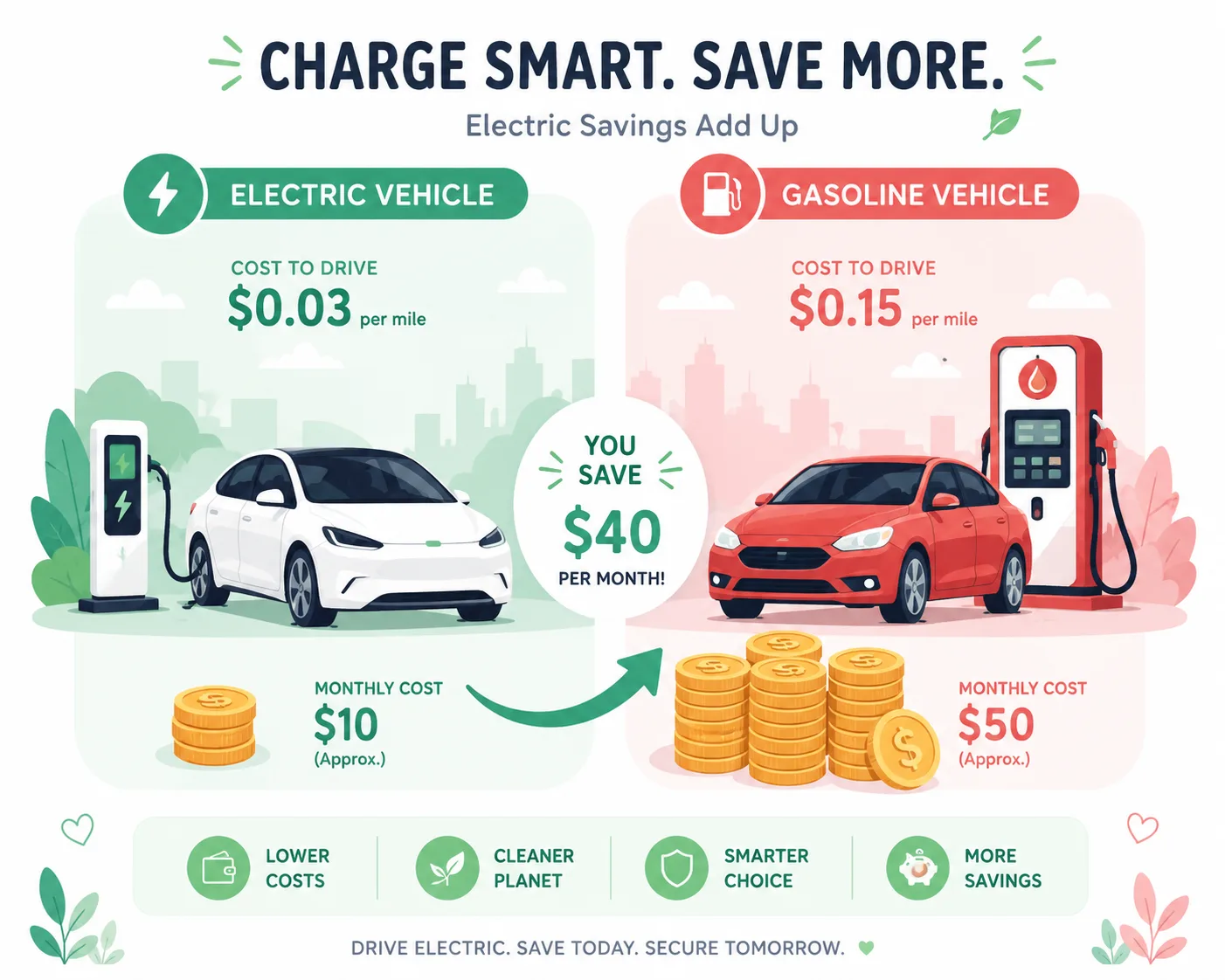
Compare that with a gasoline SUV getting 25 mpg. At $4.46 per gallon, driving 1,000 miles costs nearly $180 in fuel. The difference is enormous.
Home charging becomes even cheaper with solar panels or off-peak utility plans. Some utility companies offer nighttime electricity rates below 10 cents per kWh. Charging during these periods can slash EV operating costs dramatically.
The biggest advantage of home charging isn’t only financial. It’s psychological convenience. Drivers wake up every morning with a “full tank” instead of stopping at gas stations. That daily convenience quietly becomes one of the most beloved parts of EV ownership.
Public Charging Station Expenses
Public charging stations introduce an entirely different financial landscape. While home charging feels economical and predictable, public charging can range from affordable to surprisingly expensive depending on the network and charging speed.
Level 2 public chargers are usually found at workplaces, shopping centers, hotels, and parking garages. These chargers operate more slowly but cost less than ultra-fast highway chargers. Current pricing averages roughly $0.25–$0.40 per kWh.
DC fast chargers, on the other hand, are designed for speed and convenience. They can recharge many EVs from 10% to 80% in under 30 minutes. But convenience comes at a premium. National averages now hover around $0.45–$0.60 per kWh.
Consider a 75 kWh battery:
| Charging Type | Average Cost Per kWh | Estimated Full Charge Cost |
|---|---|---|
| Home Charging | $0.16 | $12 |
| Public Level 2 | $0.35 | $26.25 |
| DC Fast Charging | $0.50 | $37.50 |
The gap is eye-opening.
Public charging networks justify these prices through infrastructure expenses. Fast chargers require expensive electrical upgrades, maintenance, cooling systems, payment processing, and property leasing. Drivers essentially pay extra for speed and accessibility.
Road trips are where fast charging becomes valuable despite the higher costs. Nobody wants to sit eight hours at a roadside charger during a long journey. In those moments, paying more feels worthwhile because time becomes more valuable than electricity savings.
The smartest EV owners treat public charging like restaurant dining. It’s useful and sometimes necessary, but home charging remains the cheaper everyday option.
Fast Charging vs Standard Charging Expenses
Fast charging feels like the espresso shot of the EV world. It’s quick, powerful, and incredibly convenient. But just like coffee shops charge more for premium drinks, fast charging networks demand higher prices for speed.
The reason is simple: delivering huge amounts of electricity rapidly requires advanced infrastructure. DC fast chargers can supply power at rates exceeding 150 kW or even 350 kW. That level of energy delivery demands sophisticated cooling systems, industrial-grade equipment, and expensive utility connections.
Standard Level 2 home charging spreads electricity delivery over several hours, usually overnight. This slower approach is not only gentler on the electrical grid but often more cost-efficient for drivers.
Fast charging also introduces demand pricing. Some charging networks adjust costs based on time of day or charger demand. During busy travel periods, prices can climb noticeably higher.
Recent 2026 charging network comparisons show fast charging often costing three to five times more than residential electricity. That’s a substantial premium for convenience.
Still, fast charging absolutely has a place. Long-distance travel would be frustrating without it. Imagine driving hundreds of miles and needing an overnight stay just to recharge. Fast charging keeps EV road trips practical and competitive with gasoline vehicles.
The smartest strategy is balance. Use home charging for daily driving and reserve DC fast charging for emergencies, vacations, or long highway journeys. That combination delivers the best financial outcome while preserving convenience.
How Charging Efficiency Changes the Final Cost
One of the biggest surprises for new EV owners is discovering that not all purchased electricity actually reaches the battery. Charging losses are real, unavoidable, and financially important.
Studies show EV charging losses typically range from 5% to 15%, depending on charger type and environmental conditions. In slower charging setups, losses can exceed 20%.
Why does this happen?
Several systems consume electricity during charging:
- AC-to-DC power conversion
- Battery heating or cooling
- Vehicle electronics
- Charging cable resistance
Think of it like pouring water into a bucket with tiny holes. Most of the water stays inside, but some escapes during the process.
Suppose your EV battery needs 60 kWh stored energy. If charging efficiency is 90%, you actually draw:
<math xmlns=”60÷0.90≈66.760 div 0.90 approx 66.7
You purchase roughly 66.7 kWh from the grid.
At $0.16 per kWh:
<math xmlns=”66.7×0.16≈10.6766.7 times 0.16 approx 10.67
Instead of paying $9.60, you spend around $10.67.
The Reddit EV community frequently discusses how charging speed affects efficiency. Many users report that higher-powered Level 2 charging reduces overall losses because the vehicle’s electronics remain active for less time.
Charging efficiency may seem like a minor technical detail, but over years of ownership it meaningfully impacts total electricity costs. Understanding these losses helps drivers make more accurate financial estimates instead of assuming every kilowatt purchased ends up inside the battery.
Seasonal Temperature Effects on Charging Consumption
Electric vehicle batteries behave a lot like humans during extreme weather. They dislike freezing temperatures and struggle under intense heat. That discomfort directly affects charging efficiency and energy consumption.
Cold weather is especially challenging. Batteries charge more slowly in winter because chemical reactions inside the cells become less efficient. To protect the battery, EVs often warm the battery pack before charging begins. That heating process consumes additional electricity.
Some EV owners notice dramatic efficiency losses during winter charging sessions. Community discussions and charging studies confirm that colder temperatures can significantly increase charging overhead.
Hot climates create different problems. Instead of heating, the vehicle activates cooling systems to prevent overheating. Battery cooling fans and liquid thermal systems also consume electricity, slightly increasing total charging costs.
Seasonal changes affect driving range too. In freezing weather, EVs may use more energy for cabin heating, windshield defrosting, and battery conditioning. That means drivers charge more frequently during winter months.
Here’s a simplified comparison:
| Season | Typical Impact on Charging |
|---|---|
| Mild Weather | Highest efficiency |
| Winter | Increased heating losses |
| Summer | Added cooling consumption |
Drivers living in extreme climates should expect seasonal fluctuations in charging costs. Winter often produces the highest electricity consumption per mile traveled.
The good news is modern EVs are improving rapidly. Advanced heat pumps, battery preconditioning systems, and smarter thermal management software help reduce seasonal efficiency losses. Even so, weather remains one of the most important hidden factors affecting EV charging expenses.
Comparing EV Charging Costs to Fuel Expenses
This is the comparison most drivers care about. Does charging an EV actually save money compared to gasoline?
For most people, the answer is yes; and often by a substantial margin.
Recent industry estimates show EV drivers spend 40–60% less on energy costs compared to gasoline vehicle owners. In periods of high gas prices, those savings grow even larger.
Let’s compare two vehicles traveling 1,200 miles monthly:
Gasoline Vehicle
- Fuel economy: 28 mpg
- Gas price: $4.46/gallon
- Monthly fuel use:
<math xmlns=”1200÷28≈42.91200 div 28 approx 42.9
Fuel cost:
<math xmlns=”42.9×4.46≈19142.9 times 4.46 approx 191
Approximate monthly fuel bill: $191
Electric Vehicle
- Efficiency: 3.5 miles/kWh
- Electricity rate: $0.16/kWh
Energy use:
<math xmlns=”1200÷3.5≈3431200 div 3.5 approx 343
Charging cost:
<math xmlns=”343×0.16≈54.9343 times 0.16 approx 54.9
Approximate monthly charging bill: $55
That difference equals more than $1,600 annually; and potentially much more depending on fuel prices.
Gasoline vehicles also face maintenance expenses like oil changes, exhaust repairs, spark plugs, and transmission servicing. EVs generally avoid many of these costs.
Of course, public fast charging narrows the savings gap. Drivers relying heavily on expensive DC fast chargers may see smaller financial advantages. Even then, EVs frequently remain cheaper overall, especially in regions with affordable residential electricity.
Smart Charging Habits That Reduce Electricity Bills
Owning an EV is a bit like managing a smart home appliance. Small charging decisions can create surprisingly large financial savings over time.
The single most effective strategy is charging during off-peak electricity hours. Many utility providers offer reduced nighttime pricing when grid demand is low. Charging after midnight instead of during evening peak hours can dramatically lower electricity bills.
Another useful habit is avoiding unnecessary fast charging. DC fast chargers are convenient but expensive. Treat them like airport food; great when needed, but not ideal for everyday budgeting.
Maintaining moderate battery levels also improves long-term battery health. Constantly charging to 100% may increase battery degradation over time. Many manufacturers recommend daily charging between 20% and 80% for optimal battery longevity.
Smart charging apps make this process easier. Many EVs allow drivers to schedule charging automatically when rates are cheapest. Some utilities even provide rebates for participating in managed charging programs.
Drivers can also reduce costs by improving driving efficiency:
- Smooth acceleration
- Proper tire pressure
- Moderate highway speeds
- Reduced unnecessary cargo weight
Efficient driving reduces energy consumption, meaning fewer charging sessions overall.
Solar panels add another layer of savings. Some EV owners effectively drive using sunlight captured during the day. While solar installation requires upfront investment, pairing home solar with EV charging can drastically reduce transportation energy costs over the long term.
Ultimately, EV charging costs reward informed behavior. Drivers who understand electricity pricing, charging efficiency, and smart scheduling consistently spend less than those who simply plug in without strategy.
Conclusion
Calculating the cost of charging an electric car is much easier once you understand the key variables. Battery capacity, electricity rates, charging efficiency, weather conditions, and charging speed all influence the final price you pay.
Home charging remains the most affordable solution for most EV owners. With average residential electricity rates around 15–18 cents per kWh, many drivers spend only a fraction of what gasoline vehicles require for fuel. Public fast charging provides convenience and travel flexibility, though at noticeably higher prices.
Charging efficiency losses and seasonal weather effects remind us that EV ownership involves more than simple math. Real-world conditions matter. Cold batteries, hot climates, and inefficient charging setups all affect electricity consumption.
The biggest advantage EV owners gain is predictability. Unlike gasoline markets that fluctuate with geopolitical tensions and oil production, electricity pricing tends to be more stable and manageable. Smart charging habits; especially overnight off-peak charging; can further reduce transportation expenses.
Electric vehicles are not just changing how people drive. They are changing how people think about energy itself. Once drivers understand the numbers behind charging costs, EV ownership becomes less mysterious and far more financially empowering.
FAQs
1. How much does it cost to fully charge an electric car at home?
Most EVs cost between $8 and $15 for a full home charge depending on battery size and local electricity rates. Larger batteries and higher utility rates increase the total cost.
2. Is charging an EV cheaper than buying gasoline?
In most cases, yes. Studies show EV drivers often spend 40–60% less on energy compared to gasoline vehicle owners.
3. Why is DC fast charging more expensive?
Fast charging stations require expensive infrastructure, high-power electrical systems, cooling equipment, and commercial utility pricing. Those costs are reflected in higher charging fees.
4. Does cold weather increase EV charging costs?
Yes. Cold temperatures force EVs to heat batteries before charging and driving, which consumes extra electricity and reduces efficiency.
5. What is the cheapest way to charge an electric vehicle?
Charging at home during off-peak electricity hours is usually the cheapest option. Pairing home charging with solar panels can reduce costs even further.

Colt Marlowe is a 29-year-old American content writer based in Boise, Idaho. He specializes in technology, digital tools, and online business topics, combining years of research with practical experience to produce clear, trustworthy articles. As a contributor to wirelogic.online, he focuses on creating well-researched, reader-friendly content that emphasizes accuracy, transparency, and long-term value for audiences seeking reliable information.