
Choosing the correct wire size for a 100 amp electrical service is not something you want to guess your way through. One wrong decision can lead to overheating, voltage drop, damaged appliances, nuisance breaker trips, or even electrical fires. A lot of homeowners assume that “100 amps means any thick wire will work,” but electrical systems do not operate on assumptions. Every part of the system; from conductor material to insulation type and distance; changes the equation.
Modern electrical standards continue to evolve because homes now consume more electricity than ever before. Large HVAC systems, EV chargers, workshop equipment, hot tubs, and modern kitchen appliances place enormous demands on residential wiring. According to updated NEC-based sizing references, the most common minimum size for a 100 amp copper feeder is 3 AWG copper wire, while aluminum usually requires 1 AWG to carry the same load safely.
The tricky part is that amperage alone never tells the whole story. Wire length, ambient temperature, conduit fill, insulation ratings, and installation method all influence how much current a conductor can safely carry. Think of electrical wiring like plumbing pipes carrying water. The longer and narrower the pipe becomes, the harder it is for water to move efficiently. Electrical current behaves similarly. Resistance builds up, heat increases, and efficiency drops.
This guide breaks down everything homeowners should understand about sizing copper wire for 100 amps while staying compliant with modern electrical code standards and avoiding dangerous mistakes.
Why Amperage and Wire Size Must Match Correctly
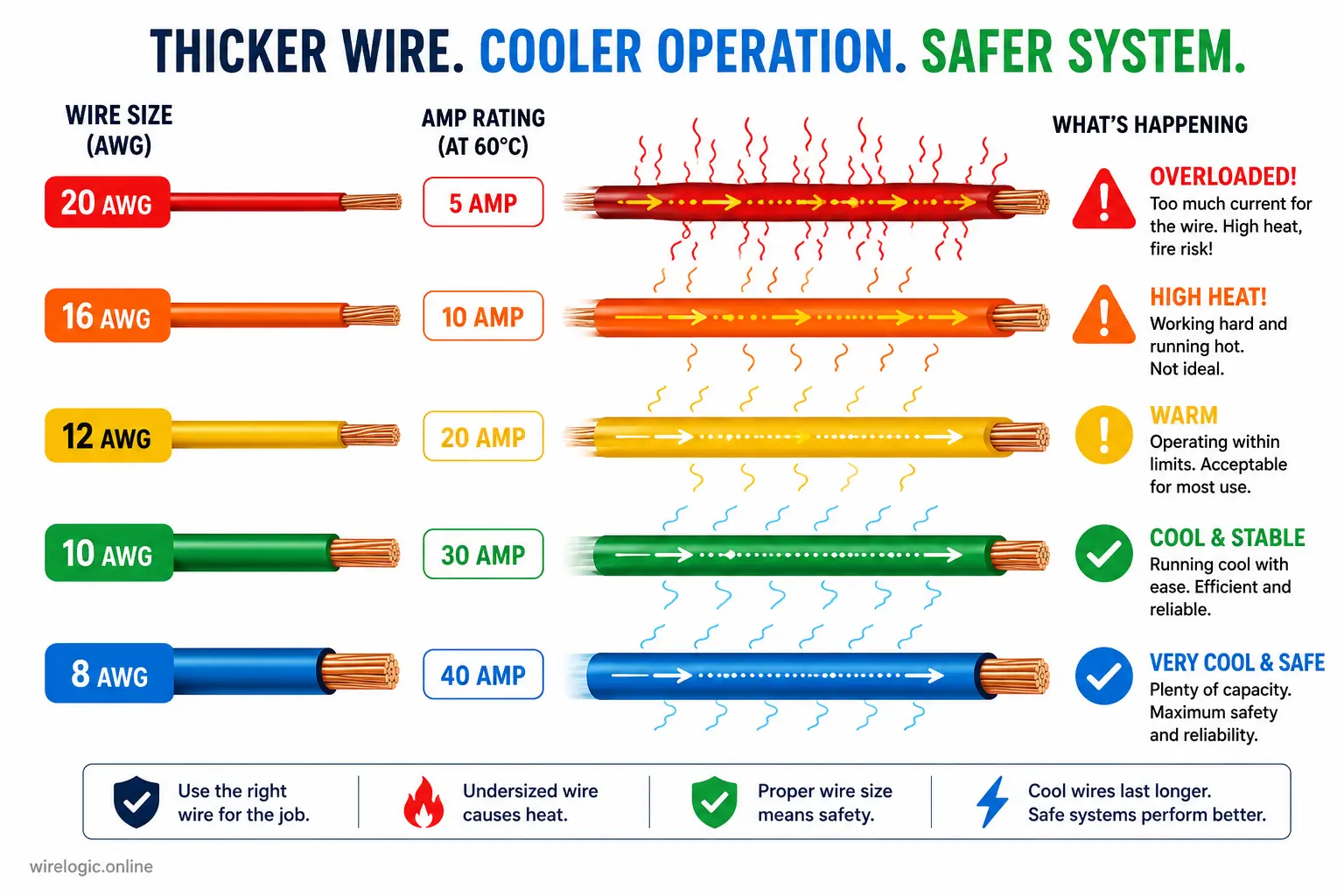
Electricity might feel invisible, but it behaves according to strict physical laws. When electrical current travels through a wire, the conductor naturally resists part of that energy flow. That resistance creates heat. If the wire is large enough, the heat remains manageable and safely dissipates into the surrounding air. If the wire is too small for the amperage it carries, the conductor overheats like an overworked engine climbing a steep mountain road.
A 100 amp circuit moves a substantial amount of current. That is enough energy to power an entire small home, detached workshop, or subpanel loaded with major appliances. Because of this, electricians never size conductors casually. Wire size must match both the intended load and the installation environment. According to NEC-based ampacity tables, 3 AWG copper is commonly accepted as the minimum conductor size for many 100 amp residential applications under specific conditions.
How Electrical Resistance Creates Heat
Every conductor has resistance, even highly conductive copper. As electrons push through the conductor, some energy transforms into heat. The smaller the wire diameter, the greater the resistance becomes. This is why thin extension cords become warm when powering heavy equipment for long periods.
Imagine trying to force highway traffic into a single narrow lane during rush hour. Congestion builds rapidly. Electrical current behaves similarly when too much amperage moves through undersized wire. Excessive resistance increases conductor temperature, and insulation begins degrading over time.
This heat buildup is one reason electrical fires remain a serious residential hazard. The danger often develops slowly and silently behind walls where homeowners cannot see the damage occurring.
Why Undersized Wire Becomes Dangerous
Undersized wiring can create several problems beyond simple overheating. Voltage drop increases, appliances operate inefficiently, breakers trip unexpectedly, and motors may fail prematurely. HVAC compressors and large power tools are especially sensitive to improper voltage delivery.
An overloaded wire can also damage insulation. Once insulation deteriorates, exposed conductors may short against metal surfaces or nearby wiring. That is why electrical codes strictly define conductor ampacity and installation practices.
Many homeowners assume the breaker alone provides protection. In reality, the breaker and conductor work together as a safety system. A 100 amp breaker protects a properly sized 100 amp conductor. If the wire is undersized, the breaker may not trip before dangerous heat levels occur.
Common Copper Wire Sizes Used for 100 Amp Service
When discussing a 100 amp electrical service, there is no universal one-size-fits-all answer. The correct wire depends on installation type, temperature ratings, conductor material, and distance. Still, certain conductor sizes appear repeatedly in residential work because they meet NEC ampacity requirements under common conditions.
For many standard residential applications, electricians typically use 3 AWG copper wire for a 100 amp feeder or subpanel. Some situations may also allow 2 AWG copper, particularly depending on insulation type and termination ratings.
| Copper Wire Size | Typical Ampacity | Common Use |
|---|---|---|
| 4 AWG Copper | 70–95A | Smaller feeders |
| 3 AWG Copper | 100A | Standard 100 amp service |
| 2 AWG Copper | 115A | Long runs or lower voltage drop |
| 1 AWG Copper | 130A | Heavy-duty feeder applications |
Minimum Copper Wire Size for 100 Amps
Under many NEC 2023 references, 3 AWG copper is treated as the standard minimum conductor size for a 100 amp feeder using appropriate insulation and termination ratings.
That does not mean every installation should automatically use the minimum allowed size. Electrical code establishes the lowest acceptable threshold for safety, not necessarily the best-performing solution for every home.
Several electricians intentionally upsize conductors because modern households continuously add electrical loads over time. EV chargers, mini-split systems, workshop tools, and smart home systems can increase demand quickly.
When Electricians Upsize Beyond Minimum Requirements
Upsizing conductors is extremely common on long runs. A detached garage located 150 feet away may technically operate on minimum-size wire, but voltage drop could become significant under load. In those situations, electricians often increase conductor size to reduce resistance and improve efficiency.
Upsizing also helps reduce operating temperatures. Lower resistance means cooler conductors, improved equipment performance, and less stress on electrical connections over decades of use.
Think of larger wire like giving electricity a wider highway. Traffic flows more smoothly with less friction and fewer bottlenecks.
The Difference Between Copper and Aluminum Wire Ratings
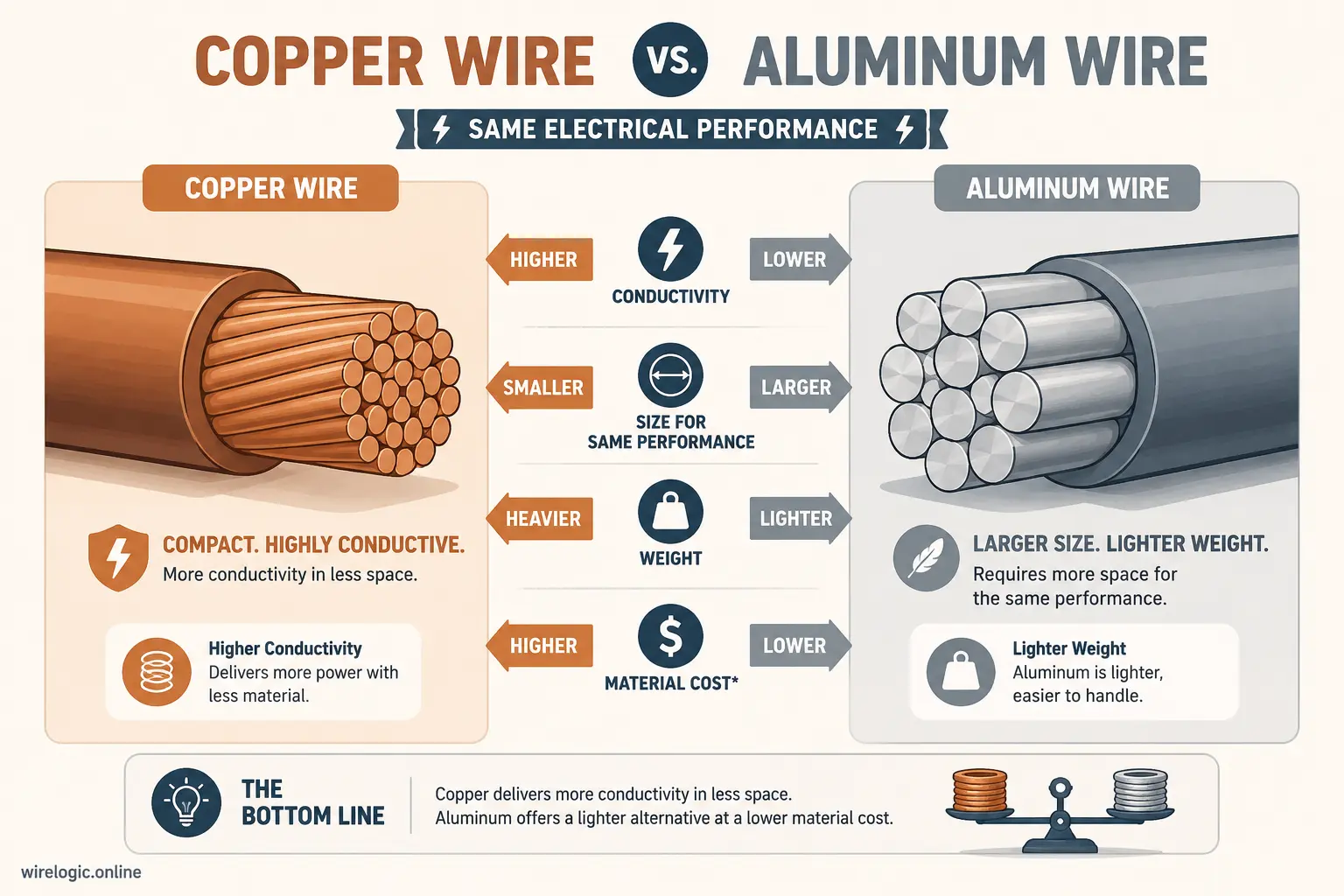
Copper and aluminum dominate residential electrical systems, but they behave very differently. Copper is more conductive, stronger, and more resistant to expansion and contraction. Aluminum is cheaper and lighter but requires larger conductor sizes to safely carry the same current.
Current NEC-based comparisons show aluminum conductors generally require approximately two AWG sizes larger than copper to achieve equivalent ampacity.
| Material | Common 100A Size | Conductivity | Cost |
|---|---|---|---|
| Copper | 3 AWG | Excellent | Higher |
| Aluminum | 1 AWG | Lower | Lower |
Conductivity Differences Between Copper and Aluminum
Copper remains the gold standard because it conducts electricity more efficiently. Aluminum only provides roughly 61% of copper’s conductivity, meaning larger conductors are required for equivalent performance.
Copper also handles repeated heating and cooling cycles better. Aluminum expands and contracts more aggressively under load changes, which can loosen connections if terminals are not properly torqued.
That does not mean aluminum is unsafe. Modern aluminum feeder conductors are widely used and code-compliant when installed correctly. Utilities commonly rely on aluminum for service feeders because of its lower cost and lighter weight.
Cost and Installation Considerations
Copper prices remain significantly higher than aluminum, especially for larger conductors like 3 AWG or 2 AWG. For long feeder runs, aluminum may reduce material costs dramatically.
The tradeoff is installation precision. Aluminum requires:
- AL/CU-rated terminals
- Proper torque specifications
- Anti-oxidant compound
- Careful termination practices
Improper aluminum installations caused many historical failures decades ago. Modern connectors and installation standards have improved reliability substantially, but shortcuts still create problems.
Factors That Change Wire Size Requirements Beyond Amperage
Many homeowners focus entirely on breaker size while ignoring installation conditions. That approach creates dangerous misunderstandings because conductor ampacity changes based on environmental and installation factors.
A wire that safely carries 100 amps in one installation may become unsafe in another. Temperature, conduit fill, airflow, and surrounding conductors all influence heat dissipation.
Ambient Temperature and Heat Exposure
Electrical ampacity ratings assume standard ambient temperatures. When wires operate in hot attics, outdoor conduit exposed to sunlight, or high-temperature mechanical rooms, conductors cannot cool as effectively.
NEC derating factors reduce allowable ampacity as temperatures rise. For example, conductor capacity decreases substantially in environments above 86°F (30°C).
That means a wire adequate in a cool basement may no longer safely carry the same current inside a scorching attic during summer.
Heat is the enemy of electrical insulation. Elevated temperatures accelerate insulation aging and reduce long-term reliability.
Conduit Fill and Bundled Conductors
Bundling multiple current-carrying conductors together increases heat buildup. When several wires occupy the same conduit, they trap heat and reduce each other’s cooling ability.
NEC adjustment factors require conductor derating once more than three current-carrying conductors share a raceway.
This is similar to multiple people crowding into a small room. Heat accumulates faster because ventilation becomes limited.
Electricians must calculate:
- Number of conductors
- Conduit type
- Ambient temperature
- Insulation rating
- Load characteristics
These calculations explain why professional electrical design involves more than simply reading a wire chart.
Voltage Drop and Its Impact on Long Wire Runs
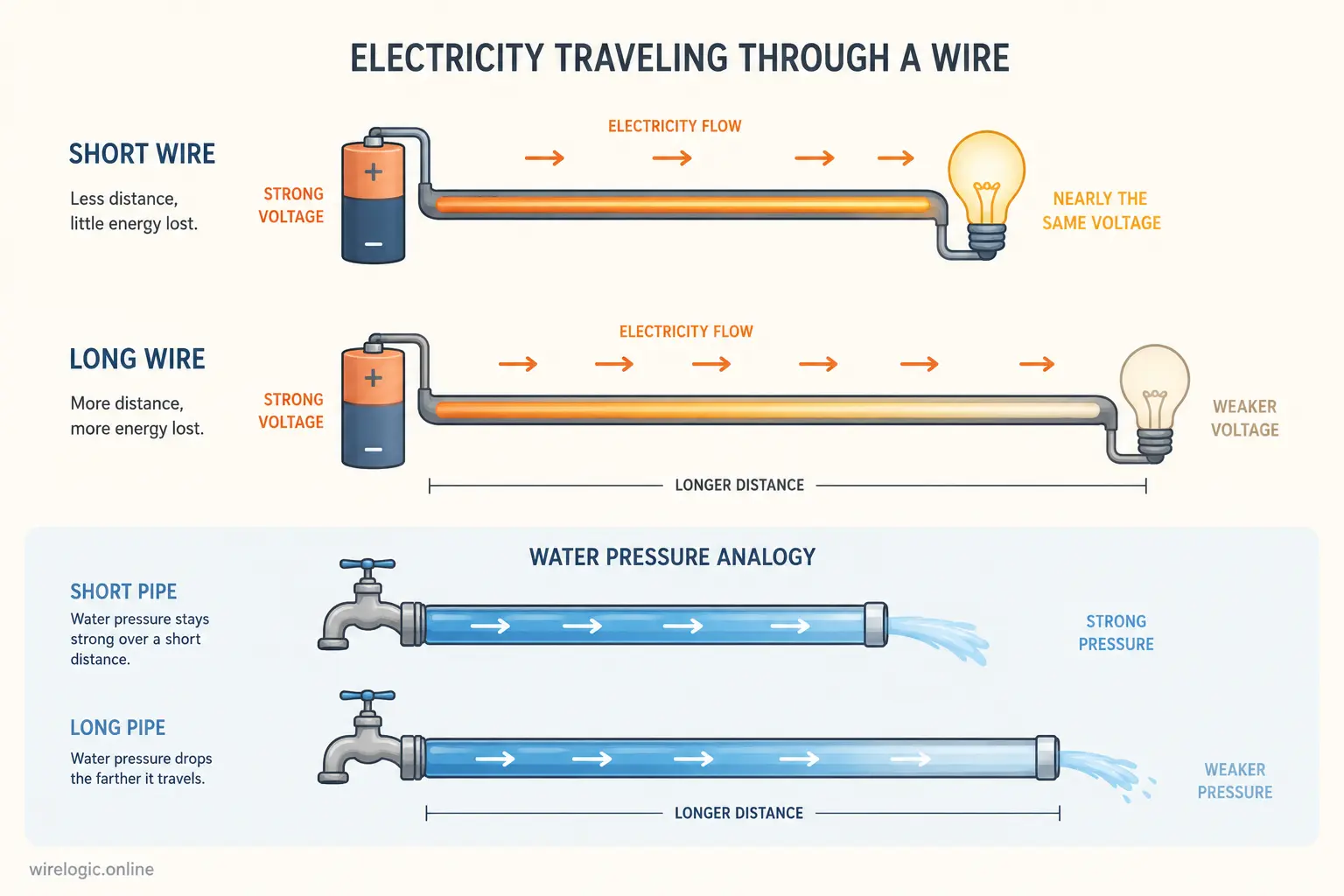
Voltage drop becomes one of the biggest concerns during long feeder installations. Even correctly sized conductors lose voltage over distance because resistance increases as wire length grows.
Think of voltage like water pressure traveling through a long garden hose. The farther water travels, the weaker the pressure becomes at the end. Electrical systems experience the same effect.
Why Distance Changes Everything
A 100 amp feeder running 25 feet behaves very differently from one running 250 feet. Long runs create greater resistance, reducing available voltage at the equipment being powered.
According to NEC recommendations, voltage drop should generally remain:
- Under 3% for branch circuits
- Under 5% combined for feeder and branch circuits
When voltage drops excessively:
- Motors overheat
- Lights dim
- Appliances operate inefficiently
- Electronics become unstable
This is why electricians often increase wire size far beyond minimum ampacity requirements on long-distance runs.
Recommended Voltage Drop Limits
Several modern sizing references suggest that 3 AWG copper maintains acceptable voltage drop for roughly 147 feet at 240 volts under a 100 amp load before upsizing becomes advisable.
Here is a simplified example:
| Copper Wire Size | Approximate 240V Distance at 3% Drop |
|---|---|
| 3 AWG | 147 ft |
| 2 AWG | 185 ft |
| 1 AWG | 234 ft |
| 1/0 AWG | 294 ft |
Long-distance subpanels frequently require conductor upsizing specifically for voltage-drop control rather than ampacity alone.
How Insulation Type Affects Current Capacity
Many homeowners focus only on wire gauge while ignoring insulation type. That is like buying tires based only on diameter while ignoring speed rating or tread design. Insulation dramatically affects how much heat a conductor can safely tolerate.
The same copper conductor may have very different ampacity ratings depending on insulation type and temperature classification.
THHN, XHHW, NM-B, and Other Common Insulations
Common residential conductor types include:
| Insulation Type | Common Application |
|---|---|
| THHN | Conduit wiring |
| XHHW | Wet locations |
| NM-B | Residential indoor cable |
| THWN-2 | Wet/dry conduit use |
Each insulation type has unique heat resistance characteristics. Conductors rated for 90°C can tolerate higher temperatures than those rated for 60°C or 75°C.
However, the conductor’s full insulation rating does not always determine final ampacity. Terminal ratings often become the limiting factor.
Understanding Temperature Ratings
Many residential breakers and terminals are only rated for 60°C or 75°C terminations, even if the conductor insulation itself is rated for 90°C.
This creates confusion among homeowners reading ampacity tables online. The wire may technically withstand higher temperatures, but the connected equipment may not.
Electricians therefore select ampacity values based on:
- Terminal ratings
- Equipment labeling
- Installation environment
- NEC requirements
Ignoring these details can result in unsafe installations even when conductor size initially appears correct.
Mistakes That Can Lead to Overheating and Safety Issues
Electrical problems rarely begin with dramatic sparks or explosions. Most dangerous failures develop quietly over time through heat, loose connections, or improper installations.
Many DIY wiring mistakes seem harmless initially but become hazardous months or years later.
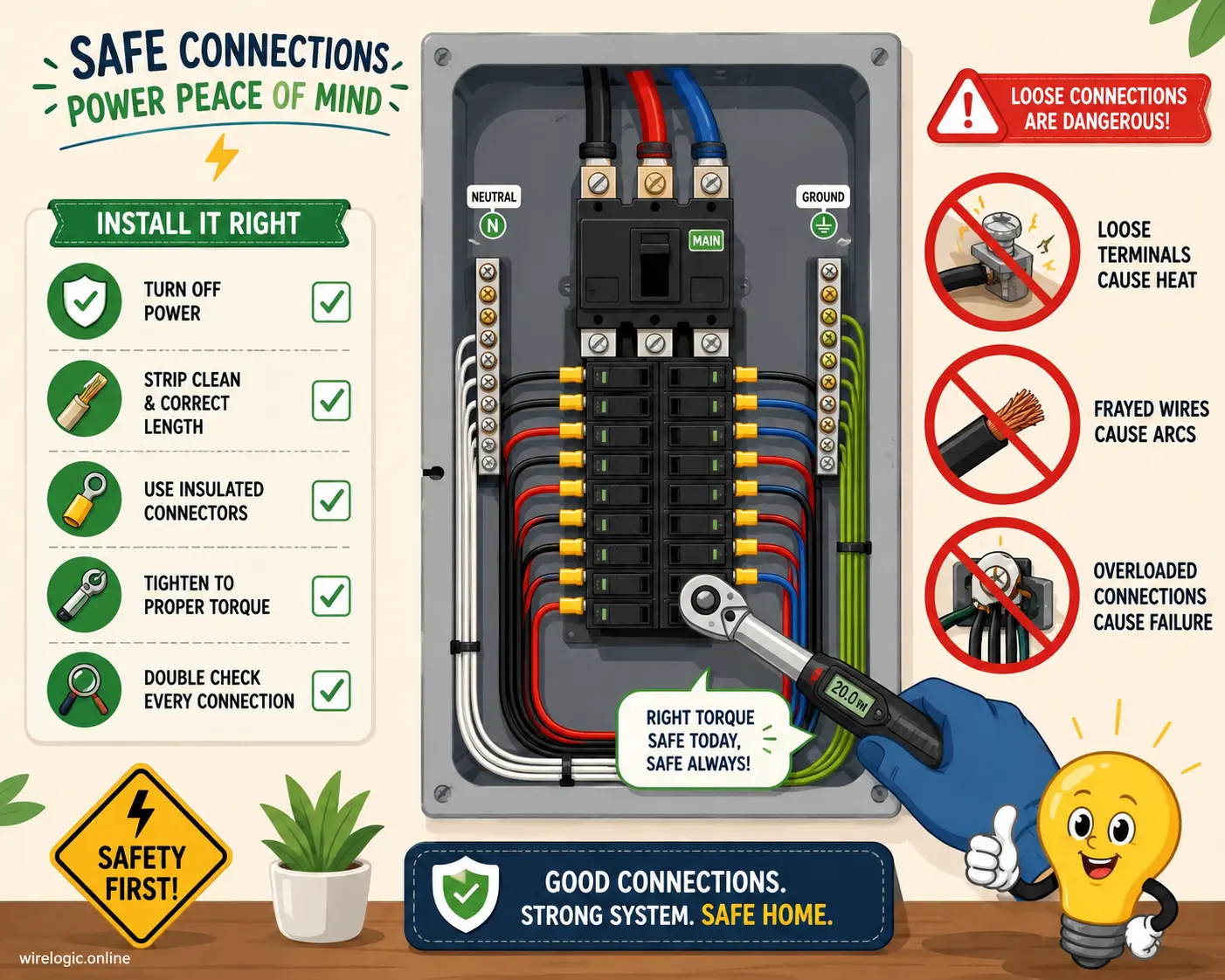
Using the Wrong Terminals or Connectors
One of the biggest mistakes involves mixing conductor materials improperly. Aluminum conductors require connectors specifically rated for aluminum use. Copper-only terminals can loosen, corrode, and overheat when paired with aluminum wire.
Modern aluminum installations typically require:
- AL/CU-rated lugs
- Proper torque application
- Anti-oxidant paste
Several professional electricians emphasize that improper aluminum terminations; not the conductor itself; cause most failures.
Loose connections create resistance. Resistance creates heat. Heat destroys insulation and terminals.
Ignoring Local Electrical Codes
Another dangerous mistake is assuming online advice overrides local code requirements. Electrical regulations vary by region, and inspectors may enforce additional rules beyond NEC minimums.
Some installations require:
- Specific grounding methods
- Conduit types
- Burial depths
- Disconnect locations
- GFCI or AFCI protection
Detached structures often require separate grounding electrode systems and isolated neutrals.
Skipping permit requirements may also create insurance complications if an electrical failure later causes property damage.
Electrical Code Considerations Homeowners Should Know
The National Electrical Code exists because electrical failures can destroy property and endanger lives. While homeowners can learn the basics of conductor sizing, code compliance involves much more than selecting the correct AWG number.
Modern electrical systems require coordinated protection between conductors, breakers, grounding systems, and terminations.
NEC Guidelines for 100 Amp Service
NEC Table 310.16 remains one of the primary references electricians use when sizing conductors. Recent NEC-based references commonly identify:
- 3 AWG copper
- 1 AWG aluminum
as standard minimum conductor sizes for many 100 amp residential feeder applications under 75°C conditions.
The NEC also addresses:
- Voltage drop recommendations
- Conductor derating
- Grounding requirements
- Overcurrent protection
- Feeder installations
- Service entrance conductors
Electrical design becomes especially important for:
- Detached garages
- EV chargers
- Workshops
- Large HVAC systems
- Solar installations
When You Should Hire a Licensed Electrician
Simple electrical tasks may fall within the capabilities of experienced homeowners, but 100 amp feeder installations involve substantial risk. These systems carry enough energy to cause catastrophic injury or fire if installed incorrectly.
A licensed electrician understands:
- Load calculations
- Voltage drop analysis
- NEC compliance
- Local inspection requirements
- Grounding and bonding
- Conductor derating
Professional installation also helps protect property value and insurance eligibility. Many municipalities require permits and inspections for major electrical work anyway.
Electrical systems are not an area where “close enough” works safely.
Conclusion
Choosing the correct copper wire size for 100 amps involves far more than matching a number on a breaker panel. While 3 AWG copper is commonly used for many standard 100 amp residential installations, real-world conditions often require adjustments based on distance, temperature, conduit fill, insulation ratings, and voltage drop considerations.
Copper and aluminum conductors each offer advantages, but they follow different ampacity rules because aluminum carries electricity less efficiently. Long wire runs frequently require upsized conductors to minimize voltage loss and prevent equipment problems. Insulation ratings, termination temperatures, and NEC derating rules all influence safe conductor selection.
Electrical wiring is the circulatory system of a home. When properly designed, it operates quietly and safely for decades. When shortcuts are taken, problems develop invisibly behind walls until serious damage occurs.
Understanding these principles helps homeowners ask better questions, avoid unsafe DIY assumptions, and make smarter decisions when planning electrical upgrades or installations.
FAQs
What is the minimum copper wire size for 100 amps?
For many standard residential applications, 3 AWG copper wire is commonly used as the minimum size for a 100 amp feeder under NEC-based guidelines. Installation conditions may require larger conductors.
Can I use aluminum wire instead of copper for 100 amps?
Yes. Aluminum is commonly used for 100 amp feeders, but it requires a larger conductor size; typically 1 AWG aluminum for applications where 3 AWG copper would be used.
Does wire length affect conductor size?
Absolutely. Long wire runs increase resistance and voltage drop. Electricians often upsize conductors on long-distance runs to maintain efficiency and prevent voltage problems.
Why does insulation type matter for ampacity?
Different insulation materials tolerate different temperatures. Conductors with higher temperature-rated insulation can often carry more current safely under proper installation conditions.
Is voltage drop required by electrical code?
The NEC generally treats voltage drop as a recommendation rather than a strict requirement, but keeping voltage drop below 3% for branch circuits and 5% total is widely recommended for system performance.

Nico Hartwell is a 26-year-old American content creator living in Spokane, Washington. He has developed expertise in software, productivity, and emerging technology through years of independent research and professional writing. As a writer for wirelogic.online, Nico creates informative, balanced articles designed to help readers make confident decisions using accurate, well-organized information.