
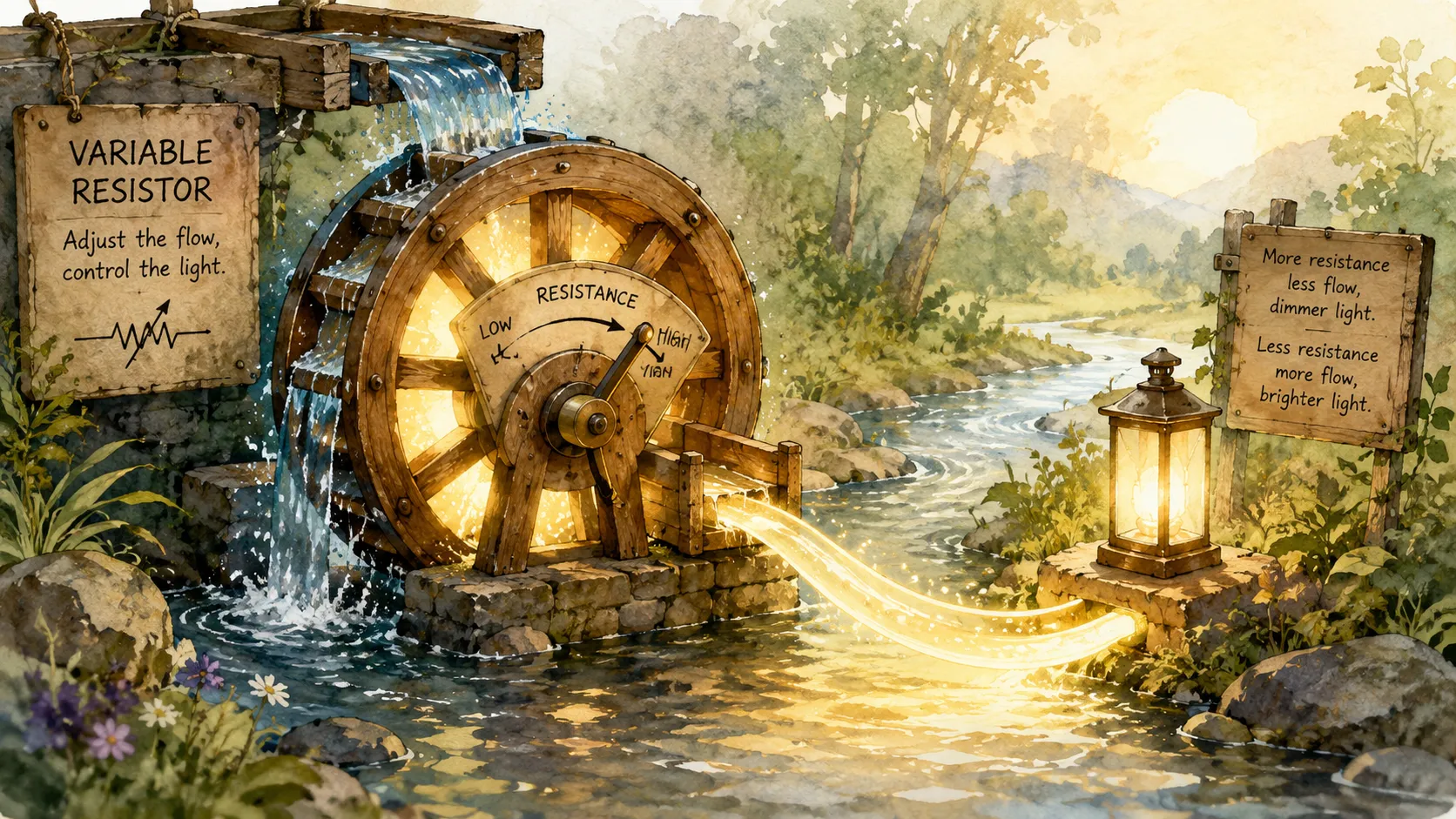
A variable resistor is one of those deceptively simple electronic components that quietly power a huge range of devices around you. At its core, it’s a resistor whose resistance value can be adjusted manually or electronically. Unlike fixed resistors, which maintain a constant resistance, variable resistors allow you to change how much they resist the flow of electric current. Think of it like a faucet controlling water flow; turn it one way, and the flow increases; turn it the other, and the flow decreases.
This adjustability makes variable resistors incredibly useful in circuits where flexibility is key. Whether you’re dimming a light, adjusting volume on a speaker, or calibrating a sensor, variable resistors give you control over how electricity behaves. They typically consist of a resistive track and a movable contact (called a wiper) that slides along the track to change resistance.
The beauty of this component lies in its simplicity and versatility. It doesn’t require complex programming or digital control systems; just a mechanical adjustment can significantly alter circuit behavior. This is why it remains a fundamental building block in both basic and advanced electronics, from hobby projects to industrial systems.
How Resistance Works in Electrical Circuits
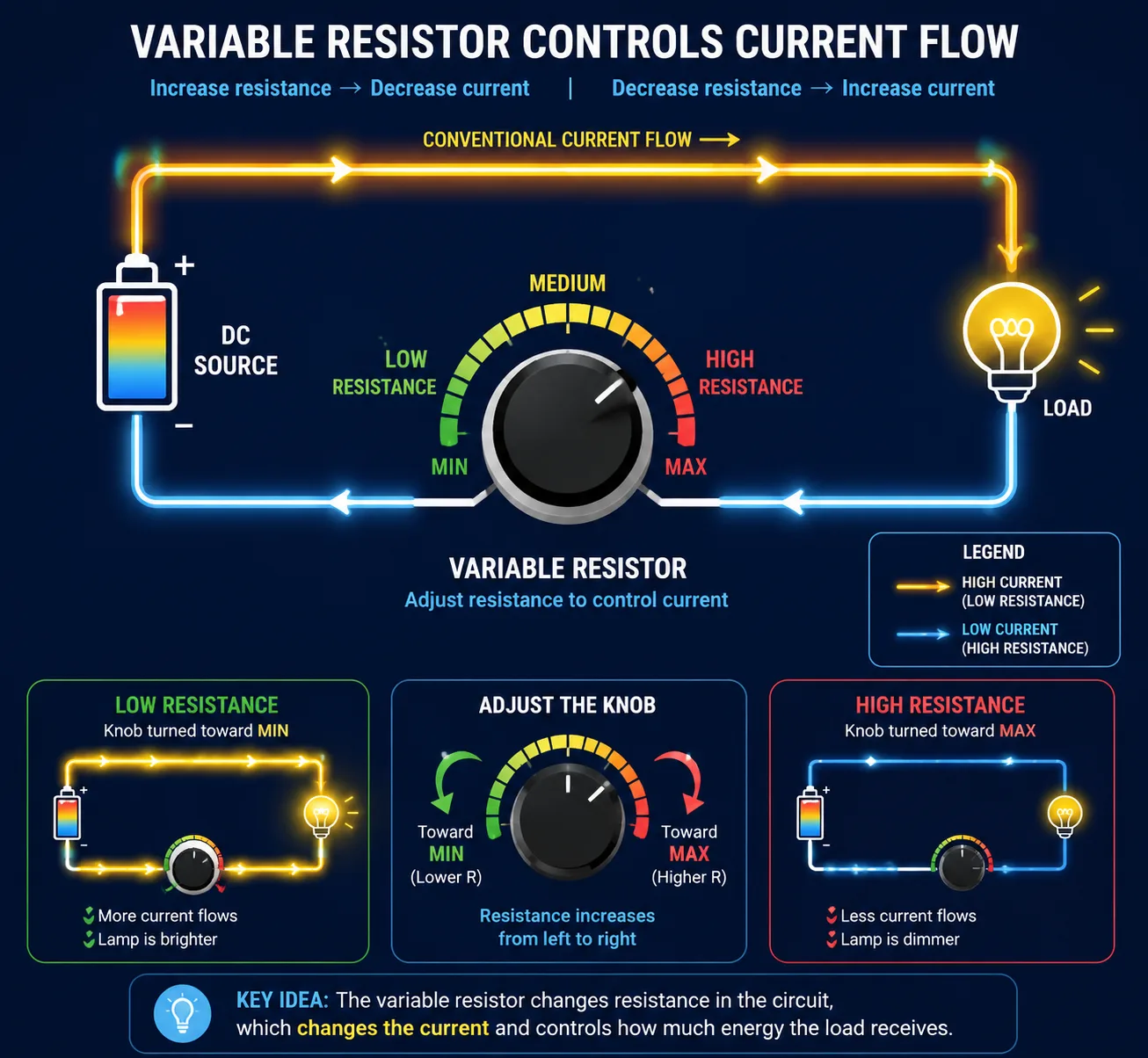
To truly understand the function of a variable resistor, you need to grasp how resistance operates in a circuit. Resistance is essentially the opposition to the flow of electric current, measured in ohms. According to Ohm’s Law, the current flowing through a circuit is inversely proportional to the resistance when voltage remains constant.
Imagine electricity as cars moving along a highway. Resistance is like traffic congestion; more resistance means fewer cars can pass through at any given time. By adjusting resistance, you’re effectively controlling how freely current flows. This directly impacts how components like LEDs, motors, and sensors behave.
Variable resistors take this concept a step further by allowing dynamic control. Instead of being locked into one resistance value, you can tweak it as needed. This flexibility is crucial in applications where conditions change or where user input is required. It’s not just about limiting current; it’s about shaping how energy is distributed across a circuit in real time.
How Variable Resistance Changes Circuit Behavior
Impact on Current Flow
When you adjust a variable resistor, the most immediate effect is on current flow. Increasing resistance reduces the current, while decreasing resistance allows more current to pass. This simple relationship has profound implications for circuit performance. For example, in a lighting circuit, increasing resistance dims the light by reducing the current reaching the bulb.
This control over current is essential in protecting sensitive components. Too much current can damage or destroy electronic parts, so variable resistors act as a safeguard. They let you fine-tune the current to safe and optimal levels. In experimental setups, this is especially valuable because you can test different conditions without redesigning the circuit.
Another interesting aspect is how variable resistors interact with other components. In series circuits, changing resistance affects the entire current path. In parallel circuits, it can influence specific branches. This makes variable resistors incredibly powerful tools for shaping circuit behavior without needing multiple components or complex configurations.
Influence on Voltage Distribution
Variable resistors don’t just affect current; they also play a key role in controlling voltage. When used in certain configurations, such as voltage dividers, they can adjust the voltage delivered to different parts of a circuit. This is particularly important in analog electronics, where precise voltage levels are critical.
Think of voltage as pressure in a water system. By adjusting resistance, you can control how that pressure is distributed across different نقاط. This is how devices like volume knobs work; they adjust the voltage signal sent to a speaker, effectively controlling sound intensity.
This ability to manipulate voltage makes variable resistors indispensable in signal processing and control systems. Whether it’s tuning a radio frequency or adjusting sensor sensitivity, they provide a simple yet effective way to manage electrical signals. It’s like having a dimmer switch for electricity, allowing you to tailor performance בדיוק to your needs.
Controlling Current and Voltage in Adjustable Circuits
Fine-Tuning Electrical Output
In many electronic systems, precision is everything. A slight variation in current or voltage can mean the difference between optimal performance and system failure. This is where variable resistors shine. They allow you to fine-tune electrical output with remarkable accuracy, making them essential in both design and troubleshooting.
Consider a circuit powering an LED. Without proper control, the LED might burn out due to excessive current. By adjusting a variable resistor, you can dial in the exact current needed for safe and efficient operation. This level of control is invaluable in applications where conditions may change, such as temperature-sensitive environments.
Variable resistors also enable customization. Instead of designing a circuit for one fixed scenario, you can adapt it to multiple use cases. This reduces the need for multiple components and simplifies design. It’s like having a multi-tool instead of a single-purpose device; flexible, efficient, and practical.
Real-Time Adjustments in Electronics
One of the most powerful features of variable resistors is their ability to provide real-time adjustments. Unlike digital systems that may require programming or processing delays, variable resistors respond instantly to changes. Turn a knob, and the circuit behavior changes immediately.
This makes them ideal for user interfaces. Volume controls, brightness settings, and tuning dials all rely on this instant responsiveness. It creates a direct connection between the user and the device, enhancing usability and control. There’s something satisfying about physically adjusting a setting and seeing immediate results.
In industrial settings, real-time adjustments can be critical. Engineers can quickly tweak parameters during testing or operation without shutting down the system. This saves time and improves efficiency. It’s a reminder that sometimes, simple analog solutions can outperform more complex digital ones in specific scenarios.
The Difference Between Potentiometers and Rheostats
What Is a Potentiometer
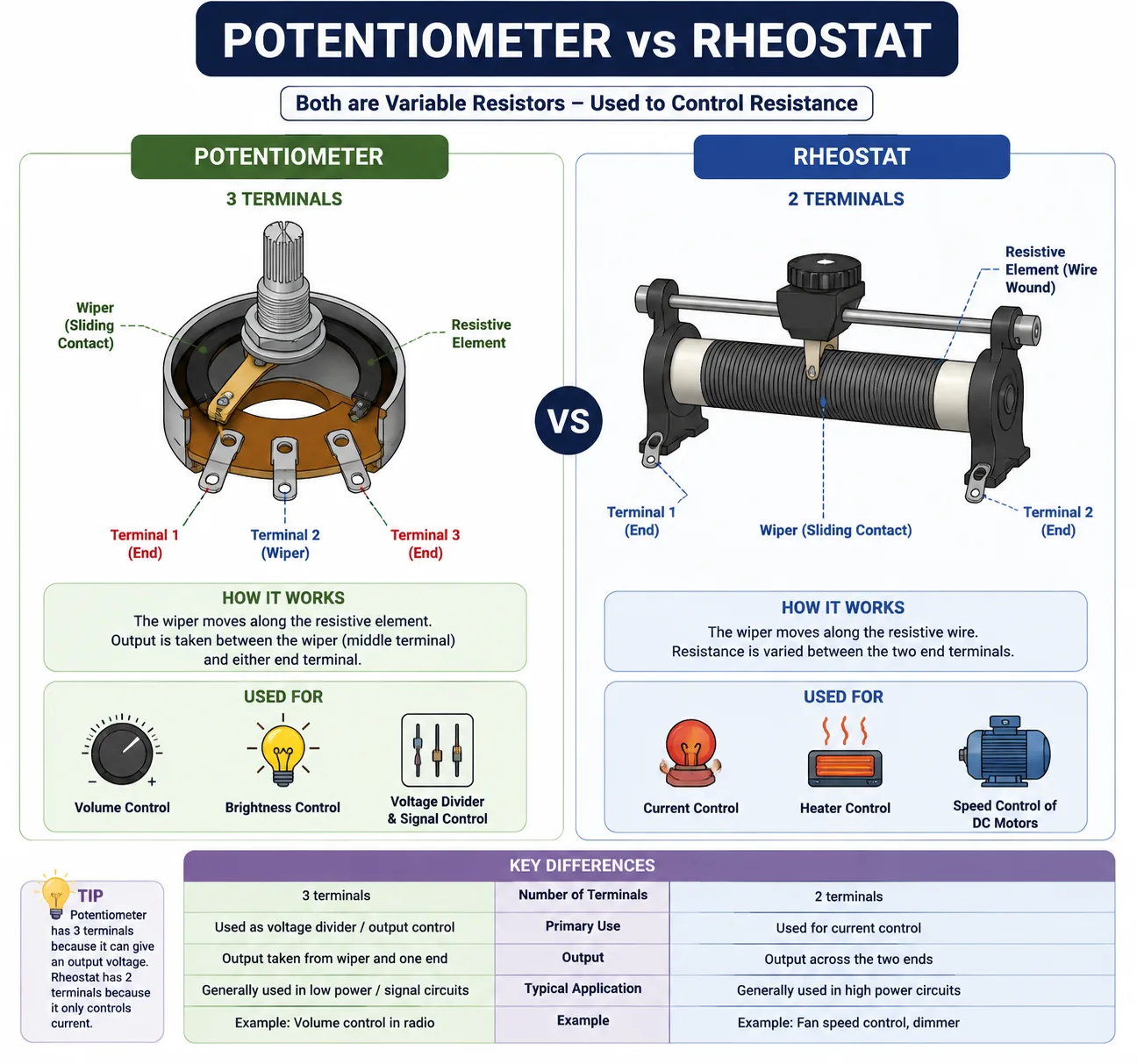
A potentiometer is a type of variable resistor commonly used to control voltage. It typically has three terminals: two connected to the ends of a resistive element and one connected to a movable wiper. By adjusting the wiper position, you can divide the voltage between the terminals, effectively controlling the output voltage.
Potentiometers are widely used in applications where precise voltage control is needed. They’re often found in audio equipment, where they adjust volume by controlling signal levels. Their design allows for smooth and continuous adjustments, making them ideal for user-facing controls.
Common Uses of Potentiometers
Potentiometers appear in a wide range of everyday devices, including:
- Audio volume controls
- Light dimmers
- Tone adjustments in musical equipment
- Calibration tools in electronics
Their versatility and ease of use make them a staple in both consumer and professional electronics.
What Is a Rheostat
A rheostat, on the other hand, is designed primarily to control current rather than voltage. It usually has two terminals and operates by varying resistance in a circuit. Rheostats are typically used in high-power applications where significant current control is required.
Unlike potentiometers, rheostats are built to handle larger currents and dissipate more heat. This makes them suitable for industrial applications, such as controlling motor speeds or adjusting heating elements.
When to Use a Rheostat
Rheostats are ideal when you need to:
- Control high current levels
- Adjust power in heating systems
- Regulate motor speeds
While both potentiometers and rheostats are variable resistors, their design and applications differ significantly. Choosing the right one depends on your specific needs.
Everyday Devices That Use Variable Resistors
Consumer Electronics Applications
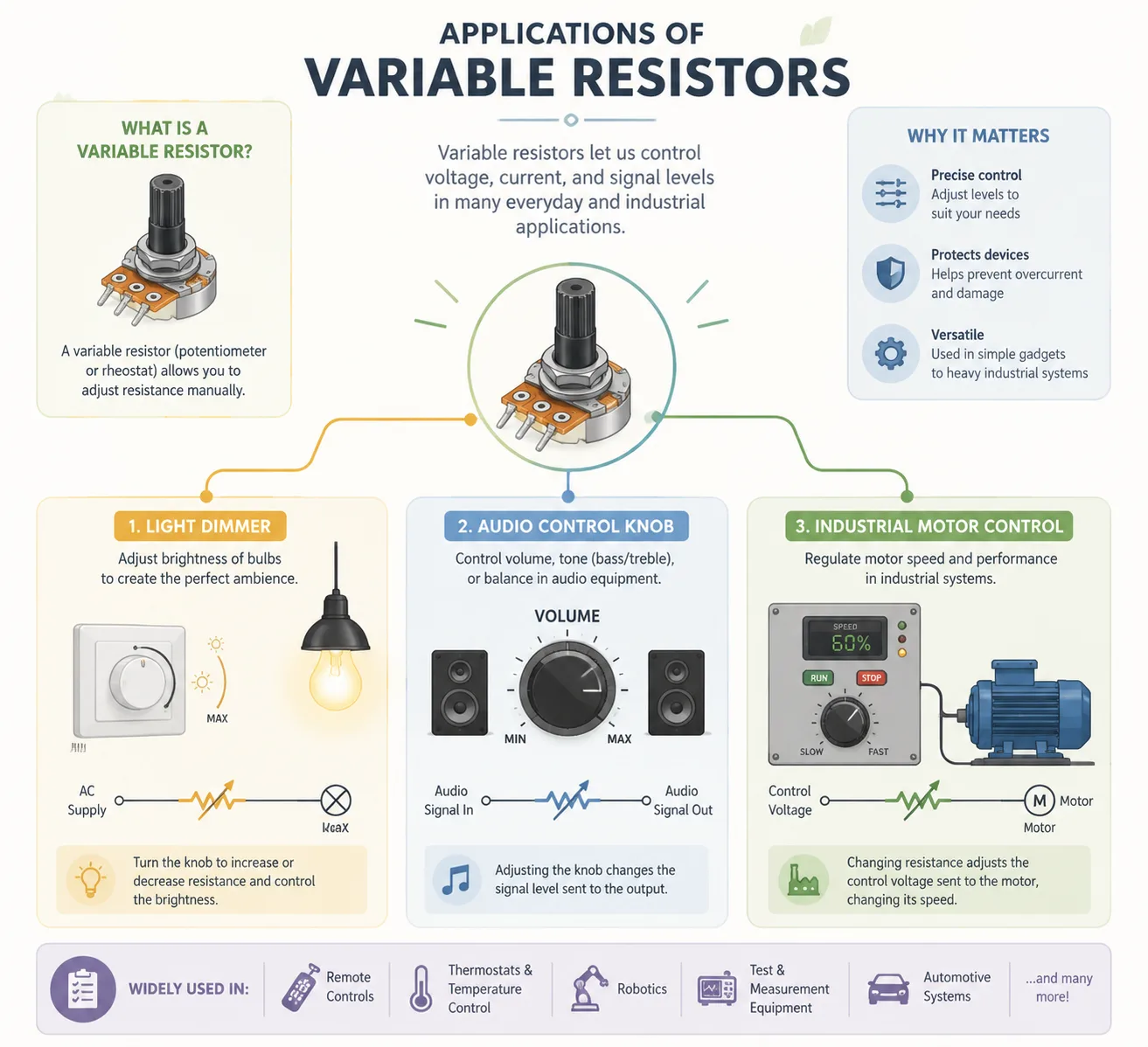
You might not realize it, but variable resistors are everywhere in your daily life. From the moment you wake up to the time you go to bed, you interact with devices that rely on them. One of the most common examples is the volume control on your speakers or headphones. That simple knob adjusts resistance to control the audio signal, giving you the perfect listening experience.
Light dimmers are another familiar application. By adjusting resistance, they control how much current flows to a light bulb, allowing you to set the mood in a room. Even older television sets and radios used variable resistors for tuning and brightness adjustments. These components provide a tactile and intuitive way to interact with technology.
What makes variable resistors so valuable in consumer electronics is their reliability and simplicity. They don’t require complex software or sensors to function. Instead, they offer direct, hands-on control. This makes them not only cost-effective but also user-friendly, which is why they remain widely used despite advances in digital technology.
Industrial and Automotive Uses
Beyond consumer gadgets, variable resistors play a crucial role in industrial and automotive systems. In manufacturing, they are used to control machinery, adjust sensor sensitivity, and fine-tune processes. This level of control is essential for maintaining الجودة and efficiency in production lines.
In the automotive world, variable resistors are used in systems like throttle position sensors, dashboard controls, and climate регулирования. They help monitor and adjust various parameters, ensuring optimal vehicle performance. For example, adjusting the fan speed in your car’s air conditioning system often involves a variable resistor.
These applications highlight the versatility of variable resistors. Whether in a simple household device or a complex industrial system, they provide a reliable way to control electrical behavior. It’s this adaptability that keeps them relevant in modern engineering.
Signal Adjustment and Calibration Applications
Precision Control in Circuits
In many advanced electronic systems, precision is not optional; it’s essential. Variable resistors are often used to fine-tune signals, ensuring that circuits operate within exact parameters. This is especially important in analog circuits, where small variations can significantly impact performance.
For example, in audio equipment, variable resistors can adjust signal levels to prevent distortion. In communication systems, they help tune frequencies for optimal transmission. These adjustments may seem minor, but they can make a huge difference in overall الأداء.
Engineers often rely on variable resistors during the design and testing phases. They allow for quick adjustments without redesigning the circuit. This flexibility speeds up development and improves accuracy. It’s like having a dial for perfection, letting you tweak performance until everything is just right.
Calibration in Measurement Systems
Calibration is another area where variable resistors excel. Measurement devices, such as multimeters and sensors, require precise calibration to ensure accurate readings. Variable resistors provide a simple way to adjust these devices to known standards.
Imagine using a scale that’s slightly off; it would give you incorrect measurements every time. Calibration fixes this, and variable resistors make it possible. By adjusting resistance, you can align the device’s output with expected values.
This is particularly important in scientific applications, where accuracy is critical. Even a small error can lead to significant consequences. Variable resistors help eliminate these errors, ensuring reliable and consistent performance.
Wear, Dust, and Performance Issues Over Time
Common Causes of Degradation
Like any mechanical component, variable resistors are subject to wear and tear over time. The constant movement of the wiper across the resistive track can cause gradual degradation. Dust and debris can also accumulate, interfering with electrical contact and causing inconsistent performance.
This often manifests as noise or “scratchiness” in audio applications. You might notice this when adjusting a volume knob and hearing crackling sounds. It’s a clear sign that the variable resistor is no longer functioning optimally.
Environmental factors, such as humidity and temperature, can also affect performance. Over time, these elements can degrade the materials داخل the resistor, reducing its effectiveness. Understanding these issues is key to maintaining reliable operation.
Maintenance and Longevity Tips
To extend the life of variable resistors, regular maintenance is essential. Keeping them clean and free of dust can significantly improve performance. In some cases, specialized cleaning solutions can restore functionality.
Proper handling is also important. Avoid excessive force when adjusting knobs, as this can damage internal components. In critical applications, using sealed or high-quality variable resistors can reduce the risk of degradation.
By taking these precautions, you can ensure that your variable resistors continue to perform effectively over time. It’s a small investment of effort that can yield significant benefits in reliability and الأداء.
Why Variable Resistance Matters in Electronic Design
Flexibility and Adaptability
In the world of electronics, flexibility is a major advantage. Variable resistors provide this by allowing circuits to adapt to different conditions and requirements. Instead of being locked into a fixed configuration, you can adjust parameters as needed.
This adaptability is particularly valuable in prototyping and experimentation. Engineers can test different scenarios without redesigning the circuit, saving time and resources. It’s like having a built-in adjustment tool that makes development more efficient.
Variable resistors also enable customization for end users. Devices can be tailored to individual preferences, enhancing user experience. Whether it’s adjusting brightness or volume, this level of control makes technology more accessible and enjoyable.
Enhancing User Control and Efficiency
Ultimately, variable resistors enhance both control and efficiency in electronic systems. They provide a simple yet powerful way to manage electrical behavior, making them indispensable in a wide range of applications.
By allowing real-time adjustments, they improve usability and responsiveness. Users can interact with devices in a more intuitive way, creating a better overall experience. At the same time, engineers benefit from their versatility and ease of integration.
This combination of simplicity and functionality is what makes variable resistors so important. They may not be the most glamorous components, but they play a critical role in making modern electronics work the way they do.
Conclusion
Variable resistors are fundamental components that bring flexibility, control, and precision to electronic circuits. From adjusting current and voltage to enabling real-time user interaction, their role is both practical and essential. Whether in simple household devices or complex industrial systems, they provide a reliable way to manage electrical behavior. Understanding how they work; and how to use them effectively; opens the door to better design, improved performance, and greater innovation in electronics.
FAQs
1. What is the main purpose of a variable resistor?
The main purpose is to adjust resistance in a circuit, allowing control over current and voltage levels for different applications.
2. How does a potentiometer differ from a rheostat?
A potentiometer controls voltage using three terminals, while a rheostat controls current and typically uses two terminals.
3. Where are variable resistors commonly used?
They are used in audio controls, light dimmers, industrial machinery, automotive systems, and calibration उपकरण.
4. Why do variable resistors wear out over time?
Mechanical movement, dust accumulation, and environmental factors can degrade the internal components, affecting performance.
5. Can variable resistors be replaced easily?
Yes, in most cases they can be replaced, but it’s important to match the सही specifications to ensure proper operation.

Colt Marlowe is a 29-year-old American content writer based in Boise, Idaho. He specializes in technology, digital tools, and online business topics, combining years of research with practical experience to produce clear, trustworthy articles. As a contributor to wirelogic.online, he focuses on creating well-researched, reader-friendly content that emphasizes accuracy, transparency, and long-term value for audiences seeking reliable information.