
Most people think a thermostat is just a little box on the wall that controls temperature. You tap a button, hear a click, and warm air magically starts flowing through the vents. But behind that simple interaction sits an entire communication network made up of low-voltage wires, terminals, relays, and control boards. One of the most important pieces in that network is the white wire, commonly connected to the W terminal. This small wire plays a massive role in telling your heating system when to turn on and when to stop.
Modern HVAC systems rely heavily on accurate wiring connections. According to guidance from , thermostat wires control heating, cooling, fan operation, compressors, reversing valves, and even emergency heat systems. That means a single incorrect wire placement can make your furnace refuse to start, your heat pump cool instead of heat, or your smart thermostat fail completely. It’s a bit like connecting the wrong cables behind a gaming console and wondering why the screen stays black.
The challenge is that many homeowners assume wire colors are universal. They are not. HVAC professionals regularly warn that installers sometimes reuse colors or wire systems differently from industry conventions. That’s why understanding the function of the white wire matters more than memorizing color alone. Whether you are replacing an old thermostat, installing a smart thermostat, or troubleshooting a heating issue during winter, understanding how the white wire works can save you frustration, wasted money, and cold nights.
The Hidden Communication System Behind HVAC Equipment
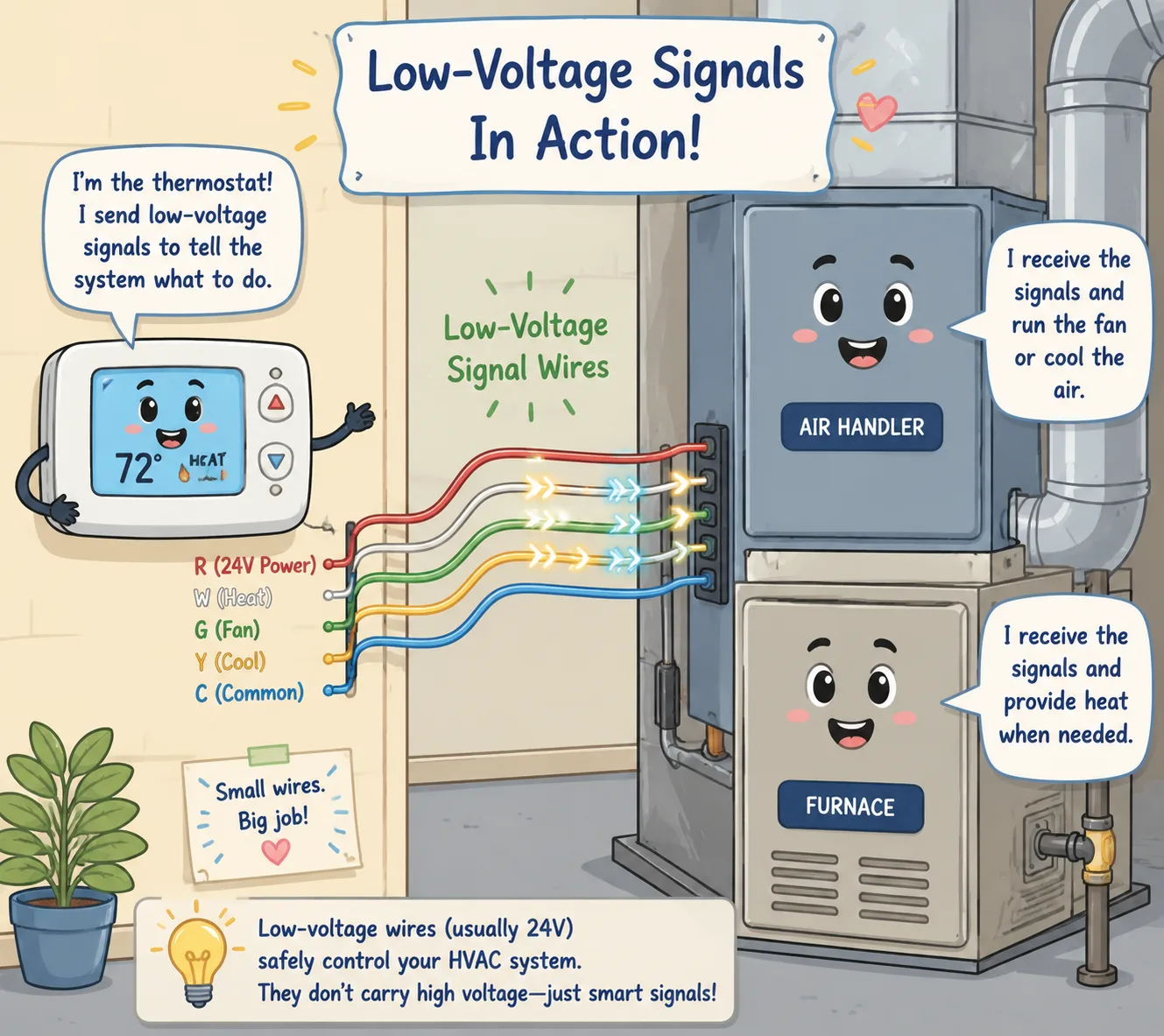
Your thermostat uses low-voltage electrical signals to communicate with your HVAC system. Think of it as a traffic controller directing heating and cooling equipment. Each wire carries a different instruction. The red wire supplies power, the yellow wire typically controls cooling, the green wire controls the fan, and the white wire usually controls heating. When the thermostat senses that room temperature has fallen below the desired setting, it sends a signal through the white wire to activate the furnace or heating stage.
Why a Single Loose Wire Can Shut Down Your Heat
A loose white wire connection may completely interrupt heating operation. HVAC troubleshooting guides consistently identify loose thermostat connections as one of the most common reasons heating systems fail. Even if every other component works perfectly, a disconnected W terminal prevents the furnace from receiving the “turn on heat” command. That’s why technicians always inspect thermostat wiring before replacing expensive HVAC parts.
What Is the White Wire on a Thermostat?
The white wire on a thermostat traditionally controls the heating system. In standard furnace setups, it connects to the W terminal, which signals the furnace to begin the heating cycle. When your thermostat calls for heat, electrical current travels through the white wire and activates the furnace control board. The furnace then ignites burners or energizes heating elements and starts circulating warm air throughout the house.
Industry-standard HVAC color coding generally identifies the white wire as the heating wire. However, professionals repeatedly caution homeowners not to rely solely on color because some installers repurpose wires based on availability. That’s why thermostat manufacturers recommend identifying wires by terminal labels rather than color. Imagine following a road map where street names suddenly changed halfway through town. That’s essentially what happens when wire colors don’t match standard conventions.
In many homes with conventional gas or electric furnaces, the white wire activates the primary heating stage. More advanced systems may use additional heating terminals like W2 for second-stage heating. Heat pump systems often use the white wire differently, assigning it to auxiliary or emergency heating functions instead of primary heating. That distinction becomes critical during thermostat replacement because improper configuration can cause strange HVAC behavior.
The Traditional Purpose of the White Wire
In traditional HVAC systems, the white wire’s main job is straightforward: control heat. When indoor temperatures drop below the thermostat setting, the thermostat closes the heating circuit between R and W. That action tells the furnace to begin heating. Once the target temperature is reached, the thermostat opens the circuit and the furnace shuts off.
How the White Wire Sends Heating Commands
The thermostat uses a low-voltage 24VAC system. The red wire provides power from the HVAC transformer, while the white wire acts like a messenger carrying the heating command back to the furnace control board. When connected properly, the system works almost instantly. When connected incorrectly, the results can range from no heat at all to constantly running furnaces.
The Role of the White Wire in Heating Systems
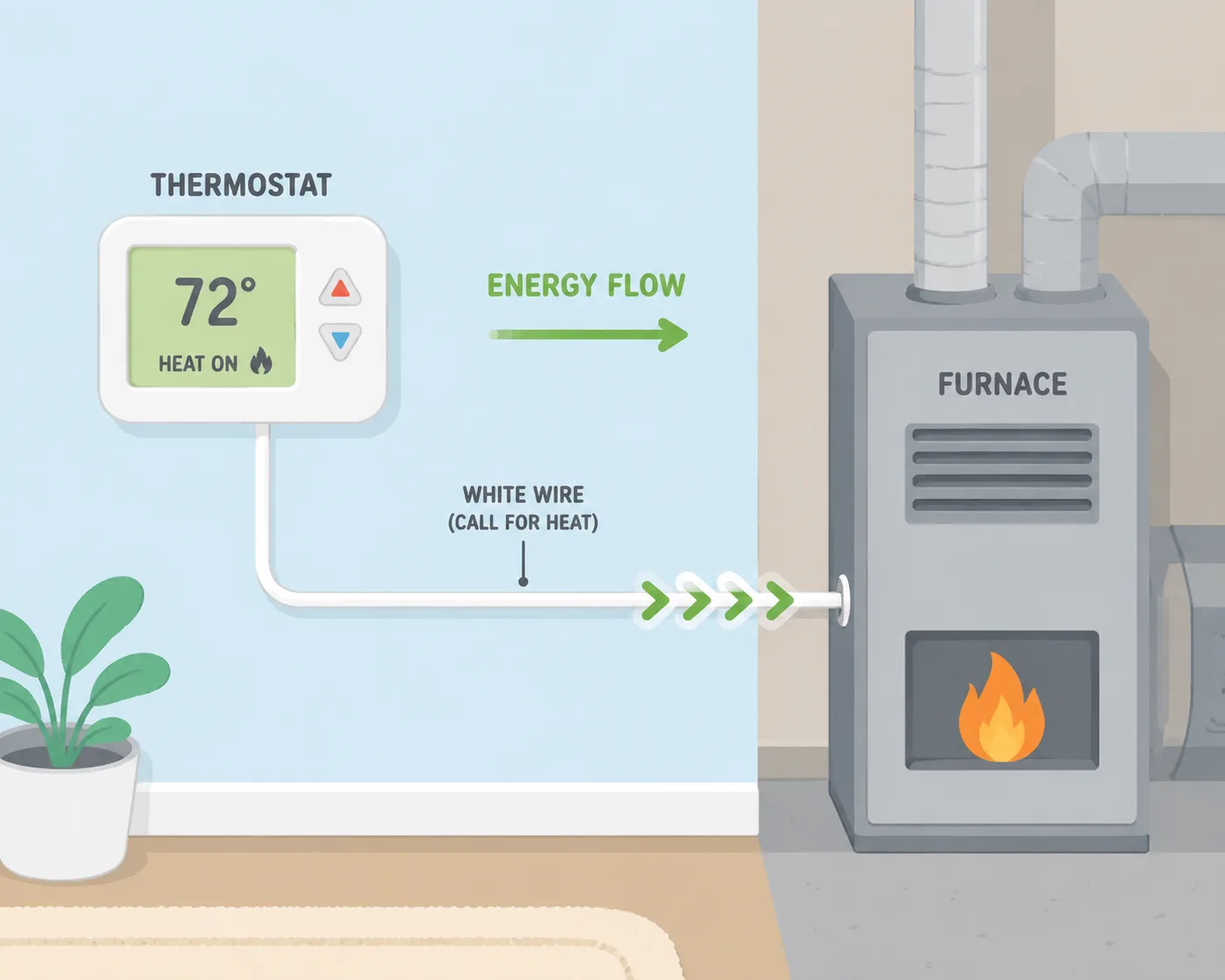
The white wire acts as the bridge between your thermostat and your home’s heating equipment. Without it, the thermostat has no reliable way to request heat. It’s similar to pressing the accelerator pedal in a car. The engine may be fully functional, but without that signal connection, the vehicle never moves.
In a standard forced-air furnace system, the white wire connects directly to the furnace control board’s W terminal. Once energized, the furnace initiates a sequence involving ignition, blower activation, and airflow regulation. The process happens within seconds, yet every stage depends on that initial thermostat signal. HVAC experts emphasize that this wiring relationship is one of the most important connections inside residential heating systems.
The white wire also plays a major role in multi-stage heating systems. Modern furnaces increasingly use two-stage or variable-speed technology for better efficiency and comfort. In those systems, the thermostat may use W1 and W2 terminals to control different heating intensities. The first stage handles mild heating demands, while the second stage activates during colder conditions. This staged approach improves energy efficiency while reducing temperature swings.
How Furnaces Respond to the W Terminal
When the thermostat energizes the W terminal, the furnace control board interprets it as a heating request. Gas furnaces typically begin by activating an inducer motor, checking pressure switches, igniting burners, and then starting the blower fan. Electric furnaces energize heating strips instead. Either way, the white wire triggers the entire process.
Single-Stage vs Multi-Stage Heating
Single-stage systems use one heating level only. Multi-stage systems can operate at different capacities. In these setups, W1 often controls low-stage heating while W2 activates higher heating output. Some smart thermostats automatically decide when to activate second-stage heating for efficiency.
How the White Wire Connects to the Furnace
The white wire usually travels from the thermostat wall plate directly to the furnace control board. At the thermostat, it connects to the W terminal. At the furnace, it typically connects to a corresponding W input on the control board. This creates a complete low-voltage control loop between the thermostat and the furnace.
One common misunderstanding is assuming the thermostat powers the furnace directly. It does not. The thermostat acts more like a switch. The furnace transformer supplies low-voltage power, and the thermostat simply routes that power through different wires depending on heating or cooling demands. When the thermostat closes the R-to-W circuit, the furnace receives the signal to activate heat.
Improper installation often causes major HVAC issues. Homeowners replacing thermostats sometimes disconnect wires without labeling them first. Others rely only on wire colors instead of terminal designations. HVAC professionals frequently warn against this mistake because older homes may contain non-standard wiring. One installer may have used a white wire for heating, while another reused that same wire for a reversing valve or auxiliary heat years later.
Understanding the W and W2 Terminals
The W terminal typically controls primary heating. W2 usually controls secondary or auxiliary heating. In multi-stage furnaces and heat pumps, these separate terminals allow thermostats to manage heating output more precisely. Heat pump systems often use W2 for backup electric heat strips during freezing weather.
What Happens Inside the Furnace Control Board
Once the W signal reaches the furnace board, relays and safety circuits begin operating. The board checks for safe ignition conditions, activates burners or heating elements, and controls blower timing. Modern control boards also monitor errors and may shut down heating if unsafe conditions occur.
Thermostat Terminals and What They Control
Understanding thermostat terminals makes HVAC wiring far less intimidating. Most residential thermostats use similar terminal labels regardless of brand. According to thermostat wiring guides from Honeywell and HVAC industry resources, the most common terminals include R, C, Y, G, W, and O/B.
Here’s a simplified breakdown of standard thermostat terminals:
| Terminal | Typical Function | Common Wire Color |
|---|---|---|
| R / Rc / Rh | 24V power | Red |
| W / W1 | Heating | White |
| Y / Y1 | Cooling compressor | Yellow |
| G | Fan control | Green |
| C | Common wire | Blue/Black |
| O/B | Heat pump reversing valve | Orange |
| Aux / E | Auxiliary heat | White/Brown |
Even though these colors are widely accepted, HVAC experts stress that terminal labels matter more than wire colors. Smart thermostat installation failures often happen because homeowners move wires according to color instead of matching terminal positions.
Common Thermostat Wire Colors Explained
Color coding exists to simplify installation and service. White usually indicates heat, yellow indicates cooling, green controls the fan, and red carries power. Heat pumps introduce additional colors and terminals because they operate differently from standard furnaces.
Standard Terminal Functions
Each thermostat terminal controls a specific HVAC function. Together, they create a complete communication network between the thermostat and HVAC equipment. Once you understand those relationships, diagnosing problems becomes much easier.
Differences Between Heat Pump and Standard Wiring
One of the biggest areas of confusion in thermostat wiring involves heat pump systems. Standard furnaces and heat pumps operate differently, so their wiring setups differ too. In conventional furnace systems, the white wire usually controls primary heating. In heat pumps, the white wire often controls auxiliary heat or emergency heat instead.
Heat pumps heat homes by transferring heat rather than generating it directly. They use a reversing valve to switch between heating and cooling modes. That’s why heat pumps require additional terminals like O/B. The thermostat must tell the reversing valve whether to operate in heating or cooling mode. Standard furnaces do not need this function.
This distinction creates problems during thermostat upgrades. Many homeowners replace an old thermostat with a smart thermostat and assume the wiring is identical. Then suddenly the system cools when heat is selected or emergency heat runs constantly. Reddit HVAC discussions show countless examples of homeowners struggling with heat pump wiring confusion.
Suggested Reading:
Why Heat Pumps Use Extra Terminals
Heat pumps use compressors for both heating and cooling. The reversing valve changes refrigerant direction to switch operating modes. Auxiliary heating strips provide backup heat during extremely cold temperatures. These extra functions require additional thermostat terminals and wiring complexity.
Auxiliary and Emergency Heat Functions
In many heat pump systems, the white wire connects to AUX or E terminals. Auxiliary heat activates automatically when outdoor temperatures become too cold for the heat pump alone. Emergency heat bypasses the heat pump entirely and runs backup heating elements directly.
Common Wiring Mistakes During Thermostat Installation
Thermostat installation seems easy until wiring problems appear. One of the most common mistakes is assuming wire colors always follow standard conventions. HVAC professionals repeatedly warn homeowners that wire color alone should never determine terminal placement.
Another major mistake involves forgetting to shut off HVAC power before changing thermostat wiring. Even though thermostat systems use low voltage, improper handling can still damage equipment or blow control board fuses. Homeowners also frequently forget to photograph existing wiring before disconnecting old thermostats. That single oversight often turns a 15-minute project into hours of troubleshooting frustration.
Smart thermostat installations introduce another layer of complexity. Many smart thermostats require a C-wire for continuous power. Older systems often lack this wire, forcing homeowners to install adapters or additional wiring. Heat pump systems complicate things even further because thermostat setup menus must correctly identify system type and reversing valve configuration.
Confusing Wire Colors With Terminal Labels
This mistake causes endless HVAC problems. A white wire does not automatically belong on W. Always match wires according to the original terminal labels or furnace control board designations.
Smart Thermostat Compatibility Problems
Smart thermostats often require system configuration during setup. Selecting “standard furnace” instead of “heat pump” can completely reverse heating and cooling operation.
Troubleshooting Heating Problems Linked to the White Wire
When a heating system stops working, the white wire should always be part of the troubleshooting process. Since it carries the heating command signal, any issue involving that wire can interrupt furnace operation. Loose terminals, broken wires, blown fuses, incorrect thermostat configuration, and damaged control boards can all mimic white-wire problems.
One of the simplest diagnostic methods involves checking thermostat terminal connections. HVAC experts recommend verifying that the white wire is securely attached to the W terminal at both the thermostat and furnace control board. If the connection feels loose or corroded, tightening or replacing it may restore operation immediately.
Advanced troubleshooting sometimes requires using a multimeter to test for 24VAC signals between R and W during a heating call. If voltage appears at the thermostat but not at the furnace board, the wiring path may be damaged. If voltage never appears, the thermostat itself may be faulty.
Signs of a Faulty White Wire Connection
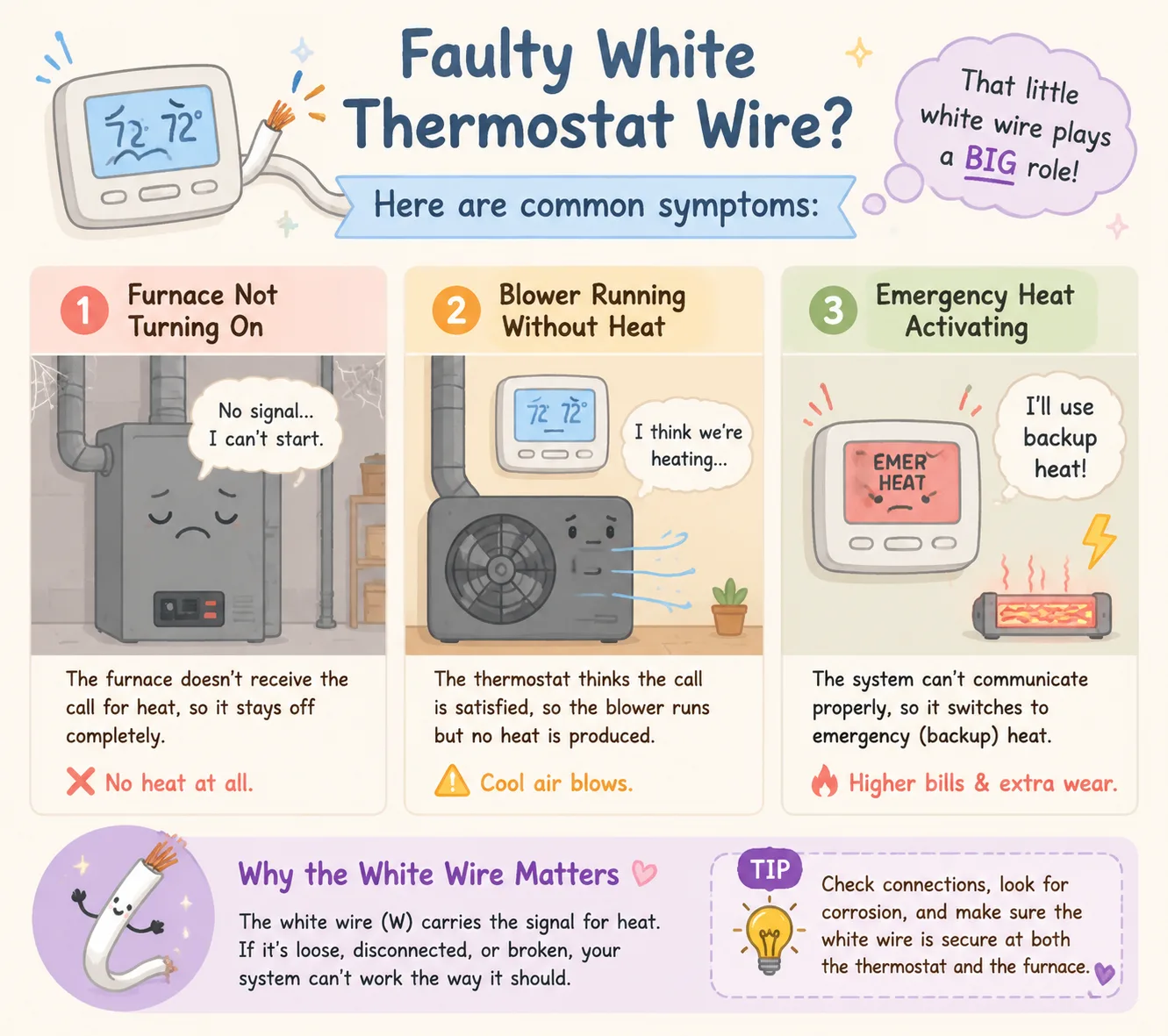
Common symptoms include:
- Furnace not turning on
- Blower running without heat
- Emergency heat activating incorrectly
- Intermittent heating
- Clicking sounds without ignition
- Smart thermostat heating errors
Step-by-Step Diagnostic Tips
- Turn off HVAC power at the breaker.
- Inspect thermostat wiring connections.
- Verify W terminal placement.
- Check furnace control board wiring.
- Inspect for damaged or pinched wires.
- Restore power and test heating mode.
- Use a multimeter if necessary.
If heating still fails, professional HVAC diagnosis may be necessary because control board failures and transformer issues can produce similar symptoms.
Safety Tips Before Working on Thermostat Wiring
Working with thermostat wiring is safer than handling high-voltage electrical circuits, but precautions still matter. Always shut off HVAC power at the breaker before touching wiring. This protects both you and the HVAC equipment. Accidentally shorting wires together can damage transformers, blow low-voltage fuses, or harm expensive control boards.
Photograph existing wiring before disconnecting anything. That single habit prevents most installation mistakes. Label wires using masking tape if necessary. HVAC professionals also recommend verifying system type before installing new thermostats because furnace wiring differs significantly from heat pump wiring.
If you encounter unfamiliar terminals like O/B, AUX, E, or dual-transformer Rc/Rh systems, consulting the thermostat manual becomes essential. Even experienced DIY homeowners sometimes struggle with advanced HVAC configurations. There’s no shame in calling a licensed HVAC technician when wiring becomes confusing. A professional service call costs far less than replacing a damaged furnace board or compressor.
Conclusion
The white wire on a thermostat may look small and insignificant, but it serves as one of the most important communication lines in your HVAC system. In traditional furnace systems, it typically controls heating through the W terminal. In heat pump systems, it often manages auxiliary or emergency heat functions. Understanding this distinction is essential for thermostat replacement, troubleshooting, and HVAC upgrades.
Thermostat wiring mistakes remain one of the leading causes of heating problems after DIY installations. The biggest lesson is simple: trust terminal labels more than wire colors. HVAC systems evolve over time, and installers often repurpose wires in unexpected ways. A properly connected white wire helps your heating system operate smoothly, efficiently, and safely throughout the cold season.
Whether you’re installing a smart thermostat, diagnosing furnace issues, or simply trying to understand your HVAC system better, knowing how the white wire works gives you a huge advantage. It transforms thermostat wiring from a confusing maze into a logical communication system that becomes far easier to maintain and troubleshoot.
FAQs
1. What does the white wire do on a thermostat?
The white wire usually controls the heating system. It connects to the W terminal and signals the furnace or heating equipment to turn on.
2. Is the white wire always connected to W?
No. In heat pump systems, the white wire may connect to AUX, E, or W2 terminals instead of standard W terminals.
3. Can incorrect white wire placement stop heating?
Yes. If the white wire is connected incorrectly, the furnace may not receive heating commands, causing no-heat problems.
4. Why does my heat pump use the white wire differently?
Heat pumps use auxiliary and emergency heat systems, so the white wire often controls backup heating rather than primary heating.
5. Should I rely on thermostat wire colors during installation?
No. HVAC professionals recommend identifying wires by terminal labels because wire colors can vary between installations.

Colt Marlowe is a 29-year-old American content writer based in Boise, Idaho. He specializes in technology, digital tools, and online business topics, combining years of research with practical experience to produce clear, trustworthy articles. As a contributor to wirelogic.online, he focuses on creating well-researched, reader-friendly content that emphasizes accuracy, transparency, and long-term value for audiences seeking reliable information.