
When it comes to outdoor electrical projects, choosing the right wire matters more than most homeowners realize. You can build the perfect backyard workshop, install elegant landscape lighting, or add power to a detached garage, but if the wrong cable sits underground, moisture and corrosion will eventually win the battle. That is exactly where UF-B wire enters the picture. This specialized electrical cable is designed to survive harsh outdoor conditions that would quickly destroy ordinary indoor wiring.
Many people confuse UF-B cable with standard NM-B Romex because they look somewhat similar at first glance. The difference is like comparing hiking boots to bedroom slippers. One is built to face mud, rain, pressure, and rough terrain, while the other is designed for comfortable indoor conditions. UF-B cable exists specifically for environments where moisture, sunlight, soil, and temperature swings create constant stress on electrical systems.
Electricians commonly rely on UF-B cable for underground power runs, outdoor lighting circuits, detached structures, pumps, and many other exterior applications. According to current National Electrical Code guidance, UF-B cable is approved for wet locations and direct burial underground without conduit in many installations.
Before digging trenches or planning an outdoor circuit, it helps to fully understand how UF-B cable works, where it performs best, and where it should never be used. That knowledge can save money, prevent electrical failures, and protect your property for decades.
Understanding What UF-B Wire Actually Is
What the Letters UF-B Mean
The term UF-B stands for Underground Feeder and Branch Circuit cable. The name itself practically describes the job it performs. This cable was engineered specifically for electrical circuits that travel underground or operate in damp and wet outdoor environments. Unlike standard indoor electrical cable, UF-B can tolerate direct exposure to soil moisture and changing weather conditions without rapidly degrading. That durability is the core reason electricians use it for outdoor residential wiring projects.
The “B” designation refers to the cable’s insulation rating and temperature classification. Modern UF-B cable typically carries a 600-volt rating and is approved for wet, dry, and corrosive locations under NEC standards. This means the same cable can travel underground outdoors and then continue indoors to connect with an electrical panel or subpanel. That flexibility makes installation simpler and more practical for homeowners.
A good way to think about UF-B wire is to imagine a submarine cable compared to a standard indoor extension cord. Indoor wire assumes the environment stays dry and protected. UF-B assumes nature will attack it constantly with rainwater, shifting dirt, temperature changes, and even sunlight. Because of that expectation, its insulation and outer jacket are significantly tougher than ordinary household cable.
Homeowners often encounter UF-B during projects involving detached garages, sheds, outdoor receptacles, pumps, or landscape lighting systems. These applications require dependable underground power delivery that remains safe year after year. Since outdoor electrical repairs can become expensive and disruptive, installing the correct cable from the beginning matters enormously.
How UF-B Cable Is Constructed
UF-B cable looks similar to NM-B Romex at first glance, but internally it is built very differently. Standard indoor cable contains insulated conductors wrapped loosely inside an outer sheath. UF-B cable, however, embeds the conductors inside a solid thermoplastic material that forms a unified moisture-resistant structure.
That solid construction creates several advantages. First, water has a much harder time penetrating the cable. Second, the cable resists crushing pressure from soil and rocks more effectively. Third, the cable tolerates sunlight exposure and outdoor temperature swings far better than indoor-rated alternatives. The outer PVC jacket is specifically designed to resist moisture, fungus, corrosion, and UV damage.
The downside is that UF-B can be frustrating to work with. Electricians often joke that stripping UF-B feels like wrestling an alligator because the jacket is thick and tightly bonded around the conductors. Unlike Romex, which peels apart fairly easily, UF-B requires more effort and specialized stripping tools. That extra difficulty exists for a reason: stronger protection.
Most residential UF-B cables contain copper conductors and come in common sizes like 14/2, 12/2, 12/3, and 6/3. The first number refers to wire gauge, while the second indicates the number of insulated conductors. A ground wire is usually included as well. Choosing the correct size depends on the circuit load, distance, and intended application.
What Makes UF-B Wire Different From Standard Indoor Cable
UF-B vs NM-B Romex
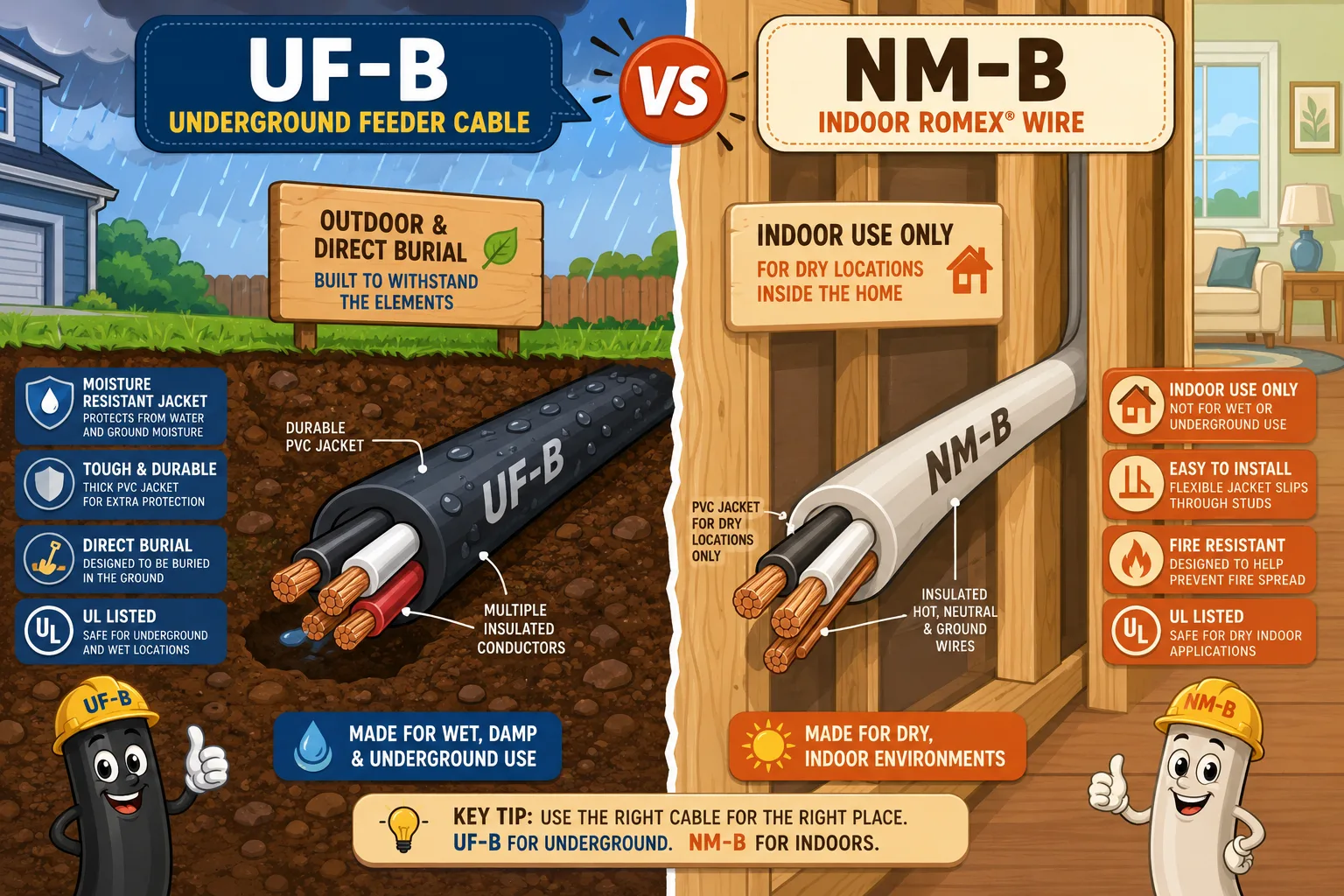
The most common comparison people make is between UF-B cable and NM-B Romex. Understanding this difference prevents one of the biggest mistakes homeowners make during outdoor electrical work. NM-B cable is intended for dry indoor environments only. UF-B cable is designed for wet locations and underground installations.
Imagine wearing a cotton T-shirt during a rainstorm versus wearing a waterproof jacket. The T-shirt works perfectly indoors but fails quickly outdoors. That is exactly how Romex behaves underground. Even if you place NM-B inside conduit outdoors, many code interpretations still prohibit it because moisture eventually enters underground conduit systems. Water intrusion underground is practically inevitable over time.
UF-B cable handles those conditions because its insulation and jacket are specifically rated for wet environments. The cable can survive direct soil contact for decades when installed correctly. This makes it ideal for underground feeder circuits supplying power to detached structures or outdoor equipment.
Another important distinction involves durability. UF-B cable resists sunlight exposure, fungal growth, corrosion, and physical stress much better than NM-B cable. Outdoor installations constantly face expansion, contraction, and environmental wear. Standard indoor cable simply was not engineered for those conditions.
There is also a practical difference in flexibility. Romex bends easily and installs quickly inside walls. UF-B is stiffer, heavier, and harder to manipulate. That tradeoff comes with the added protection necessary for outdoor performance. Many electricians still prefer THWN conductors inside conduit for long underground runs because UF-B can be difficult to pull through bends and tight spaces.
Why Moisture Resistance Matters
Electricity and moisture are natural enemies. Even small amounts of water intrusion can slowly degrade insulation, corrode copper conductors, and create dangerous electrical faults. Underground installations remain especially vulnerable because soil constantly holds moisture, even in regions that appear dry on the surface.
UF-B cable solves this issue through its moisture-resistant construction. The conductors are fully embedded within solid insulation, creating a much tighter barrier against water infiltration than ordinary cable. This protection becomes crucial in rainy climates, snowy regions, or landscapes with irrigation systems.
Outdoor circuits often experience condensation, flooding, and temperature swings that generate moisture inside junction boxes and conduit systems. Without proper wet-rated cable, these conditions gradually weaken insulation integrity. Over time, the risk of short circuits, nuisance breaker trips, and electrical fires increases dramatically.
The National Electrical Code recognizes underground locations as wet environments by default. That means all underground wiring methods must account for moisture exposure regardless of local climate conditions. This surprises many homeowners who assume dry soil means dry electrical conditions. Underground spaces simply do not stay truly dry for long periods.
Moisture resistance also improves long-term reliability. Nobody wants to dig up a yard every few years because buried cable failed prematurely. Properly installed UF-B wire can last decades with minimal maintenance, making it a cost-effective investment despite its higher initial price compared to indoor cable.
Underground Installations Where UF-B Is Commonly Used
Powering Detached Garages and Sheds
One of the most common uses for UF-B wire is delivering power to detached garages, workshops, and backyard sheds. Modern homeowners increasingly transform outdoor buildings into functional spaces for hobbies, storage, remote work, or even home gyms. These spaces require reliable electricity for lighting, tools, HVAC systems, and outlets.
UF-B cable provides a practical solution because it can travel underground directly from the main home panel to the detached structure. This avoids the visual clutter and safety concerns associated with overhead wiring. Underground installations also protect the cable from falling branches, storms, and accidental physical damage.
For detached structures, electricians often install larger UF-B feeder cables capable of supporting subpanels. Common sizes include 6/3 or 8/3 cable depending on electrical load requirements. These installations may power lighting circuits, receptacles, garage door openers, refrigerators, compressors, or workshop equipment.
Proper trench depth matters significantly during these projects. NEC guidelines commonly require direct-buried UF cable to maintain approximately 24 inches of earth cover unless additional protection or specific circuit conditions apply. Shallow burial increases the risk of accidental damage from gardening tools, landscaping equipment, or soil erosion.
Another major advantage involves aesthetics. Underground UF-B installations preserve clean landscaping and eliminate the need for visible overhead wires crossing yards. Homeowners often prefer this cleaner appearance, especially in professionally landscaped outdoor spaces.
Landscape Lighting and Garden Equipment
Landscape lighting systems represent another major application for UF-B cable. Outdoor lighting has evolved far beyond simple porch fixtures. Today’s homeowners install pathway lights, accent lighting, retaining wall illumination, deck lighting, and decorative garden systems that require durable underground wiring.
UF-B cable works well because it tolerates irrigation systems, mulch moisture, and constant outdoor exposure. Garden environments remain surprisingly harsh on electrical systems due to fertilizer chemicals, water saturation, and soil movement. Standard indoor cable would deteriorate quickly under those conditions.
Outdoor pumps and water features also frequently depend on UF-B wiring. Pond pumps, fountain motors, irrigation controllers, and well pumps require moisture-resistant electrical connections that remain safe near water. The cable’s rugged construction provides dependable performance in these demanding environments.
Many homeowners also use UF-B cable for backyard entertainment spaces. Outdoor kitchens, patio receptacles, pergola lighting, and hot tub support circuits often involve underground feeder wiring. These installations create comfortable outdoor living spaces while maintaining safe electrical practices.
One overlooked advantage is sunlight resistance. Outdoor cable sections exposed above ground must tolerate UV exposure without cracking or degrading. UF-B jackets are designed specifically for this purpose. That added protection improves longevity in exposed outdoor areas.
Moisture Resistance and Outdoor Durability Explained
Sunlight and Corrosion Protection
Outdoor electrical systems endure environmental punishment every single day. Rain, UV rays, temperature changes, lawn chemicals, and soil acidity constantly attack exposed materials. UF-B cable is engineered specifically to survive this relentless exposure.
Its PVC jacket resists sunlight damage that would eventually crack and weaken ordinary cable insulation. This matters because even partial sunlight exposure near the ground surface can degrade non-rated wiring over time. Cracked insulation creates opportunities for water intrusion and electrical failure.
Corrosion resistance is equally important. Soil contains minerals, fertilizers, salts, and organic compounds that can damage electrical materials slowly over many years. UF-B’s protective jacket minimizes direct exposure between conductors and corrosive elements. That protection significantly increases cable lifespan in challenging environments.
Some regions present especially aggressive soil conditions. Coastal areas expose wiring to salt contamination, while heavily irrigated landscapes maintain persistent moisture levels. UF-B cable performs far better than standard indoor wiring under these circumstances because its design anticipates environmental stress.
Durability also includes physical protection. Underground cable experiences pressure from shifting soil, landscaping work, rocks, and foot traffic. UF-B’s solid construction resists abrasion and compression more effectively than softer indoor cable alternatives.
Wet Location Performance
One of the defining characteristics of UF-B wire is its approval for wet locations. NEC standards specifically recognize UF-B cable as suitable for wet, damp, dry, and direct burial environments.
This rating becomes extremely important because underground conduit often accumulates water over time. Many homeowners incorrectly assume conduit guarantees a dry environment underground. In reality, condensation and groundwater intrusion frequently occur even in sealed systems. That is why wet-rated conductors remain essential outdoors.
UF-B cable also handles freeze-thaw cycles better than many alternative wiring methods. In colder climates, soil expansion and contraction create movement that stresses underground installations. Flexible but durable insulation helps maintain long-term reliability under these conditions.
Outdoor electrical equipment also faces splash exposure from sprinklers, rain runoff, and flooding. Wet-rated cable reduces the likelihood of insulation breakdown and electrical hazards during these events. Safety improves dramatically when the correct cable type matches environmental conditions.
Because of this performance, UF-B remains one of the most trusted residential underground wiring solutions available today.
Direct Burial vs Conduit Installation Methods
When Direct Burial Makes Sense
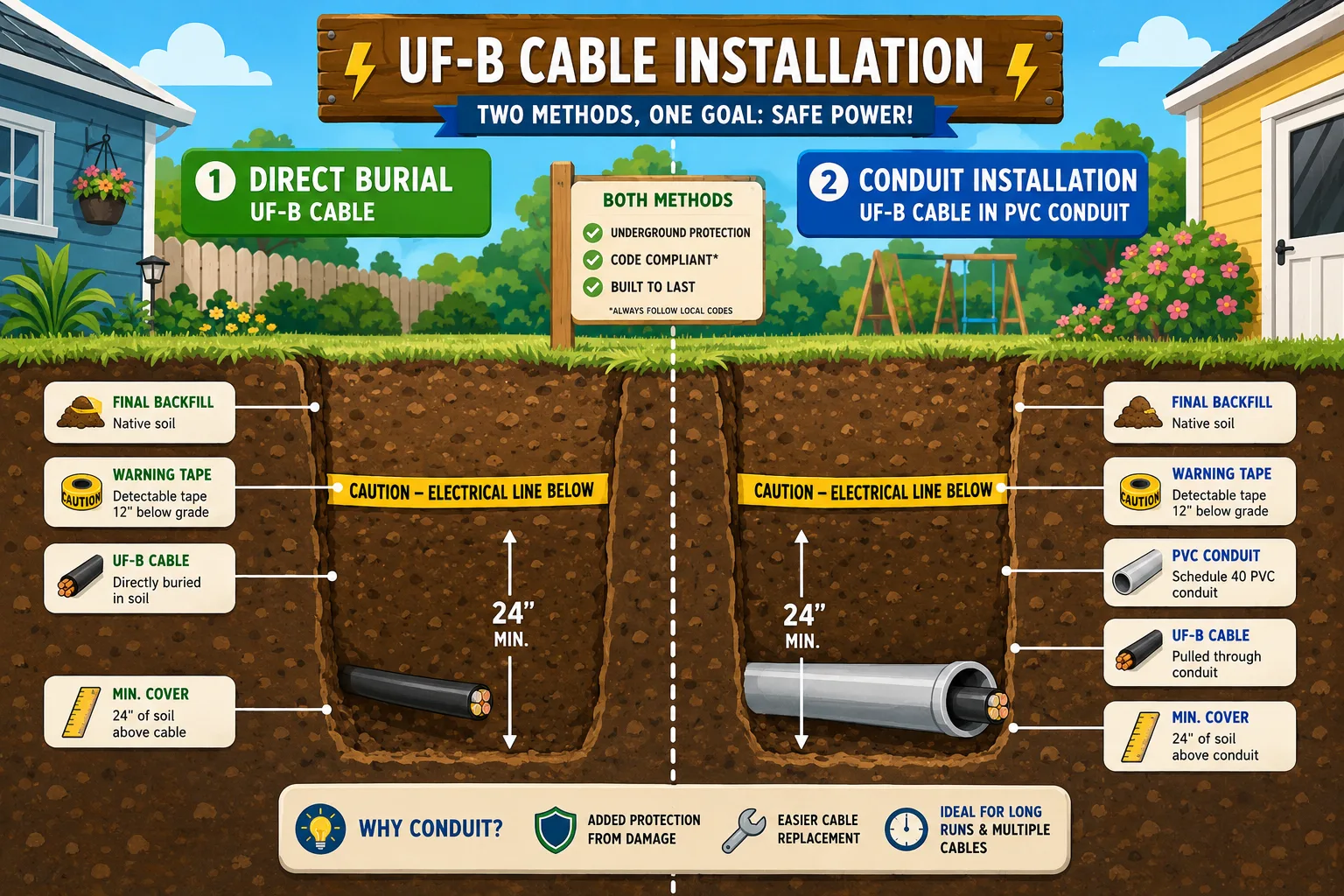
One major advantage of UF-B cable is that it can often be buried directly without conduit. This simplifies installation and reduces material costs substantially. Direct burial works especially well for straightforward residential runs across yards to sheds, lighting systems, or detached garages.
The process typically involves digging a trench, laying the cable, and backfilling with smooth soil free from sharp rocks. NEC guidance generally requires around 24 inches of cover for direct burial cable installations.
Direct burial offers several practical benefits. Installation is faster, material costs decrease, and there are fewer connection points where moisture intrusion might occur. For many homeowners, it represents the simplest way to extend power outdoors safely.
Another advantage involves flexibility in uneven terrain. Direct-buried cable adapts naturally to curves and landscape contours without requiring numerous conduit fittings and bends. This simplifies trench routing through gardens or around obstacles.
Still, careful installation remains essential. Sharp rocks, poor backfill practices, and shallow trench depths can damage cable insulation over time. Many electricians recommend placing warning tape above buried cable to reduce accidental digging damage later.
Situations Where Conduit Is Better
Even though UF-B allows direct burial, conduit still offers advantages in certain situations. Areas exposed to physical damage, frequent digging, or future landscaping changes benefit from conduit protection.
Conduit also simplifies wire replacement and upgrades. If future electrical needs increase, pulling new conductors through conduit may be easier than digging another trench. This flexibility matters for homeowners planning future additions or expanded outdoor power usage.
Some electricians prefer using THWN conductors inside conduit rather than UF-B for long underground runs because pulling UF-B through conduit can be difficult due to its stiffness. Conduit systems also provide enhanced mechanical protection near driveways or areas with heavy equipment traffic.
Most codes additionally require conduit protection where direct-buried cable emerges from the ground. This shields exposed sections from lawn equipment, accidental impacts, and UV damage.
The best installation method depends on project conditions, future plans, and local code requirements.
Related Articles: How to Identify a Neutral Wire With a Multimeter
Typical Applications Around Homes and Landscapes
Backyard and Patio Installations
Modern outdoor living spaces increasingly resemble indoor rooms. Patios now include televisions, speakers, refrigerators, lighting systems, and heating equipment. UF-B cable helps power these spaces safely while keeping wiring hidden underground.
Patio receptacles often require underground feeder wiring extending from the home’s electrical system. Homeowners may install outlets for grills, outdoor kitchens, charging stations, or entertainment systems. Underground UF-B cable keeps these circuits protected from weather exposure.
Deck lighting also commonly depends on UF-B wiring. Stair lights, rail lighting, pergola fixtures, and pathway illumination all benefit from moisture-resistant underground cable. These systems improve both aesthetics and nighttime safety.
Outdoor holiday lighting installations sometimes incorporate permanent underground circuits as well. Instead of dragging extension cords across lawns each year, homeowners install dedicated buried receptacles positioned strategically around landscaping features.
Backyard offices and studios represent another growing trend. Remote work has increased demand for powered detached spaces where underground electrical service becomes essential.
Pumps, Fountains, and Outdoor Receptacles
Water-related equipment creates one of the harshest electrical environments possible. Pumps, fountains, irrigation systems, and pond equipment operate continuously near moisture exposure. UF-B cable performs well because it tolerates wet conditions safely.
Well pumps often rely on underground feeder cable for dependable operation. Landscape irrigation systems may also require buried power supplies for timers, valves, and control systems. These applications demand long-term moisture resistance.
Outdoor receptacles installed throughout yards and gardens also frequently connect through UF-B circuits. Homeowners use these outlets for tools, seasonal lighting, pool maintenance equipment, and recreational devices.
Safety becomes especially important in wet environments. Outdoor circuits typically require GFCI protection to reduce shock risks. Combining GFCI devices with wet-rated UF-B cable creates a safer outdoor electrical system overall.
Wire Sizing Considerations for Outdoor Circuits
Choosing the Correct Gauge
Choosing the proper wire size is critical for outdoor circuits. Wire that is too small can overheat, waste energy, and create dangerous voltage drop problems. Common UF-B sizes include 14 AWG, 12 AWG, 10 AWG, and larger feeder cables like 6 AWG.
For standard residential circuits:
| Wire Size | Typical Circuit Rating | Common Uses |
|---|---|---|
| 14 AWG | 15 amps | Basic lighting |
| 12 AWG | 20 amps | Outdoor receptacles |
| 10 AWG | 30 amps | Larger equipment |
| 6 AWG | 50–60 amps | Subpanel feeders |
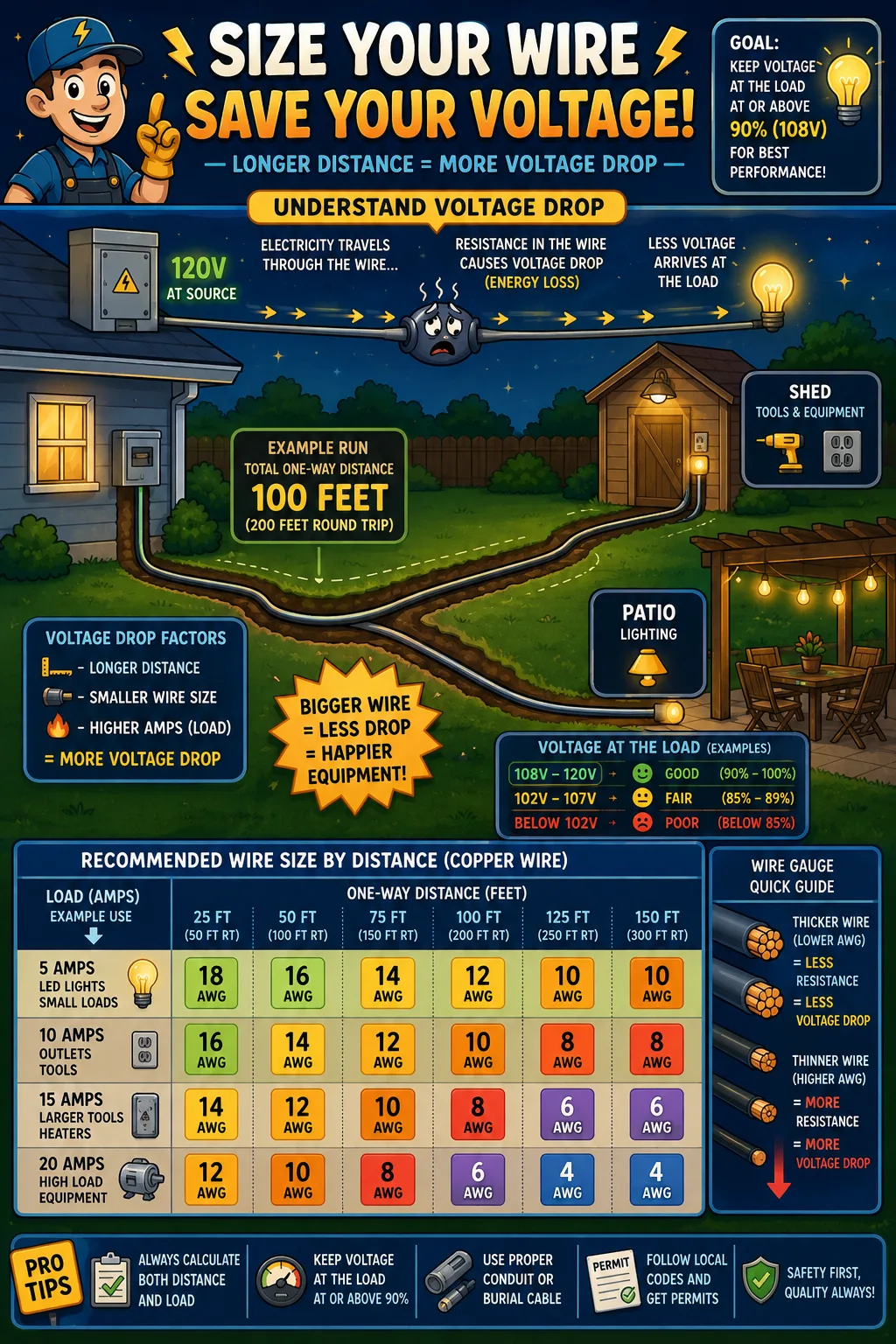
Outdoor installations often require upsizing wire due to longer distances. Electricity behaves somewhat like water flowing through a pipe. The longer the run, the more resistance occurs. Larger wire reduces that resistance and improves performance.
Incorrect sizing creates multiple problems. Lights may dim, motors may overheat, and sensitive electronics may malfunction. Proper sizing ensures stable voltage delivery even across long underground runs.
Voltage Drop Over Long Distances
Voltage drop becomes increasingly important in outdoor installations because underground circuits often travel significant distances from the main electrical panel. A detached garage located 150 feet away experiences much greater voltage drop than an outlet inside a nearby room.
Excessive voltage drop reduces equipment efficiency and shortens motor lifespan. Tools may operate sluggishly, pumps may overheat, and lighting systems may appear dimmer than expected.
Electricians commonly recommend limiting voltage drop to around 3% on branch circuits for optimal performance. Achieving this may require larger wire sizes than the circuit amperage alone would suggest.
For example, a 20-amp circuit supplying a distant shed might require 10 AWG wire instead of 12 AWG depending on distance and load demands. Careful planning prevents expensive performance problems later.
Recommended: What Size Wire for a 125 Amp Sub Panel
Common Mistakes During Underground Installation
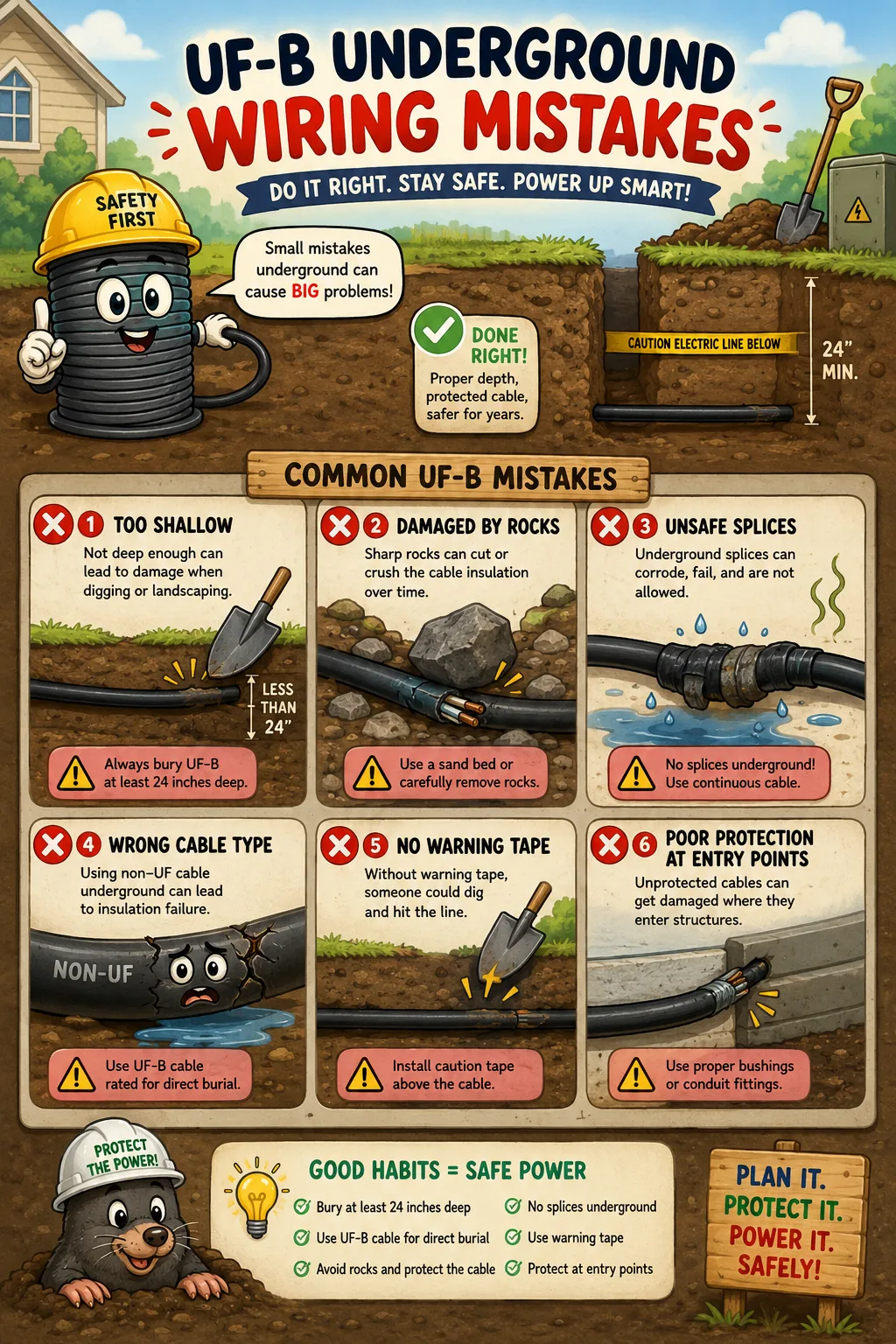
Incorrect Burial Depth
One of the most common DIY mistakes involves burying cable too shallow. Shallow installations increase the likelihood of accidental damage from gardening tools, fence posts, or landscaping projects.
NEC guidelines generally require direct-buried UF cable to maintain about 24 inches of cover unless special conditions apply. Failing to meet depth requirements can lead to inspection failures and safety hazards.
Another issue involves poor trench preparation. Sharp rocks and construction debris can damage insulation over time. Smooth backfill material helps protect cable from abrasion and pressure points.
Marking buried cable routes also matters. Future homeowners or contractors may unknowingly dig into hidden electrical lines without proper documentation or warning tape.
Using the Wrong Cable Type
Perhaps the biggest mistake homeowners make is using indoor NM-B Romex outdoors or underground. This shortcut may appear cheaper initially, but it creates serious long-term risks.
Underground environments qualify as wet locations under electrical code standards. Standard indoor cable is not designed for persistent moisture exposure. Over time, insulation deterioration and conductor corrosion become likely.
Another mistake involves assuming conduit automatically creates a dry environment underground. Water intrusion remains common inside buried conduit systems. That is why wet-rated conductors remain necessary even within conduit outdoors.
Improper splicing also creates problems. Underground splices require specially rated waterproof enclosures and connectors. Standard indoor junction boxes are unsuitable for buried applications.
Situations Where UF-B Wire Should Not Be Used
High-Heat Applications
Although UF-B cable performs extremely well outdoors, it is not ideal for every situation. High-heat environments can limit its effectiveness because ampacity rules typically follow the 60°C column under NEC standards.
Heavy HVAC equipment, large air conditioning systems, and certain industrial machinery may require alternative wiring methods capable of handling higher temperatures and continuous loads. Some experts specifically discourage UF-B for outdoor AC condenser circuits due to current demands and environmental stresses.
UF-B also becomes difficult to manage in large conduit systems because of its stiffness and thick jacket. Long conduit pulls often favor individual THWN conductors instead.
Commercial and Heavy Industrial Installations
Commercial and industrial environments frequently require wiring systems with greater flexibility, higher ampacity ratings, or specialized protective features. Metal conduit systems with THHN or THWN conductors often dominate these settings.
UF-B is primarily a residential solution. While durable, it is not always the best choice for factories, commercial buildings, or large-scale infrastructure projects involving complex conduit routing and high electrical loads.
Projects requiring frequent modifications or future upgrades may also benefit from conduit-based systems instead of direct-buried UF-B cable.
Conclusion
UF-B wire plays a critical role in modern outdoor electrical systems. Its moisture-resistant construction, sunlight durability, and direct-burial capability make it one of the most dependable wiring solutions for residential underground installations. Whether powering a detached garage, illuminating a backyard pathway, or supplying electricity to a garden pump, UF-B cable provides the rugged protection outdoor circuits require.
The biggest advantage of UF-B cable lies in its ability to survive harsh environmental conditions that would quickly destroy ordinary indoor wiring. Wet soil, UV exposure, corrosion, freezing temperatures, and shifting ground create constant stress on outdoor electrical systems. UF-B was designed specifically to handle those challenges safely and reliably.
Successful installation still requires proper planning. Correct burial depth, proper wire sizing, GFCI protection, and compliance with local electrical codes all matter enormously. Skipping those details can turn a durable outdoor circuit into a costly safety hazard.
Understanding where UF-B excels; and where alternative wiring methods may perform better; helps homeowners and contractors make smarter decisions for long-term electrical reliability.
Find Out More: What Is the White Wire on a Thermostat and Its Function
Continue Reading: What Is a Red Wire in a Light Switch
FAQs
Is UF-B wire waterproof?
UF-B wire is not technically waterproof, but it is highly moisture-resistant and approved for wet locations and direct burial underground. Its insulation is designed to withstand long-term exposure to soil moisture and outdoor environments.
Can UF-B wire be buried without conduit?
Yes, UF-B cable is specifically approved for direct burial without conduit in many residential applications when installed at the correct depth according to NEC requirements.
How deep should UF-B wire be buried?
Direct-buried UF-B cable commonly requires approximately 24 inches of earth cover under NEC guidelines, although some installations with GFCI protection or conduit may allow different depths.
Can UF-B wire be used indoors?
Yes, UF-B wire can be used indoors, although it is stiffer and harder to work with than standard NM-B Romex. Many electricians still prefer NM-B for indoor-only applications because it is easier to install.
What is the difference between UF-B and Romex?
UF-B cable is rated for wet locations, direct burial, and outdoor exposure, while Romex (NM-B) is intended only for dry indoor environments. UF-B also features thicker, more durable insulation and a tougher outer jacket.

Colt Marlowe is a 29-year-old American content writer based in Boise, Idaho. He specializes in technology, digital tools, and online business topics, combining years of research with practical experience to produce clear, trustworthy articles. As a contributor to wirelogic.online, he focuses on creating well-researched, reader-friendly content that emphasizes accuracy, transparency, and long-term value for audiences seeking reliable information.