
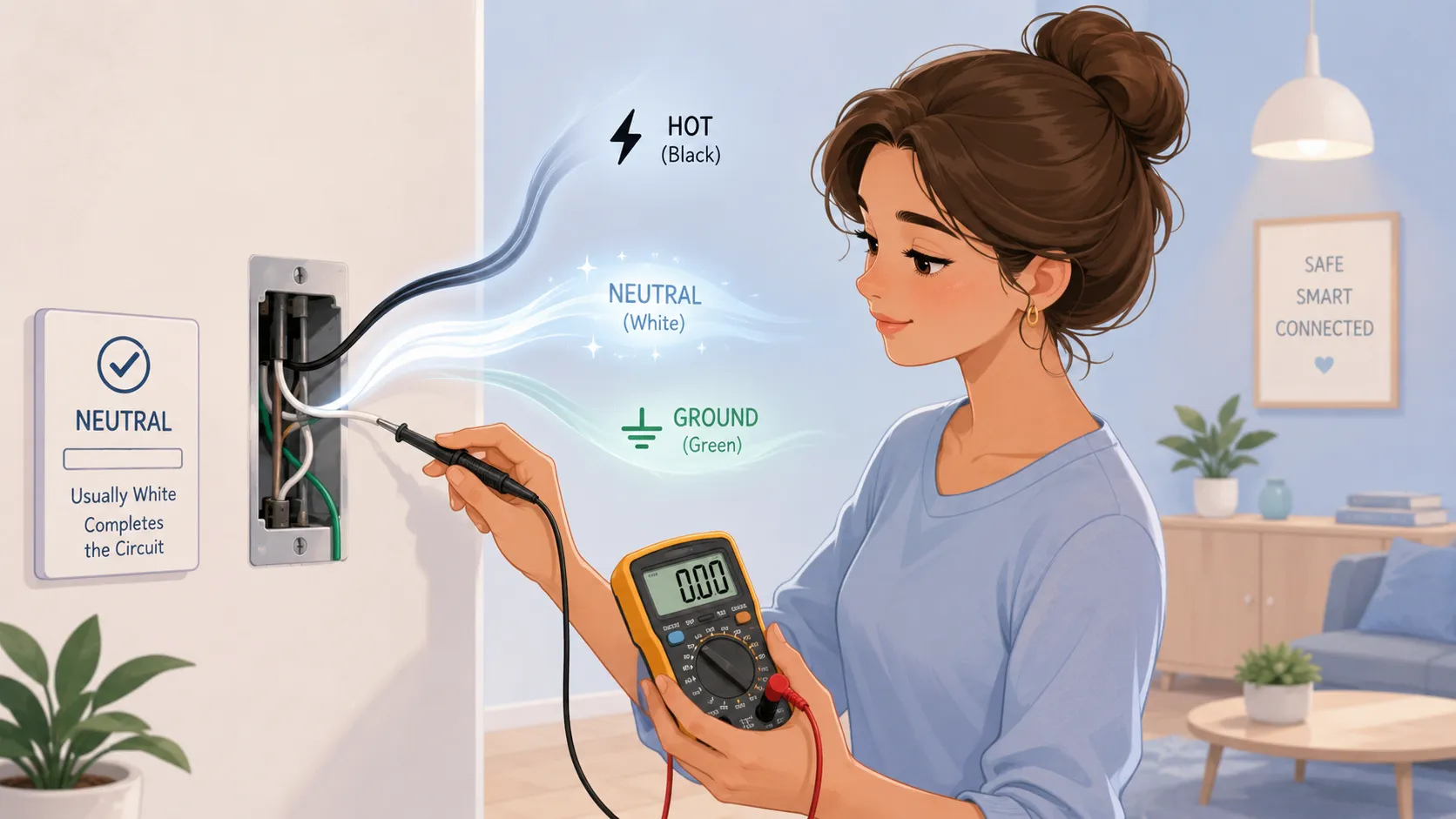
Electricity is one of those things people interact with every single day without really thinking about what is happening behind the walls. Flip a switch, charge a phone, run a microwave, and life moves on. But the moment you start opening outlets, replacing fixtures, or troubleshooting wiring, electrical systems suddenly become a lot less invisible and a lot more serious. One of the most important things you can learn before touching any electrical connection is how to correctly identify the neutral wire. Getting it wrong is not just inconvenient; it can become dangerous fast.
A multimeter is one of the simplest and most reliable tools for identifying a neutral wire. While wire colors can help, relying on colors alone is a gamble, especially in older homes or poorly modified electrical systems. A properly used multimeter gives you actual voltage readings, removing guesswork from the process. Think of it like using GPS instead of road signs in a city where half the signs are missing or misleading. The tool tells you what is really happening inside the circuit.
Electrical safety organizations continue to warn about wiring hazards and accidental contact with energized conductors. According to recent data from the Electrical Safety Foundation International, workplace electrical incidents still lead to approximately 150 fatalities annually in the United States alone. Many of these incidents happen during routine maintenance or testing. That statistic alone explains why identifying the neutral wire properly matters before any electrical work begins.
Why Correct Wire Identification Is Critical
The Real Dangers of Misidentifying Neutral Wires
Many people assume the neutral wire is always harmless because it is often described as the “return path” for electricity. That assumption can create a false sense of safety. Under normal conditions, the neutral wire carries current back to the electrical panel, which means it can still shock you if handled improperly. A loose neutral, shared neutral, or improperly bonded system can also create unexpected voltage where none should exist.
Imagine driving on a highway where one lane unexpectedly turns into oncoming traffic without warning. That is similar to what happens when electrical wiring is mislabeled or incorrectly installed. A wire that appears safe may actually be energized because of wiring defects, reversed polarity, or previous DIY modifications. Recent discussions among electricians and inspectors continue to highlight dangerous neutral-ground bonding mistakes and bootleg grounds in older properties.
The consequences range from mild shocks to equipment damage, electrical fires, and electrocution. Loose or improperly connected neutral wires can also overheat. InterNACHI recently emphasized that improperly terminated neutral conductors remain a significant defect because loose neutrals can lead to arcing and overheating conditions. That is why professionals verify wires with instruments rather than assumptions.
Recent Electrical Safety Statistics and What They Reveal
Electrical safety data paints a clear picture: routine tasks are often where accidents happen. According to 2025 industry safety reports, poor maintenance practices and insufficient training remain among the leading causes of electrical incidents. Many accidents occur during troubleshooting, installation, or equipment servicing; exactly the type of work where someone might need to identify a neutral wire.
What makes this especially important for homeowners is that modern homes often contain a mix of old and new wiring methods. You may have updated outlets connected to decades-old branch circuits hidden behind drywall. Previous owners may have changed fixtures incorrectly or ignored color conventions entirely. That means visual inspection alone is no longer enough.
This is where a multimeter becomes essential. Instead of trusting labels or wire insulation colors, you test the circuit directly and verify the actual electrical behavior. It is similar to checking a weather radar instead of just looking out the window. The reading tells you the truth, even when appearances are deceptive. Electrical professionals rely on measurement because measurement removes assumptions from the equation.
Understanding the Difference Between Neutral, Hot, and Ground
What the Neutral Wire Actually Does
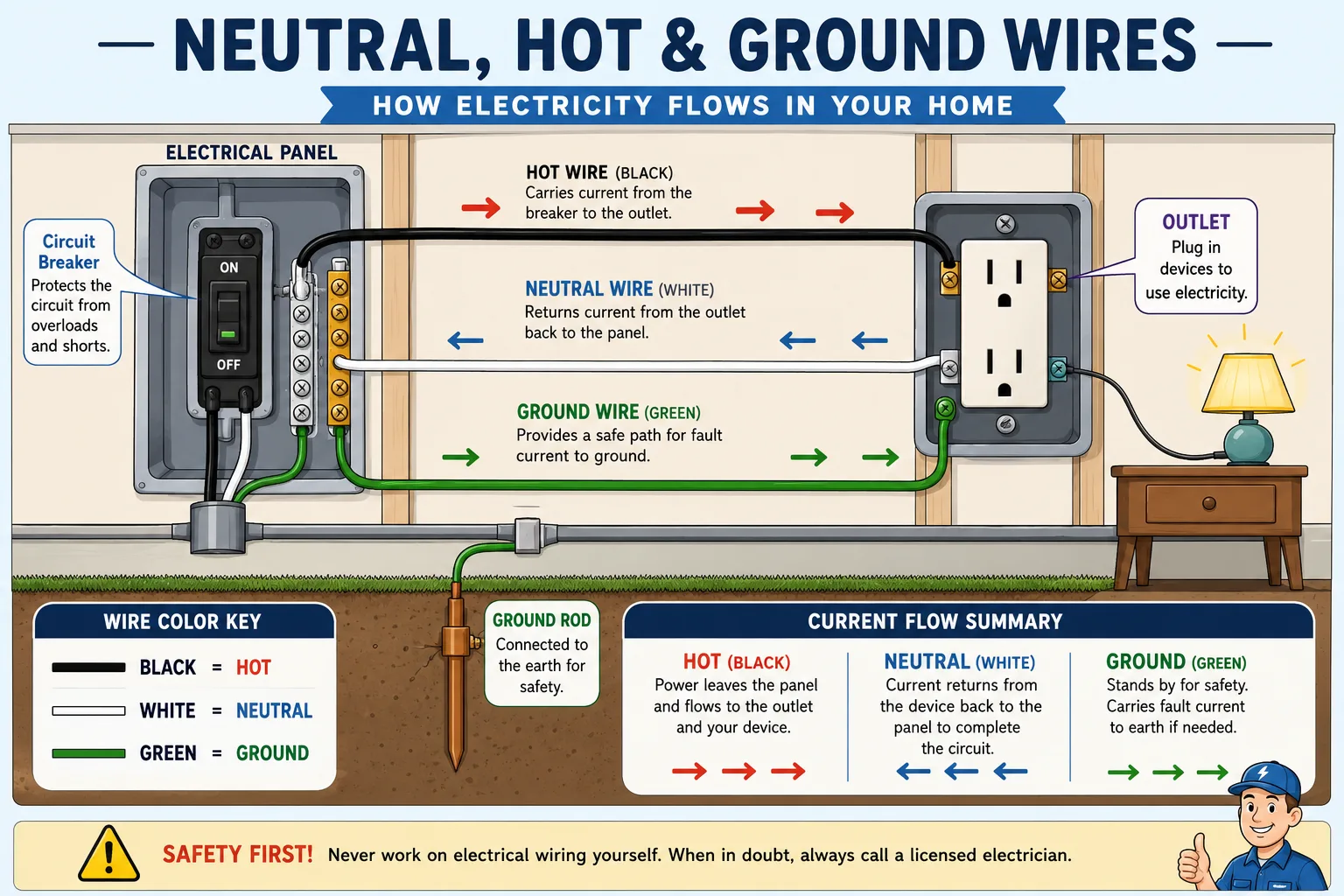
To identify a neutral wire correctly, you first need to understand its role in the circuit. In standard residential AC systems, electricity travels from the hot wire through an appliance or fixture and returns through the neutral wire. The neutral completes the circuit, allowing current to flow continuously.
The hot wire carries voltage from the breaker panel to the device. The neutral wire carries the used current back to the source. The ground wire exists mainly for safety, providing an emergency path during faults. Even though neutral and ground connect together at the main service panel, they serve different purposes inside branch circuits.
Many people confuse neutral and ground because both often sit near zero volts relative to earth. But they are not interchangeable. The neutral regularly carries current during normal operation, while the ground wire ideally carries no current unless there is a fault. Electrical experts continue to stress this distinction because mixing them improperly can energize metal surfaces and create dangerous conditions.
How Electricity Travels Through a Circuit
Think of electricity like water flowing through pipes. The hot wire pushes electrical energy toward the appliance, much like water pressure pushes water through plumbing. The neutral wire acts as the return drain, carrying current back after the appliance uses it. The ground wire functions more like an emergency overflow channel that only activates when something goes wrong.
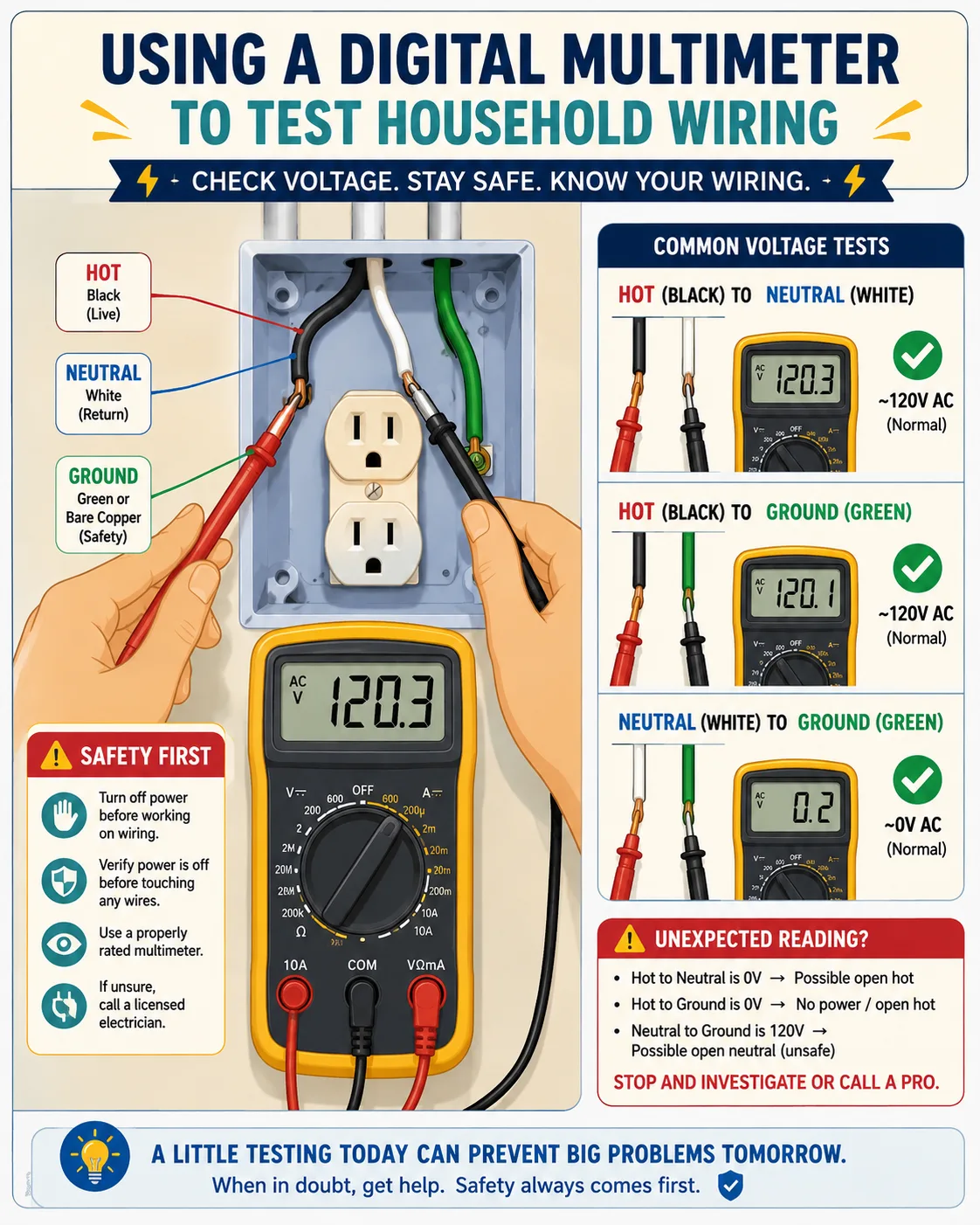
Understanding this flow helps explain multimeter readings. When you place one probe on the hot wire and the other on neutral, you measure the voltage difference between them. In many North American residential systems, this reads around 120 volts. When you measure neutral to ground, the reading should usually stay very close to zero.
If readings behave differently, that may indicate an open neutral, reversed wiring, or another electrical fault. Recent engineering discussions note that neutral-to-ground voltage above a few volts may signal a serious wiring issue requiring inspection.
Tools Needed Before Testing Wires
Choosing the Right Digital Multimeter
Not all multimeters are equal. If you are working around household electrical circuits, you need a quality digital multimeter rated for residential voltage testing. Cheap meters may lack proper protection features or provide unstable readings. A reliable meter should measure AC voltage accurately and include insulated probes.
Look for safety ratings such as CAT II or CAT III depending on the type of work you plan to do. Professional electricians often prefer meters from trusted brands because durability and reliability matter when testing live circuits. A faulty tester is almost worse than having no tester at all because it can provide false confidence.
Digital multimeters are generally easier for beginners because the readings appear clearly on a display. Analog meters still exist, but they require more interpretation. InterNACHI recently noted that digital multimeters remain the preferred option for most inspection and troubleshooting work because of their readability and accuracy.
Safety Gear You Should Never Skip
Testing live circuits without safety equipment is like riding a motorcycle without a helmet. You might get away with it once or twice, but eventually luck runs out. At minimum, wear insulated gloves and safety glasses when working near energized wiring.
Avoid standing on damp surfaces or touching grounded metal while testing. Keep one hand away from the panel or wiring whenever possible to reduce the chance of current traveling across your chest. Professionals often call this the “one-hand rule,” and it exists for good reason.
Electrical testing also requires focus. Distractions, rushing, or poor lighting increase mistakes. Before opening any outlet box or fixture, verify the area is dry and stable. If you feel uncertain about the wiring configuration, stop and consult a licensed electrician instead of experimenting.
Setting Up the Multimeter Properly
Selecting AC Voltage Mode
Most household electrical systems use alternating current, so your multimeter must be set to measure AC voltage rather than DC voltage. On many digital meters, this appears as “V~” instead of “V; “. Selecting the wrong mode can produce meaningless readings or confuse troubleshooting.
<math xmlns=”VAC≈120 VV_{AC} approx 120text{ V}
Insert the black probe into the COM port and the red probe into the voltage port. Double-check probe placement before testing because inserting probes incorrectly can damage the meter or create a hazard.
Start with a voltage range higher than the expected circuit voltage if your meter is not auto-ranging. For standard residential outlets, choosing a range above 120 volts is usually appropriate. Modern auto-ranging meters simplify this process automatically.
Checking the Multimeter Before Use
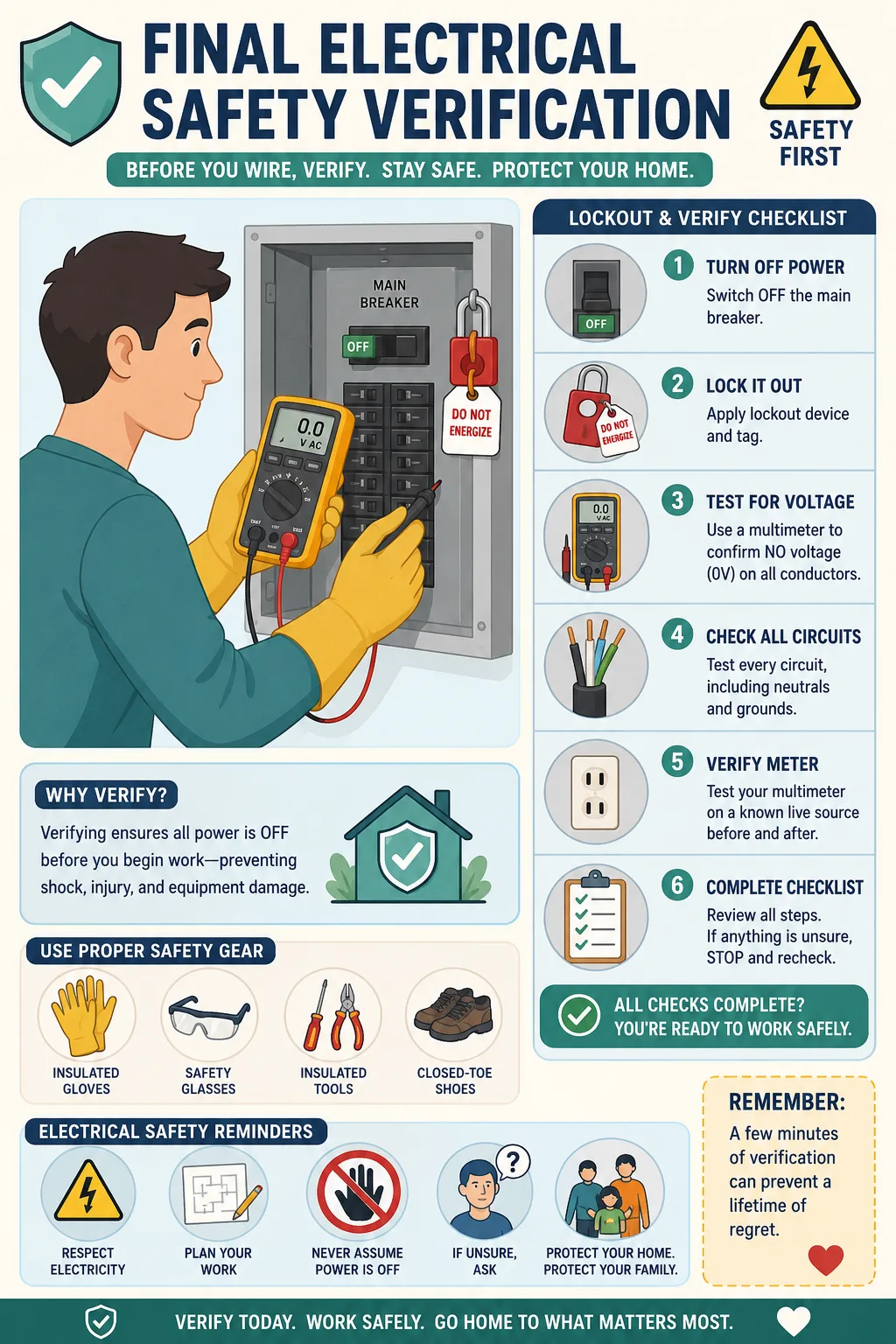
Professionals follow a simple principle: test the tester before trusting the tester. Before measuring unknown wires, verify your multimeter works on a known live outlet. This confirms the display, probes, and internal fuse are functioning correctly.
Safety experts increasingly emphasize “live-dead-live” verification procedures when testing energized circuits. In practical terms, that means checking your meter on a known live source before and after testing the target circuit. If the tester fails midway through testing, you might incorrectly assume a wire is dead when it is still energized.
This step may seem excessive for small household tasks, but electrical accidents often happen because someone skipped one “minor” safety check. The few seconds spent verifying the meter can prevent a catastrophic mistake.
Step-by-Step Guide to Identify Neutral Wire
Testing Between Hot and Neutral
Start by carefully exposing the wires or outlet terminals you need to test. Identify a suspected hot wire first. In many systems, this may be black or red, though colors should never be trusted alone.
Place the black probe on the suspected neutral wire and the red probe on the suspected hot wire. A normal residential circuit should show approximately 110–120 volts in North America or around 220–240 volts in many other countries.
<math xmlns=”VHot−Neutral≈120 VV_{Hot-Neutral} approx 120text{ V}
If you receive a stable voltage reading in the expected range, the tested wire is likely the neutral conductor. If the reading is erratic or absent, the wiring may be incorrect or the wire may not actually be neutral.
Testing Between Hot and Ground
Next, place one probe on the suspected hot wire and the other on ground. This reading should closely match the hot-to-neutral voltage. If the hot-to-ground reading differs significantly from the hot-to-neutral reading, you may have an open neutral or grounding issue.
This comparison acts like a second opinion from another doctor. One reading alone may not tell the whole story, but comparing multiple measurements creates a clearer diagnosis.
Testing Between Neutral and Ground
Finally, test between neutral and ground. Under normal conditions, the voltage should remain very low, often close to zero volts.
<math xmlns=”VNeutral−Ground≈0 VV_{Neutral-Ground} approx 0text{ V}
If you measure several volts between neutral and ground, that may indicate excessive load imbalance, a loose neutral connection, or another wiring problem. Engineering analyses continue to warn that elevated neutral-ground voltage deserves immediate attention because it can signal dangerous system faults.
Typical Voltage Readings Explained
| Test Combination | Expected Reading | Meaning |
|---|---|---|
| Hot to Neutral | 110–120V | Circuit operating normally |
| Hot to Ground | 110–120V | Ground path functioning |
| Neutral to Ground | 0–2V | Normal condition |
| Neutral to Ground Above 5V | Possible fault | Loose/open neutral or imbalance |
Reading Stable Voltage Correctly
Voltage readings should remain relatively stable. Fluctuating or inconsistent numbers can point to loose connections, overloaded circuits, or failing wiring. A stable reading means the circuit has a reliable path and proper continuity.
Beginners sometimes panic when readings vary slightly. Small variations are normal because household voltage naturally changes depending on load demand. What matters is whether the readings stay within expected ranges and remain consistent.
Signs of Wiring Problems
Several warning signs suggest wiring issues beyond simple identification:
- Hot-to-neutral voltage significantly lower than hot-to-ground voltage
- Neutral-to-ground voltage above a few volts
- Flickering multimeter readings
- Burn marks or overheating smells
- Outlets testing differently on the same circuit
These symptoms should not be ignored. A faulty neutral can damage electronics and create shock hazards that remain hidden until something fails catastrophically.
Electrical Wire Color Codes and Their Limitations
Common Residential Wire Colors
Wire colors exist to help electricians identify conductors quickly. In many residential systems:
| Wire Color | Typical Purpose |
|---|---|
| Black | Hot |
| Red | Secondary hot |
| White | Neutral |
| Green/Bare Copper | Ground |
These conventions simplify installation and maintenance. NEC guidelines continue to designate white or gray conductors for neutral identification in most residential AC systems.
Why Color Alone Can Mislead You
Here is the problem: not every electrician follows standards perfectly, and not every homeowner hires electricians. Over decades, homes accumulate modifications, shortcuts, and questionable repairs.
Older homes may contain faded insulation, cloth-covered wiring, or repurposed conductors. DIY installers sometimes use whatever wire is available. In some cases, a white wire may be reidentified as hot using electrical tape. In others, color conventions are ignored entirely.
That is why experienced electricians treat color coding as a clue; not proof. The multimeter becomes the final authority because electrical behavior matters more than insulation color.
Common Wiring Situations That Create Confusion
Older Homes with Reversed Wiring
Older houses are famous for wiring surprises. Reversed polarity, bootleg grounds, and shared neutrals are surprisingly common. Homeowners often discover these issues only after opening an outlet or testing a fixture.
Online electrician communities continue to document dangerous cases where neutral and ground were improperly tied together to fake grounded outlets. These shortcuts may temporarily “work,” but they create major shock risks.
In older systems, never assume wiring follows modern standards. Test every conductor individually and verify readings before making changes.
Shared Neutrals and Multi-Wire Branch Circuits
Some circuits use shared neutral conductors across multiple hot wires. These are called multi-wire branch circuits. While legal when installed correctly, they can confuse inexperienced DIYers because the neutral may still carry current even when one breaker is off.
This is another reason voltage testing matters. A wire that appears inactive may still become energized through shared circuit configurations. If you encounter unusual readings or multiple hot conductors, stop and investigate further before proceeding.
Safety Precautions When Testing Live Circuits
Mistakes That Increase Shock Risk
Most electrical accidents happen because someone becomes overconfident. Familiarity can breed carelessness. People rush through testing, skip protective gear, or hold probes improperly.
Never touch exposed metal probe tips while measuring live voltage. Keep probes separated to prevent accidental short circuits. Avoid leaning against grounded surfaces. Even experienced electricians treat energized circuits with caution because electricity does not care how experienced you are.
Electrical testing also carries arc flash risk under certain conditions. Safety publications continue to warn that interacting with exposed energized conductors requires proper procedures and awareness.
When to Call a Licensed Electrician
Some situations move beyond DIY territory quickly. Call a licensed electrician if you encounter:
- Burned wiring
- Aluminum branch circuits
- Constantly tripping breakers
- High neutral-ground voltage
- Shared neutrals you do not understand
- Service panel problems
There is no shame in calling a professional. Electrical systems can hide dangerous conditions that are not obvious from surface testing alone.
Verifying the Neutral Wire Before Making Connections
Double-Checking Your Readings
Before connecting fixtures, switches, or outlets, repeat your measurements. Double-checking may feel repetitive, but electrical work rewards caution.
Use multiple tests rather than relying on one measurement. Compare hot-neutral, hot-ground, and neutral-ground readings together. Consistent results provide stronger confirmation than a single isolated test.
Professional electricians often verify conductors several times during installation because they understand how costly a wrong assumption can become later.
Final Safety Checks Before Electrical Work
After identifying the neutral wire, shut off power at the breaker before making permanent connections. Then verify power is actually off using the multimeter again.
This final verification matters because panel labels are not always accurate. A mislabeled breaker can leave a supposedly dead circuit energized. Safety experts consistently stress testing for absence of voltage before beginning work.
Think of electrical testing like parachute packing. One extra check may feel unnecessary until the moment it becomes the reason everything works safely.
Conclusion
Learning how to identify a neutral wire with a multimeter is one of the most valuable electrical skills a homeowner or DIY enthusiast can develop. It transforms electrical work from guesswork into measured verification. Instead of trusting colors, labels, or assumptions, you rely on actual voltage behavior inside the circuit.
The process itself is straightforward: measure hot-to-neutral voltage, compare hot-to-ground readings, and confirm neutral-to-ground voltage remains close to zero. But behind those simple steps lies a larger principle; electrical safety depends on verification, not confidence. Even experienced professionals use testing instruments because appearances can deceive.
Modern electrical systems are often mixtures of old wiring, updated fixtures, and unknown modifications. That complexity makes careful testing essential before replacing outlets, installing lighting, or troubleshooting problems. A multimeter does more than identify wires; it helps reveal hidden faults, improper grounding, and dangerous neutral issues before they cause harm.
Electricity rewards patience, caution, and precision. Treat every wire with respect, verify every reading carefully, and never rush through live testing procedures. When something feels unclear or unsafe, stop and consult a qualified electrician. One careful decision today can prevent a serious accident tomorrow.
FAQs
1. Can I identify a neutral wire without a multimeter?
Yes, wire colors may provide clues, but they are not completely reliable. A multimeter is the safest and most accurate way to confirm wire identity because it measures actual voltage behavior.
2. What voltage should I see between neutral and ground?
Under normal conditions, neutral-to-ground voltage should remain very low, usually close to 0 volts. Higher readings may indicate wiring faults or loose neutral connections.
3. Is the neutral wire always white?
In many residential systems, neutral wires are white or gray. However, older wiring, DIY modifications, or incorrect installations may use different colors, so testing is essential.
4. Can a neutral wire shock you?
Yes. Neutral wires carry return current during normal operation. Under certain fault conditions, they can become energized and dangerous to touch.
5. What should I do if my voltage readings seem inconsistent?
Stop testing and investigate further. Inconsistent readings may indicate loose wiring, shared neutrals, open neutrals, or faulty grounding. If unsure, contact a licensed electrician immediately.

Colt Marlowe is a 29-year-old American content writer based in Boise, Idaho. He specializes in technology, digital tools, and online business topics, combining years of research with practical experience to produce clear, trustworthy articles. As a contributor to wirelogic.online, he focuses on creating well-researched, reader-friendly content that emphasizes accuracy, transparency, and long-term value for audiences seeking reliable information.