
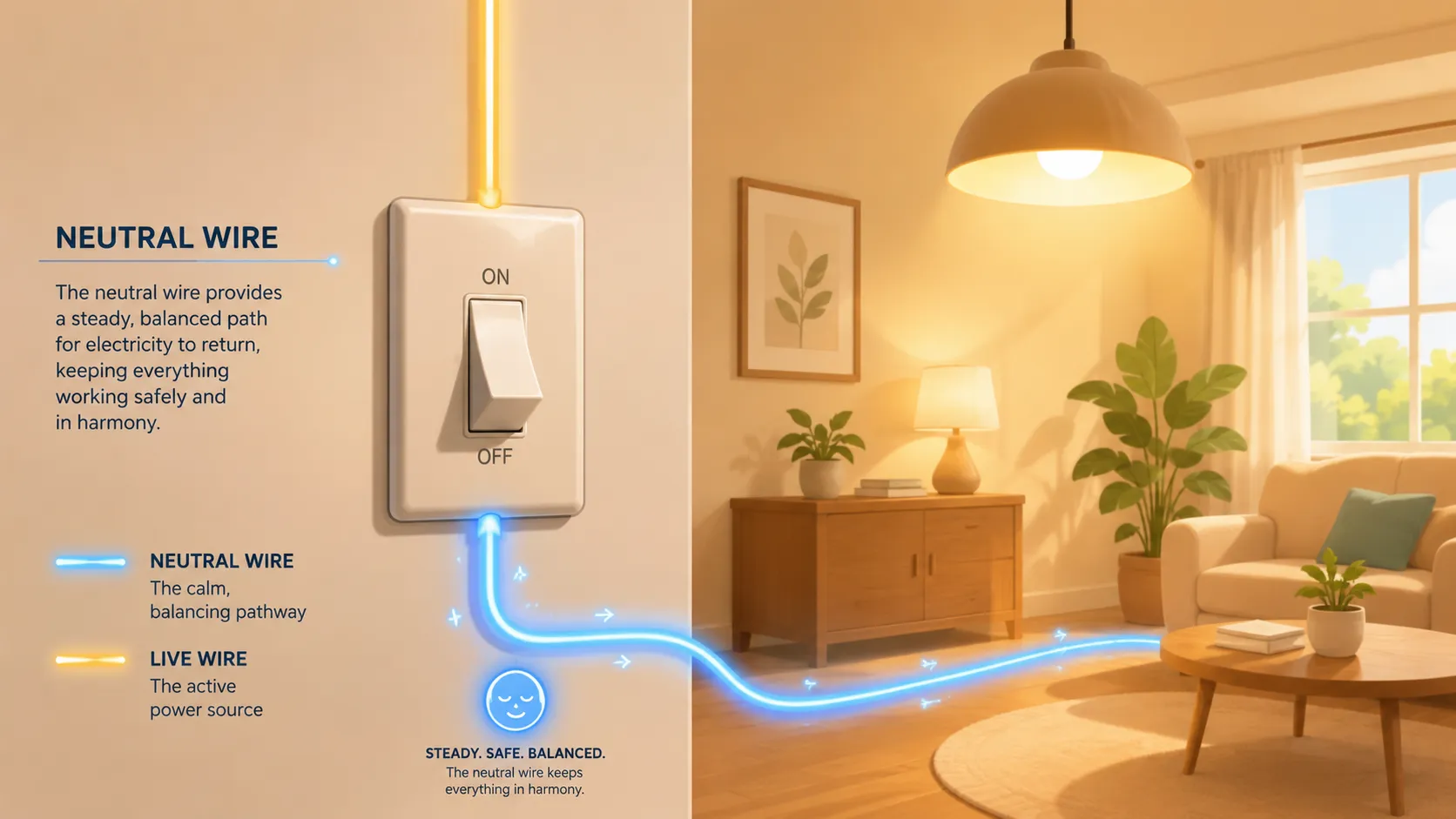
Electricity in a home works a lot like traffic on a two-lane road. One lane carries power to your lights and devices, while the other lane brings that power back after the job is done. That “return lane” is what electricians call the neutral wire. Most homeowners rarely think about it until they replace a switch, install a smart home device, or open an electrical box and suddenly wonder why some wires are white, black, or bundled together.
The neutral wire has become one of the most discussed topics in modern home wiring because today’s smart switches, dimmers, sensors, and automation systems often depend on it. Older homes may not have neutral wires in every switch box, while newer electrical codes increasingly require them. Understanding how neutral wires function can help homeowners make safer decisions, avoid installation mistakes, and communicate more effectively with electricians.
According to modern electrical guidance and recent smart switch installation resources, many smart switches require a neutral wire because their internal electronics need continuous power even when the light is turned off. Homes wired before the 1980s or even before 2011 frequently lack neutral wires in switch boxes, creating compatibility issues during upgrades.
Before diving into installations and troubleshooting, it helps to understand the basics of how household circuits actually work.
Understanding the Basics of Household Electrical Circuits
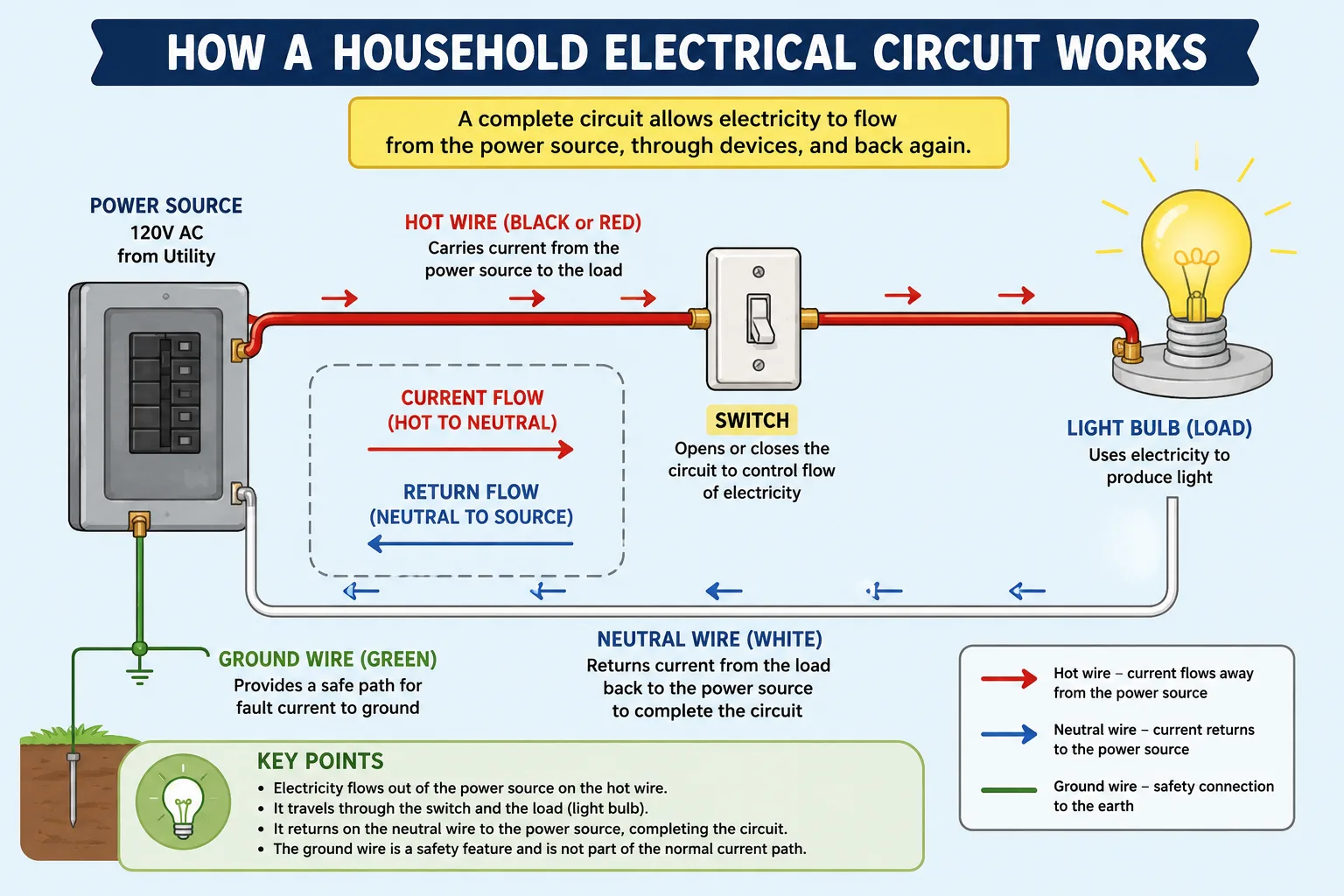
Electricity may seem invisible and mysterious, but household wiring follows surprisingly logical rules. Every standard lighting circuit inside a home relies on a complete electrical loop. Power leaves the electrical panel, travels through wires to a device like a lamp or ceiling light, and then returns to the panel. If that loop breaks, the electricity stops flowing and the device turns off. This basic principle is what makes switches work.
Inside most residential systems, there are three primary conductors people encounter: the hot wire, the neutral wire, and the ground wire. The hot wire carries energized current from the breaker panel toward the light fixture or outlet. The neutral wire carries unused current back to the panel after the electrical device has consumed power. The ground wire acts as an emergency safety path if a fault occurs. Each wire has a distinct role, and confusing them can create serious hazards.
Modern electrical systems are designed around this balance between outgoing and returning current. Without the neutral wire, many appliances and electronic controls would not function properly. Traditional incandescent lights were simple enough that switches only needed to interrupt the hot wire. Today’s smart devices, however, contain processors, radios, memory chips, and sensors that need constant low-level power. That requirement has made neutral wires much more important than they used to be.
Experts in residential electrical systems explain that smart switches rely on neutral conductors because the electronics inside them must remain powered even while the light appears off. Traditional switches never had this issue because they were purely mechanical devices.
What the Hot Wire Does
The hot wire is the energized conductor responsible for delivering electricity from the service panel to devices throughout the home. In North American wiring systems, this wire is commonly black or red, though other colors may appear depending on the application. Think of the hot wire as the supply road delivering energy where it needs to go. Without it, nothing would turn on.
The Purpose of the Neutral Wire
The neutral wire serves as the return path for electrical current. Once electricity powers a lamp, fan, or appliance, the neutral wire safely carries the current back to the electrical panel to complete the circuit. In most homes, neutral wires are white and are often bundled together inside electrical boxes.
How Neutral and Hot Wires Work Together
A household circuit only functions when electricity can move in a full loop. The hot wire sends current outward, while the neutral wire returns it. If you imagine electricity like water flowing through a pipe, the hot wire pushes the water out and the neutral wire provides the route back. Remove either side of the loop and nothing works correctly.
This relationship becomes especially important when discussing smart switches. Traditional switches only interrupt the outgoing hot wire. Smart switches, however, need their own power supply so their Wi-Fi or automation systems remain active. That tiny amount of standby electricity often depends on a neutral connection. Without it, the smart switch may fail to power on, disconnect from Wi-Fi, or behave erratically.
Electrical codes evolved alongside these technological changes. The National Electrical Code began increasingly requiring neutral conductors in switch boxes because electronic controls became common in homes. Modern guidance notes that many newer homes include neutral wires specifically to support smart lighting and advanced controls.
Another important detail is that neutral wires are current-carrying conductors. Some homeowners mistakenly assume the neutral wire is “inactive” or harmless because it is not the energized side of the circuit. That assumption can be dangerous. Neutral wires may still carry current whenever a device is operating. Improper handling can still result in shock or injury.
Completing the Electrical Circuit
Electricity always seeks a complete path. When a light switch turns on a fixture, current travels through the hot wire, powers the bulb, and returns through the neutral wire. If the return path disappears, the circuit becomes incomplete and power stops flowing.
Why Current Must Return Safely
A safe return path prevents overheating, erratic operation, and electrical faults. The neutral conductor is engineered specifically for this task. Substituting another wire, such as the ground wire, creates serious safety risks and violates electrical standards.
Why Traditional Light Switches Often Do Not Need Neutral Wires
Many homeowners are surprised when they remove a light switch and discover no neutral wire connected to it. That situation is actually common in older homes because traditional light switches did not need one. A standard mechanical switch simply interrupts the hot conductor. It acts like a gate that either allows electricity to pass or stops it entirely.
Older electricians often wired homes using methods called switch loops. In these setups, only the hot conductor traveled down to the switch box, while the neutral wire remained at the light fixture itself. This saved copper wire and reduced installation costs decades ago. At the time, there was no practical reason to place a neutral inside every switch box because switches themselves consumed no power.
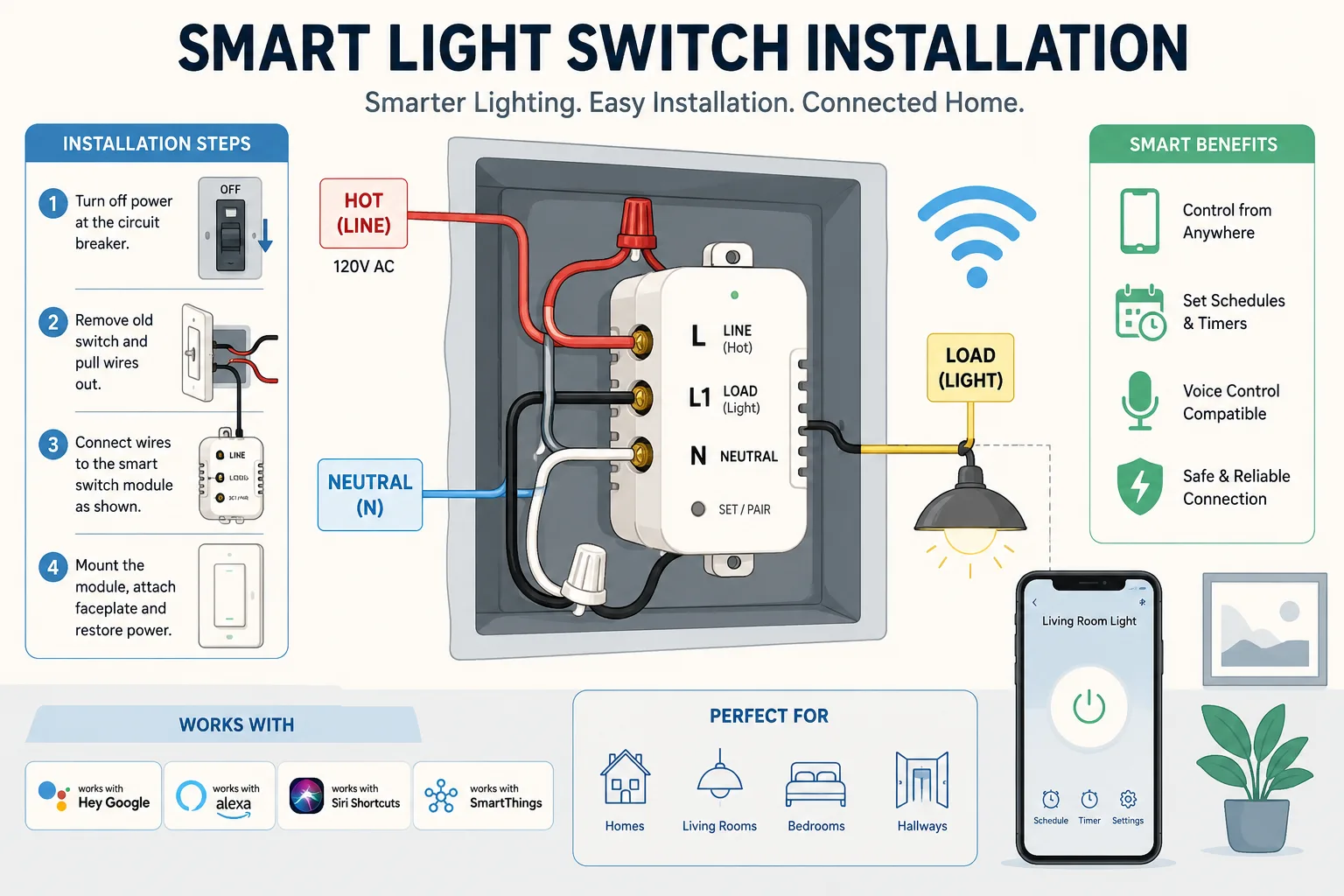
The rise of smart home technology changed everything. Suddenly, switches were no longer passive mechanical parts. They became miniature computers with wireless radios, timers, and processors. These electronics need constant power, which means many smart switches require both line power and a neutral connection.
Modern experts explain that homes built before modern code updates frequently lack neutral wires inside switch boxes. That reality is one reason homeowners upgrading to smart switches often encounter compatibility issues.
Simple Mechanical Switching
A conventional switch works like opening and closing a gate. When the switch opens, the flow of electricity stops. Since the switch itself consumes no electricity, it does not need a dedicated neutral conductor.
Older Home Wiring Practices
Older switch loops commonly sent only hot wires into switch boxes. Neutral wires stayed at the light fixture. This method was once standard practice and still exists in millions of homes today.
Why Smart Switches Usually Require a Neutral Connection
Smart switches are fundamentally different from old mechanical toggles. Even when the room light is turned off, the smart switch itself remains active. It needs enough electricity to maintain a wireless connection, process automation commands, detect motion, or respond to smartphone apps.
That standby power typically comes from a neutral wire. Without a neutral conductor, the switch struggles to maintain a complete electrical circuit for its electronics. Some manufacturers created “no-neutral” smart switches, but these often have limitations, especially with LED lighting systems.
Recent smart-home installation guides explain that most smart switches require neutral wires because their radios and processors must stay powered continuously.
One common issue involves LED flickering. Certain no-neutral switches leak tiny amounts of current through the light bulb to power themselves. Incandescent bulbs tolerated this without visible problems, but LEDs are much more sensitive. The result can be blinking, flashing, or dim glowing even when the switch is technically off.
| Smart Switch Type | Neutral Required | Common Issues |
|---|---|---|
| Standard Smart Switch | Usually Yes | Requires neutral in box |
| No-Neutral Smart Switch | No | Possible LED flicker |
| Traditional Toggle Switch | No | No smart features |
| Smart Dimmer | Often Yes | Compatibility varies |
Continuous Power Requirements
Unlike traditional switches, smart switches never fully “sleep.” Their wireless chips stay awake so they can receive commands from apps, voice assistants, or automation hubs.
Wi-Fi, Zigbee, and Smart Electronics
Protocols such as Wi-Fi, Zigbee, Matter, and Z-Wave all require electronics that consume standby power. That constant demand is the reason neutral wiring has become so important in smart homes.
Common Switch Configurations Found in Homes
Not every light switch setup looks the same. Some homes use simple single-pole switches, while others contain three-way or four-way systems controlling lights from multiple locations. Understanding these layouts helps homeowners identify whether a neutral wire may already exist inside the box.
Single-pole switches are the simplest and most common configuration. One switch controls one light fixture from one location. Three-way systems allow two switches to control the same light, such as at the top and bottom of a staircase. Four-way systems add even more control points.
Older homes may also contain switch loops, which are especially important when discussing smart switch upgrades. In many switch loops, the neutral conductor never enters the switch box. Homeowners often assume a white wire automatically means neutral, but in older switch loops the white wire may actually be repurposed as a hot conductor.
Electrical professionals frequently warn homeowners not to rely solely on wire color. Testing and proper identification are critical before attempting installations.
Single-Pole Switches
These are the standard wall switches found in bedrooms, bathrooms, and living rooms. One switch controls one fixture using a straightforward circuit design.
Three-Way and Four-Way Switches
Multi-location switch systems are common in hallways and staircases. Wiring becomes more complex because traveler wires connect the switches together.
Switch Loops in Older Houses
Switch loops often lack neutral wires in the switch box entirely. This configuration is one of the biggest obstacles homeowners face during smart switch upgrades.
Identifying Neutral Wires Inside an Electrical Box
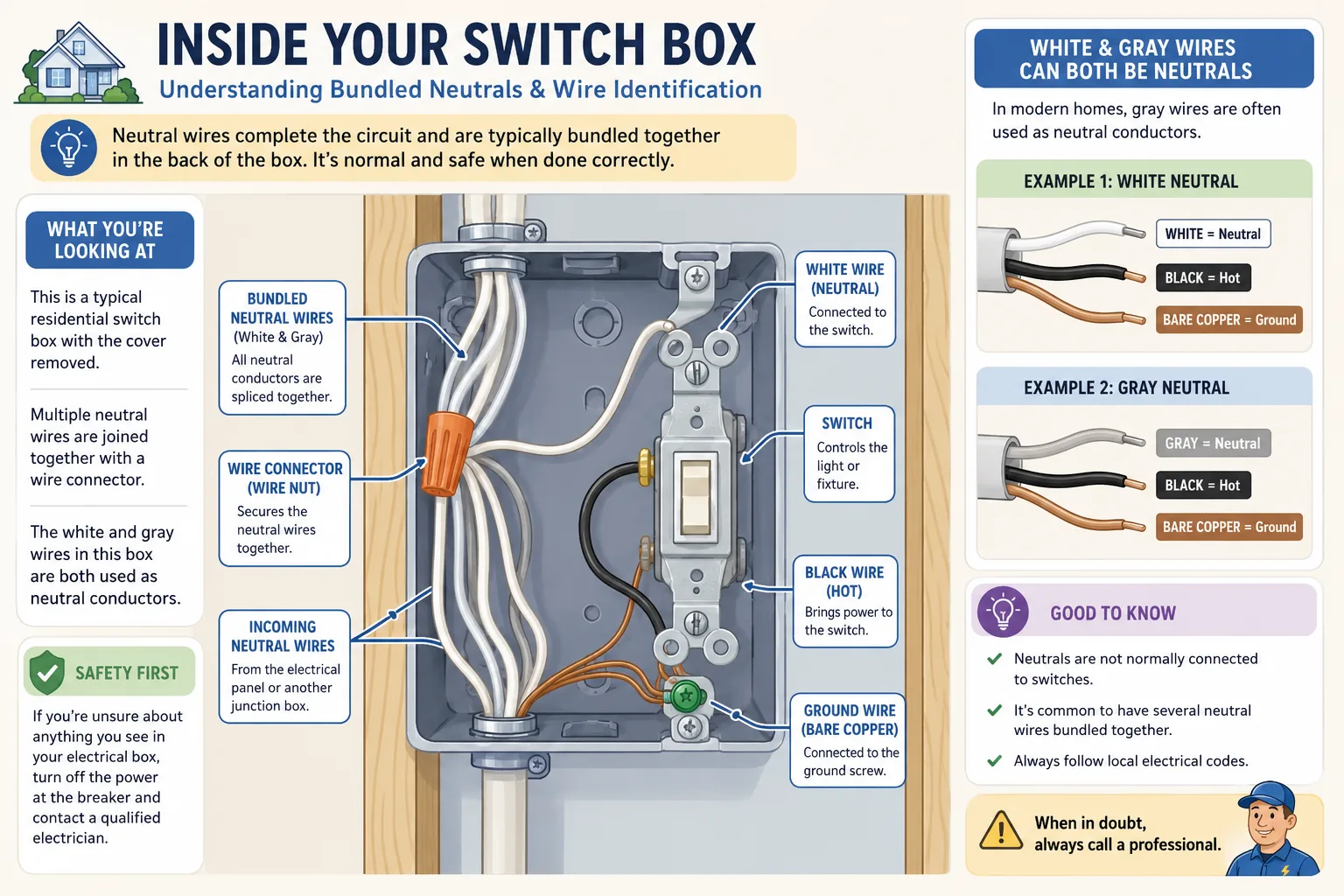
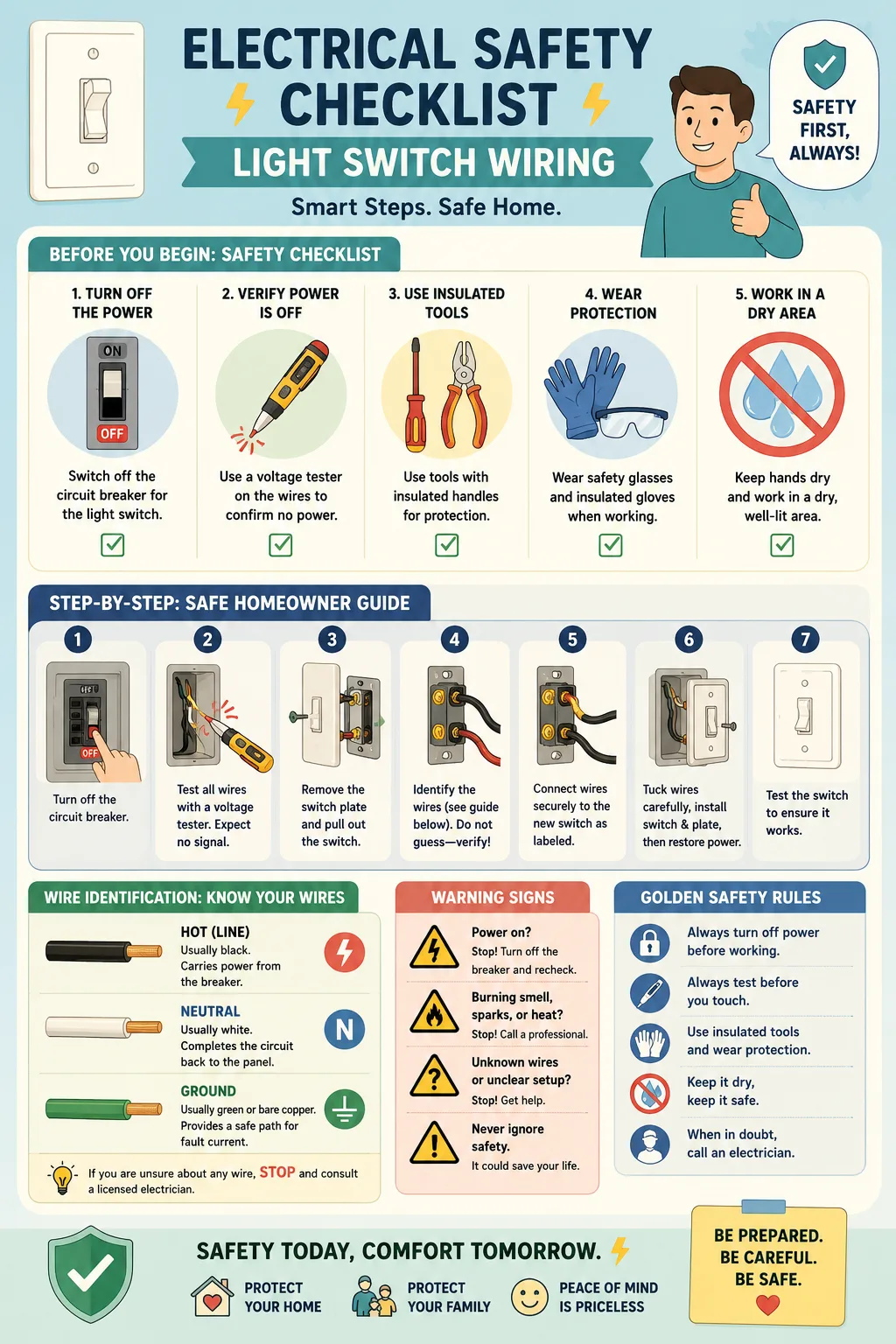
Opening an electrical box can feel intimidating, especially when several wires are bundled together. Neutral wires are usually white and often tied together with wire nuts in the back of the box rather than attached directly to the switch itself.
One of the clearest signs of a neutral wire is a group of white conductors connected together. If you only see black wires attached to the switch and no white wire bundle, there is a good chance the box lacks a neutral conductor. Recent installation guides repeatedly mention this as a common issue in older homes.
Still, homeowners should never assume based solely on color. Older wiring may use white conductors as hot wires in switch loops. Paint, dust, aging insulation, or previous homeowner modifications can also create confusion.
A non-contact voltage tester and a circuit diagram can help identify conductors safely, but electrical work always carries risk. If there is uncertainty, hiring a licensed electrician is the safest option.
Typical Neutral Wire Colors
Neutral wires are generally white or gray in residential wiring systems. They are commonly grouped together inside the back of the electrical box.
Signs a Neutral Wire Is Missing
If the box contains only hot wires and a ground wire with no bundled white conductors, the switch location may not include a neutral connection.
Smart Switch Installation Challenges
Smart switch installations sound simple in advertisements, but reality can become complicated quickly. One of the most common frustrations occurs when homeowners discover their switch box lacks a neutral wire. This problem is especially common in homes built before updated electrical codes became widespread.
Manufacturers responded by developing no-neutral smart switches. These devices use alternative methods to maintain standby power, often by allowing a small trickle current through the light fixture itself. While clever, this approach is not always reliable with LED bulbs.
Online homeowner discussions and electrician forums frequently mention blinking LEDs, dim glowing bulbs, and intermittent connectivity when no-neutral smart switches are paired with low-wattage LED fixtures.
Another challenge involves code compliance. Some homeowners attempt dangerous shortcuts, such as using the ground wire as a substitute neutral. Experts strongly warn against this practice because the ground conductor exists for safety faults, not normal current return. Using it improperly can create fire hazards and violate electrical regulations.
No-Neutral Smart Switch Options
Certain smart switches are specifically designed for homes without neutral wires. Brands like Lutron and select GE models offer solutions for older homes, though compatibility varies depending on bulb type and circuit layout.
LED Flickering and Compatibility Problems
LED bulbs use very little power, which makes them more sensitive to leakage current. Some no-neutral smart switches cause LEDs to flash or glow faintly because tiny amounts of electricity continue flowing through the circuit.
Electrical Safety Concerns When Wiring Light Switches
Electricity deserves respect. Even relatively simple switch replacements can become dangerous when homeowners misunderstand wire functions or bypass safety practices. Neutral wires, ground wires, and hot wires all serve different purposes, and mixing them incorrectly can lead to shocks, overheating, or fires.
One of the most dangerous misconceptions is the belief that neutral and ground are interchangeable. They are not. The neutral wire carries return current during normal operation, while the ground wire only exists as an emergency fault path. Connecting a smart switch’s neutral terminal to ground is unsafe and violates code requirements.
Another major safety concern involves working on energized circuits. Turning off the wall switch alone is not enough because the hot wire inside the box may still carry live voltage. The breaker should always be turned off before removing a switch plate or touching conductors. Electricians also recommend verifying power loss with a tester rather than assuming the circuit is safe.
Professional electricians spend years learning wiring standards, troubleshooting techniques, and code requirements. While basic switch replacement may appear straightforward online, hidden complications like multi-wire branch circuits, mislabeled conductors, or old switch loops can create hazards quickly.
Why Neutral and Ground Are Not the Same
The neutral conductor normally carries current during operation. The ground conductor only handles electricity during fault conditions. Swapping their roles can compromise safety systems and increase shock risk.
When to Call a Licensed Electrician
You should contact a licensed electrician if:
- The wiring colors do not match expectations
- Multiple switches control one fixture
- The home contains aluminum wiring
- The switch box lacks a neutral wire
- You feel uncertain about any part of the installation
Professional help may cost more upfront, but it dramatically reduces the risk of injury, electrical damage, or code violations.
Conclusion
The neutral wire may seem like a small detail hidden behind a wall plate, but it plays a massive role in modern electrical systems. It completes the circuit, safely returns current to the electrical panel, and allows today’s smart switches and automation devices to operate continuously. As homes become more connected and technology-driven, neutral wiring has shifted from an overlooked conductor to one of the most important parts of residential lighting systems.
Traditional switches rarely needed neutral wires because they simply interrupted the hot conductor mechanically. Smart switches changed the equation by introducing electronics that require constant standby power. That transition exposed the limitations of older wiring methods, especially in homes built before modern electrical codes emphasized neutral availability in switch boxes.
Understanding how hot and neutral wires work together can help homeowners make smarter decisions during renovations, upgrades, and troubleshooting. It also highlights why electrical safety matters so much. Neutral wires are not interchangeable with grounds, and improper wiring can create dangerous consequences.
Whether you are upgrading to smart lighting, replacing an old switch, or simply trying to understand your home better, learning the role of the neutral wire gives you a clearer picture of how electricity safely powers modern living.
FAQs
1. What is the main purpose of a neutral wire?
The neutral wire carries electrical current back to the breaker panel after electricity powers a device or fixture. It completes the electrical circuit safely.
2. Why do some light switches not have neutral wires?
Older homes often used switch loop wiring methods where only hot wires entered the switch box. Since traditional switches needed no power themselves, neutral conductors stayed at the light fixture.
3. Can I install a smart switch without a neutral wire?
Yes, but only if the smart switch is specifically designed as a no-neutral model. Even then, compatibility issues with LED bulbs may occur.
4. Is the white wire always neutral?
Not always. In older switch loops, white wires may be repurposed as hot conductors. Proper testing is necessary before making assumptions.
5. Can I use the ground wire instead of a neutral wire?
No. Ground wires are safety conductors and should never replace neutral wires. Doing so violates electrical codes and creates safety hazards.

Colt Marlowe is a 29-year-old American content writer based in Boise, Idaho. He specializes in technology, digital tools, and online business topics, combining years of research with practical experience to produce clear, trustworthy articles. As a contributor to wirelogic.online, he focuses on creating well-researched, reader-friendly content that emphasizes accuracy, transparency, and long-term value for audiences seeking reliable information.