
Solar panels are a bit like a silent engine on your roof. They don’t roar to life, flash bright lights, or make dramatic noises when they start producing electricity. That’s exactly why many homeowners wonder whether their system is actually working the way it should. Maybe your electricity bill dropped one month but bounced back the next. Maybe your inverter app shows confusing numbers. Or maybe you simply stare at your roof after installation thinking, “How do I know these things are really generating power?”
The good news is that solar systems usually leave clues when they are functioning properly. Some signs are obvious, like lower utility bills. Others are more technical, such as inverter readings, production curves, and performance ratios. Modern monitoring apps have made it easier than ever to track output in real time, but understanding what the data actually means is where many people get stuck. Recent solar monitoring studies show that homeowners who regularly monitor their systems detect performance issues much faster than those who rely only on monthly utility bills.
Before panic sets in over one cloudy afternoon or a temporary dip in production, it helps to understand what normal solar behavior looks like. Weather changes, seasonal shifts, dirt accumulation, and equipment conditions all affect production. The trick is learning the difference between natural fluctuations and warning signs of a genuine problem. Once you know what to watch for, your solar system becomes much easier to understand and manage.
The First Signs Your Solar Panels Are Producing Power Normally
One of the easiest ways to tell whether your solar panels are working is to pay attention to your home’s daytime energy behavior. Most solar systems generate the highest amount of electricity between late morning and early afternoon when sunlight is strongest. If your system is functioning correctly, your home should begin relying less on grid electricity during these hours. Many homeowners notice this indirectly at first. Appliances run normally during the day while electricity usage from the utility company drops significantly. It’s almost like your roof quietly takes over part of your energy workload without asking for attention.
A healthy solar system usually shows a smooth rise and fall in power production throughout the day. Production starts low in the morning, peaks near midday, and slowly declines toward sunset. That curve matters because irregular dips can indicate shading, equipment faults, or wiring issues. Modern systems with monitoring apps make this curve easy to visualize. According to recent solar monitoring research, panel-level monitoring is becoming the standard in residential systems because it allows homeowners to identify underperforming panels much faster.
Another reassuring sign is stable inverter operation. Most inverters display a green indicator light when everything works normally. If the light suddenly turns red, orange, or starts flashing error codes, that often signals a production problem. Some systems also show current kilowatt output directly on the inverter screen. Even if you are not technical, seeing positive energy production during sunny hours is a strong indication your panels are generating electricity correctly.
Homeowners sometimes expect dramatic changes immediately after installation, but solar energy behaves more like a long-term marathon than a sprint. A cloudy week may temporarily reduce performance, but over time you should notice meaningful savings and consistent daytime production patterns. Understanding these natural rhythms helps prevent unnecessary worry every time the weather changes.
Monitoring Energy Output Through Inverters and Apps
Solar monitoring apps have become the control center of modern photovoltaic systems. Think of them as the dashboard of your solar-powered car. Without them, you are essentially driving blind. Most major inverter manufacturers now offer free apps that allow homeowners to track energy production in real time, review historical trends, and receive alerts if something goes wrong. Recent monitoring guides highlight that unnoticed solar underperformance can reduce system output by 10–20% for months if homeowners never check their monitoring data.
Popular platforms like Enphase Enlighten, mySolarEdge, and Fronius Solar.web allow users to monitor production directly from smartphones. These apps often show live wattage, daily kilowatt-hour production, energy exported to the grid, and even individual panel performance. Panel-level monitoring is especially useful because it helps detect issues like shading, dirt accumulation, or a failing microinverter before they become expensive problems.
Real-Time Energy Tracking
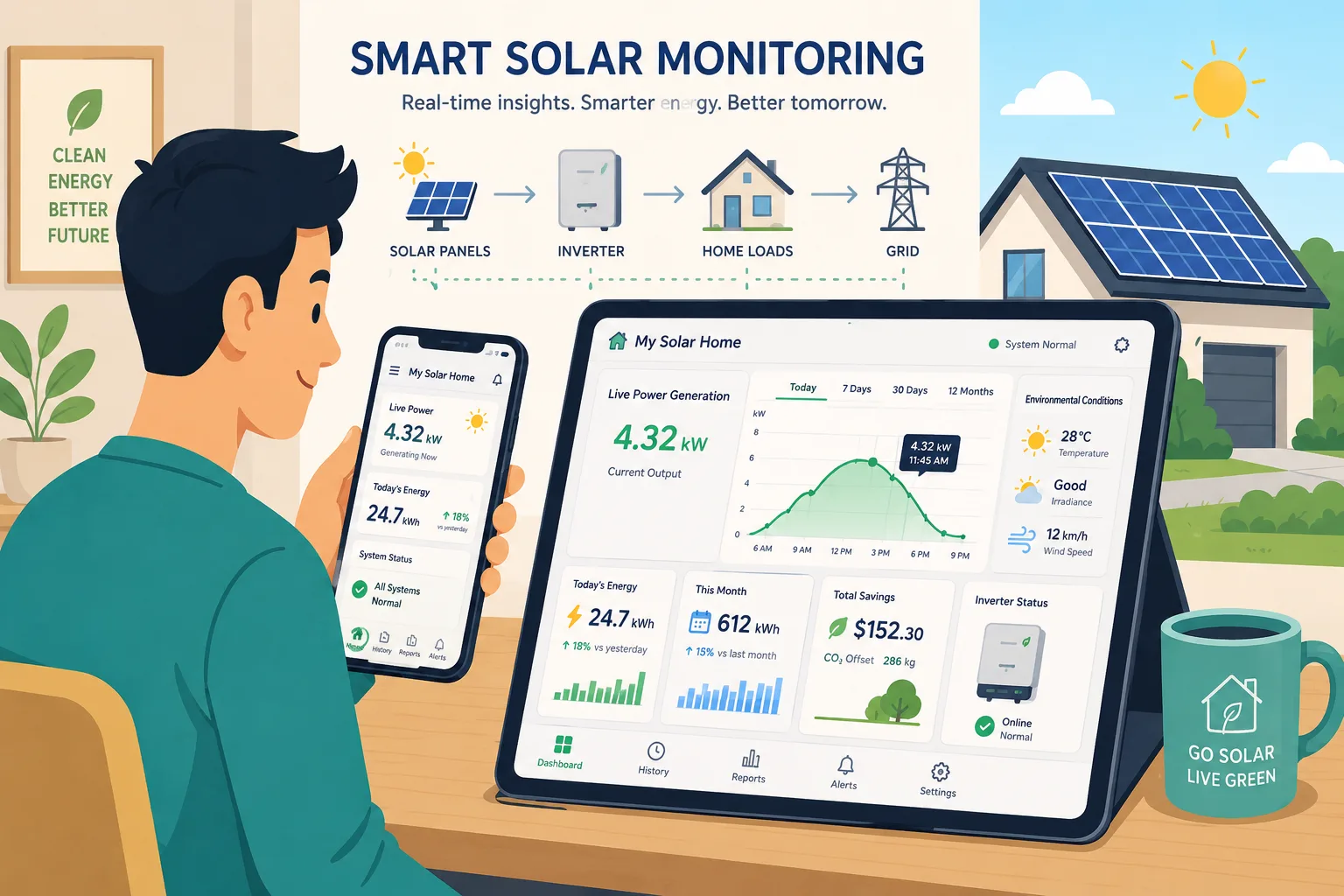
Real-time tracking gives homeowners immediate insight into whether panels are producing electricity at any given moment. On a bright sunny afternoon, your app should show significant production activity. If production stays near zero during clear daylight hours, something is probably wrong. The beauty of modern monitoring tools is that they transform invisible energy into understandable numbers and graphs.
Some advanced systems now use artificial intelligence to analyze performance trends automatically. Recent reports suggest AI-driven monitoring can detect solar faults three to five times faster than traditional systems. These smart tools compare expected production against real weather conditions and identify abnormal performance much earlier than manual observation alone.
Fault Detection Alerts
Monitoring apps also act as an early warning system. Many platforms send push notifications if an inverter disconnects, communication fails, or a panel underperforms. Imagine discovering a broken panel after losing six months of production versus receiving an alert the same day the issue begins. That difference can save hundreds of dollars annually.
Interestingly, some homeowners on Reddit have reported that monitoring apps occasionally fail to flag subtle underperformance issues automatically. In several shared experiences, homeowners only discovered inverter failures after comparing production data against expected weather-adjusted output. This is why combining app monitoring with occasional manual review is still important.
What Changes in Electricity Bills Can Reveal
Your electricity bill is one of the clearest long-term indicators of solar performance. If your solar system was sized correctly and functioning normally, you should see a noticeable reduction in grid electricity consumption after installation. For many households, the first lower bill feels almost magical. It’s the moment solar power stops being a concept and starts becoming real financial savings.
The key is consistency. Monthly bills naturally fluctuate depending on weather, air conditioning usage, heating demands, and appliance consumption. What matters is the overall trend. If your bills suddenly spike despite similar energy habits and sunny conditions, your solar system may not be performing properly. That’s especially true if the increase continues for multiple billing cycles.
Here’s a simple comparison table showing what electricity bill changes can reveal:
| Electricity Bill Pattern | Possible Meaning |
|---|---|
| Gradual bill reduction after installation | System working normally |
| Seasonal fluctuations | Weather-related production changes |
| Sudden unexplained increase | Potential inverter or panel issue |
| Minimal savings despite sunny weather | Underperforming system |
| High nighttime usage only | Normal if no battery storage exists |
Many homeowners rely too heavily on daily app readings while ignoring their utility statements. Bills provide the bigger picture. They reveal whether your solar system is delivering the long-term savings promised during installation. Smart meters are also becoming increasingly valuable because they show imported and exported electricity in real time.
One important thing to remember is that solar production alone does not determine your bill. Household consumption patterns matter too. Running energy-hungry appliances at night instead of during daylight hours can reduce solar savings significantly. Timing your dishwasher, washing machine, or EV charging during sunny hours allows you to maximize direct solar usage instead of purchasing electricity from the grid later.
Weather Conditions That Affect Solar Production
Weather is the heartbeat of solar production. Even the best solar panels in the world cannot generate maximum power without sunlight. That sounds obvious, but many homeowners still panic during cloudy weeks when production drops sharply. Understanding how weather influences output is essential for accurately judging whether your system works correctly.
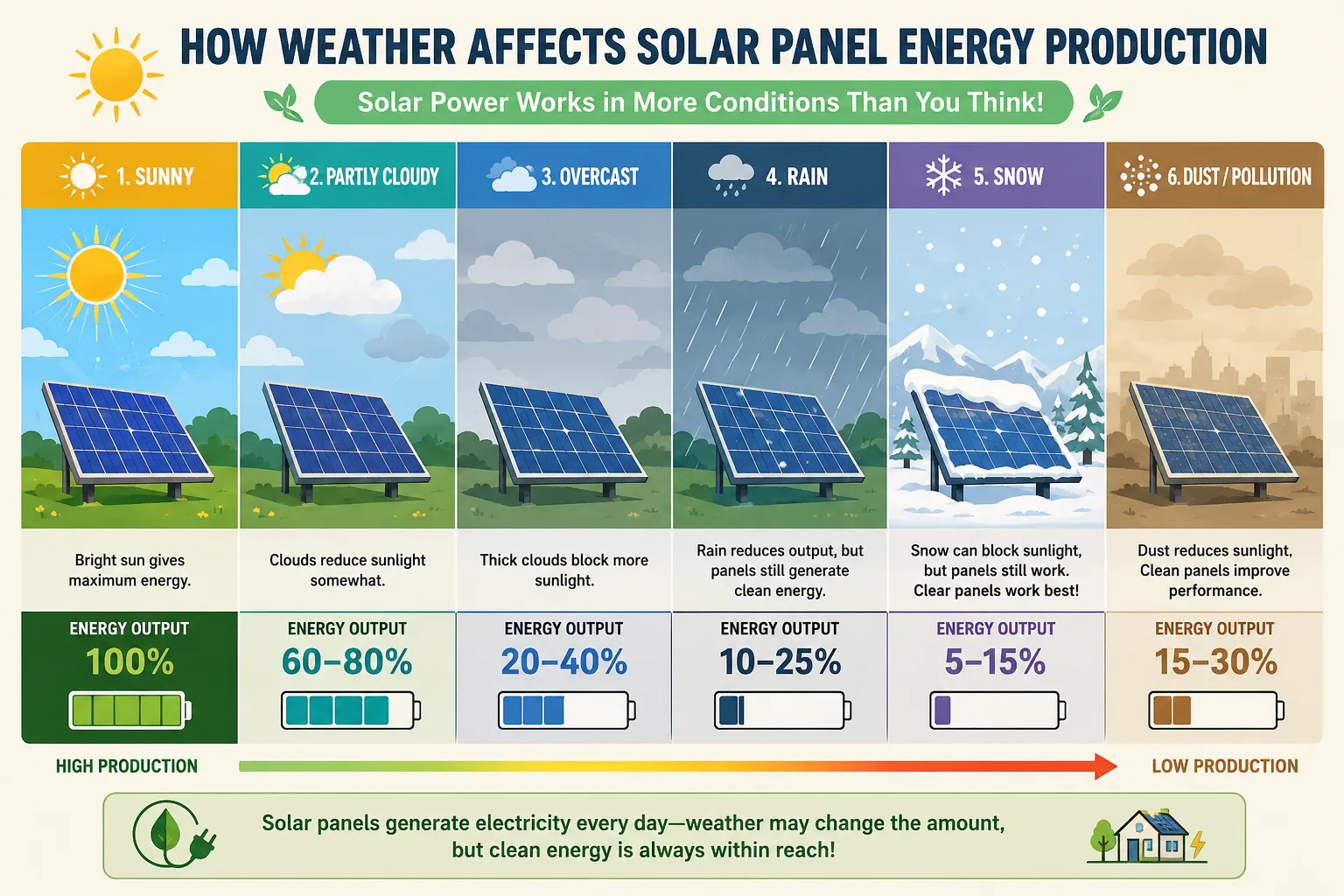
Cloud cover reduces solar irradiance, which directly lowers energy production. Heavy storms, dense clouds, and fog can dramatically cut output levels. Rain itself is not harmful to solar panels. In fact, rain often helps by washing away dust and debris. Cooler temperatures can also improve solar efficiency slightly because extreme heat reduces panel performance. It’s a strange paradox: bright sunlight powers solar panels, but excessive heat actually makes them less efficient.
Seasonal changes also play a major role. During summer, longer daylight hours usually increase production despite higher temperatures. Winter brings shorter days and lower sun angles, reducing total energy generation even on sunny days. A homeowner unfamiliar with these seasonal shifts might mistakenly assume the system is failing when it’s simply following natural solar cycles.
Recent solar weather monitoring studies show that inaccurate weather assumptions can hide performance issues for months. This is why professional solar analysts often compare system output against local irradiance data rather than using raw production numbers alone. A low-output day during heavy storms may actually represent excellent performance relative to weather conditions.
Here are some common weather-related effects on solar production:
- Sunny clear skies: Highest production levels
- Partly cloudy conditions: Variable output with occasional spikes
- Heavy overcast weather: Significant production reduction
- Extreme heat: Slight efficiency losses
- Rain and snow: Temporary production decreases
- Dust storms or pollution: Reduced sunlight absorption
Understanding these variables helps homeowners avoid confusing normal environmental effects with genuine technical failures.
Common Faults That Reduce Panel Efficiency
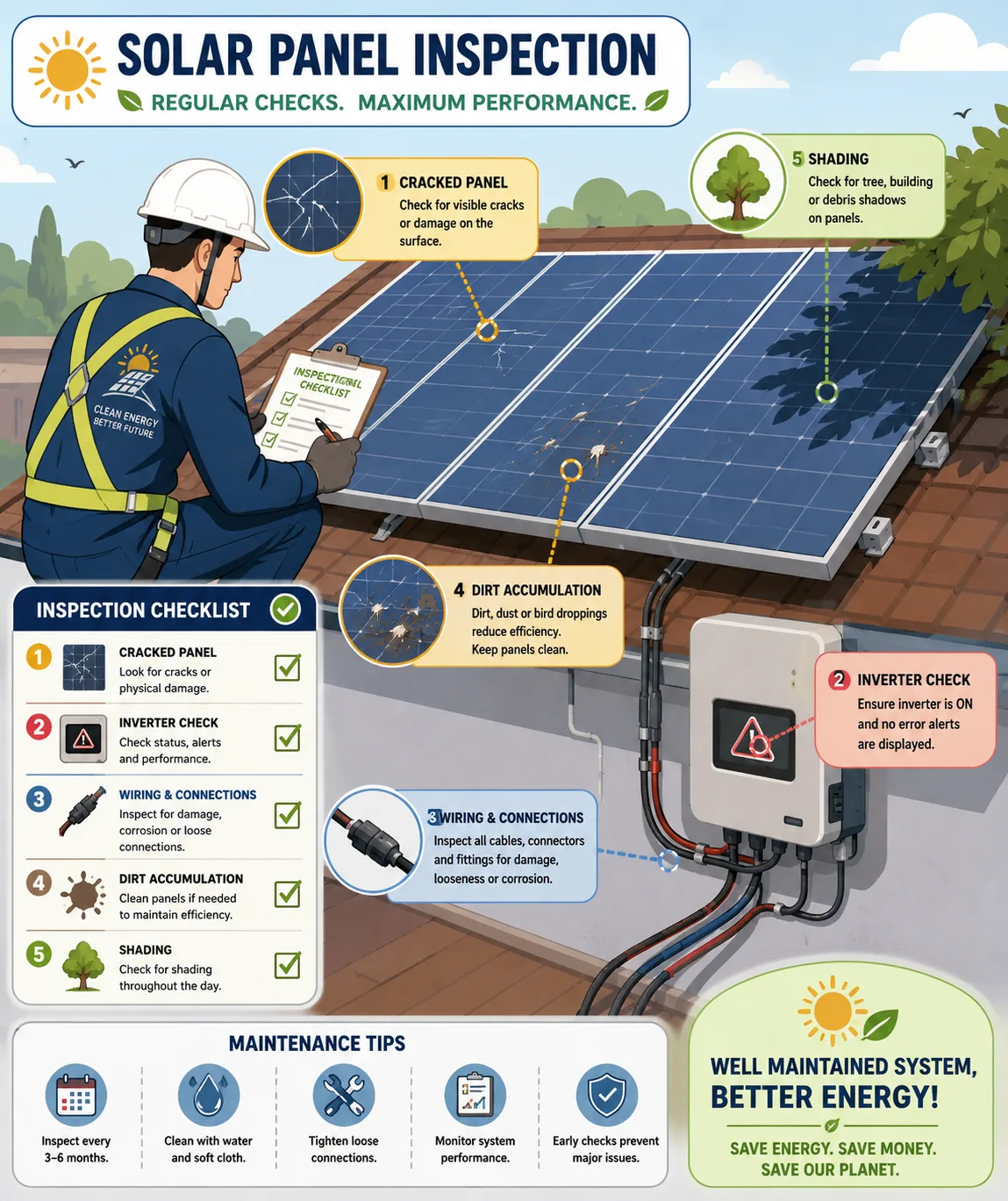
Solar systems are generally reliable, but they are not indestructible. Small faults can quietly chip away at production over time like termites weakening a wooden structure. One of the most common problems is dirt accumulation. Dust, bird droppings, leaves, and pollution layers reduce the amount of sunlight reaching the solar cells. In dusty climates, this effect can become surprisingly severe.
Shading is another major culprit. A single tree branch casting shade over one section of a panel can reduce the performance of an entire string system. That’s because traditional string inverters connect multiple panels together electrically. If one panel struggles, the rest can suffer too. Panel-level monitoring systems help identify these issues much faster than older inverter-only setups.
Inverter failures are particularly important because the inverter acts like the translator between solar panels and household electricity. Solar panels generate direct current (DC), but homes use alternating current (AC). If the inverter fails, power conversion stops even if the panels themselves still work perfectly. Warning signs often include blinking error lights, app notifications, or sudden drops in recorded output.
Wiring problems also deserve attention. Loose connectors, damaged insulation, corrosion, or rodent damage can interrupt energy flow and reduce system efficiency. Recent homeowner reports online describe cases where partially disconnected cables reduced solar production for months without obvious visible signs.
The table below summarizes common solar faults and their effects:
| Fault Type | Impact on Production |
|---|---|
| Dirt and debris | Reduced sunlight absorption |
| Tree shading | Lower output from affected panels |
| Inverter malfunction | Partial or complete production loss |
| Loose wiring | Inconsistent energy flow |
| Cracked panels | Permanent efficiency reduction |
| Hot spots | Localized overheating and damage |
Catching these issues early can prevent small problems from turning into expensive repairs later.
Visual Inspection Tips for Panels and Wiring
You don’t need to be a certified solar technician to perform a basic visual inspection. A careful walk around your property can reveal surprising clues about system health. Think of it like checking your car tires before a road trip. You may not rebuild the engine yourself, but spotting obvious problems early can save you from bigger trouble later.
Start by observing the panels themselves. Look for cracks, discoloration, moisture buildup under the glass, or obvious debris accumulation. Healthy panels usually appear clean, uniform, and securely mounted. Bird nests, fallen branches, or excessive dirt buildup can reduce efficiency substantially over time.
Pay attention to shading changes too. Trees grow slowly, which means a branch that caused no problems two years ago may now cast shadows directly across your array. Seasonal sunlight angles can also reveal new shading patterns homeowners never noticed during installation.
Wiring inspections matter just as much. Without touching electrical components directly, visually inspect cables and conduit for damage. Watch for loose hanging wires, cracked protective coverings, corrosion near connectors, or signs of animal chewing. Rodents sometimes damage wiring insulation, especially in attic spaces or under roof panels.
Here are several warning signs worth investigating:
- Panels with visible cracks or burn marks
- Loose mounting hardware
- Sudden dirt buildup or bird droppings
- Flashing inverter error lights
- Disconnected cables or damaged conduit
- Water intrusion near electrical boxes
Modern monitoring systems help tremendously, but physical inspections still catch problems technology may miss. Combining both approaches gives homeowners the strongest chance of maintaining healthy solar performance over the long term.
When Performance Drops Signal a Need for Professional Testing
Every solar system experiences occasional production dips. That alone does not mean disaster. The real concern begins when reduced performance becomes persistent, unexplained, or severe. If your system suddenly produces far less electricity during sunny conditions, professional testing may be necessary.
One major red flag is consistent underperformance compared to historical trends. If your system generated 900 kWh last April but only 650 kWh this April under similar weather conditions, something likely changed. Monitoring apps can help reveal these trends quickly. Some AI-based systems now detect abnormal patterns automatically, helping identify problems before major energy losses occur.
Professional technicians use specialized tools unavailable to most homeowners. Thermal imaging cameras can identify “hot spots” where damaged cells overheat. IV curve tracing measures electrical performance against expected values. Insulation resistance tests check for hidden wiring faults. Solar irradiance meters compare actual sunlight levels against production output to determine whether panels are converting energy efficiently.
Homeowners should especially seek professional help if they notice:
- Complete loss of solar production
- Frequent inverter shutdowns
- Burning smells near equipment
- Rapidly increasing electricity bills
- Large differences between neighboring panel outputs
- Physical storm damage
Professional testing may sound intimidating, but it often prevents much larger costs later. A failing microinverter left untreated for months can quietly erase hundreds of dollars in savings annually. Several homeowners have shared experiences where unnoticed inverter failures reduced production for nearly a year before diagnosis.
Solar systems are designed for longevity, often lasting 25 years or more. Treating performance drops seriously ensures your investment continues generating reliable savings instead of silently underperforming in the background.
Conclusion
Knowing whether your solar panels are working properly comes down to understanding patterns rather than chasing perfection every single day. Healthy solar systems show steady daytime production, lower electricity bills, consistent inverter activity, and predictable weather-related fluctuations. Monitoring apps and smart meters have made it easier than ever to track solar performance, but homeowners still benefit from learning how to interpret the data rather than blindly trusting green status indicators.
Visual inspections remain surprisingly valuable too. Dirt buildup, shading, damaged wiring, and inverter issues often reveal themselves through small clues before turning into major failures. Combining regular monitoring with occasional physical inspections gives you the best chance of catching problems early.
Solar power is not just about generating electricity. It’s about confidence. Once you understand how your system behaves during sunny days, cloudy weeks, and seasonal changes, you stop wondering whether your panels work and start seeing your roof as an active part of your home’s energy future.
FAQs
1. How do I know if my solar panels are generating electricity?
You can verify production through your inverter display, solar monitoring app, or reduced electricity usage from the grid during daylight hours. Most systems show live production data in kilowatts or kilowatt-hours.
2. Why are my solar panels producing less power on cloudy days?
Cloud cover blocks part of the sunlight reaching your panels, which naturally lowers energy production. This is normal behavior and does not automatically indicate a fault.
3. Can dirty solar panels reduce efficiency significantly?
Yes. Dust, bird droppings, leaves, and pollution can reduce sunlight absorption and lower production. In some regions, dirty panels may lose a noticeable percentage of efficiency if not cleaned periodically.
4. What is the most common solar panel failure?
Inverter problems are among the most common solar system issues. Since the inverter converts DC electricity into usable AC power, failures can dramatically reduce or stop production.
5. When should I call a solar technician?
Contact a professional if you notice major production drops, repeated inverter errors, visible panel damage, unusual electrical smells, or electricity bills rising unexpectedly despite sunny weather.

Colt Marlowe is a 29-year-old American content writer based in Boise, Idaho. He specializes in technology, digital tools, and online business topics, combining years of research with practical experience to produce clear, trustworthy articles. As a contributor to wirelogic.online, he focuses on creating well-researched, reader-friendly content that emphasizes accuracy, transparency, and long-term value for audiences seeking reliable information.